
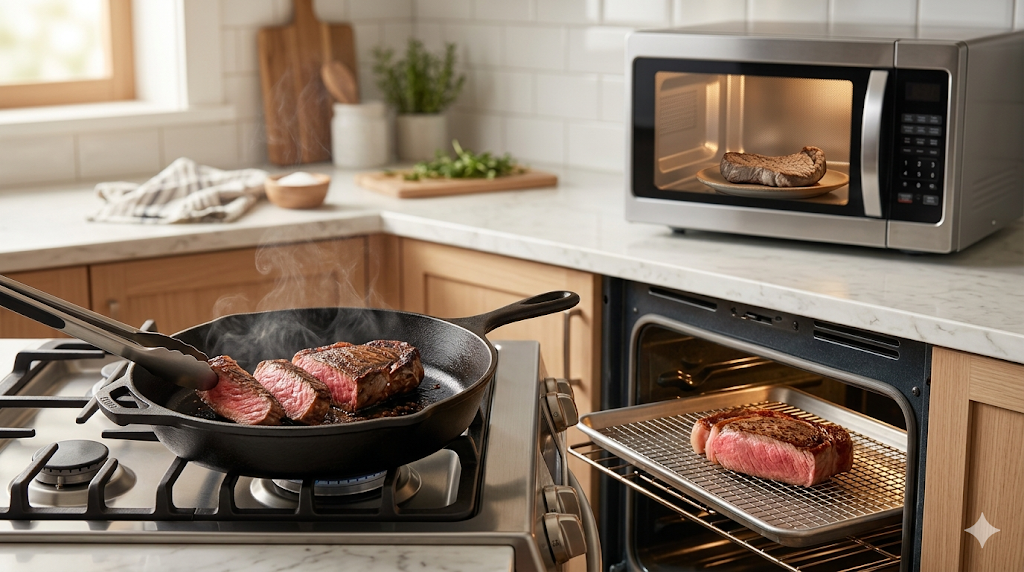
A lot of guides online tell you to just toss your leftover steak in the microwave for two minutes and call it done. That’s how you ruin a good steak. After testing a few different methods at home oven, pan, and microwave, it’s clear that the order and the heat level matter just as much as the time. This guide breaks down how to reheat steak without turning it into a chewy, gray slab of meat. No fancy equipment needed, just a bit of patience.
What Does “Reheating Steak” Actually Mean?
Reheating steak isn’t the same as cooking it. The meat is already cooked, so the goal is simply to bring it back up to a warm, eating temperature without pushing it past the doneness it already has. If your steak was medium-rare, the aim is to gently warm it back toward that same internal temperature, not to cook it further. That’s the part most people get wrong.
Why So Many People Get This Wrong
The microwave is fast, so it’s the first thing most people reach for. The problem is that microwaves heat unevenly and very quickly, which tightens the muscle fibers in the meat and pushes the juices out. The result is a steak that’s hot on the outside and rubbery all over. Steak is forgiving the first time you cook it, but leftovers are much less forgiving. Once the proteins have already tightened once during cooking, a second blast of high heat tightens them again, and that’s when you lose the juiciness.
What Actually Works When You Reheat Steak
After trying a few approaches, two methods stood out as reliable:
1. Oven plus a quick pan sear (best for thick cuts like ribeye or sirloin)
- Let the steak sit out for about 20–30 minutes so it isn’t ice cold
- Preheat the oven to 250°F (120°C)
- Place the steak on a wire rack set over a baking sheet, so air moves around it
- Warm it until the center reaches about 110°F (this takes roughly 20–30 minutes, depending on thickness)
- Pat it dry, then sear it in a hot pan for 30–45 seconds per side to bring back the crust
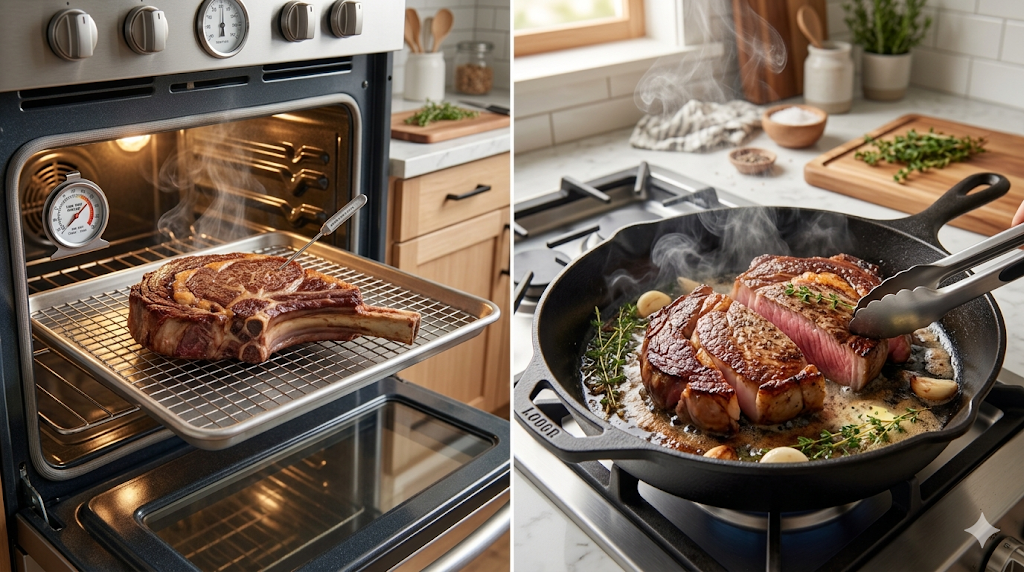
2. Stovetop with a splash of liquid (best for thinner cuts or sliced steak)
- Heat a pan on medium-low
- Add a small splash of beef broth, butter, or oil
- Cover the pan loosely so steam keeps the meat moist
- Flip once, just until warmed through — this only takes a few minutes
Both methods rely on low, gentle heat first, with a fast finish if you want the crust back. That order is the part that actually makes the difference.
Reheat Steak Temperatures by Method
Every method below follows the same rule: warm the steak gently to just below its original doneness, then finish fast if you want the crust back. These are the exact settings and targets I use.
| Method | Setting | Warm the Steak To | Finish |
|---|---|---|---|
| Oven plus sear | 250F on a wire rack | 110F in the center | Sear 30 to 45 seconds per side in a hot pan |
| Sous vide | Water bath at your original doneness temperature, 130F for medium rare | Bath temperature, 45 to 60 minutes | Pat dry, sear 30 seconds per side |
| Air fryer | 300F | About 120F, 6 to 8 minutes | None needed |
| Skillet with broth | Medium low, lid on | Warmed through, 3 to 5 minutes | None |
| Microwave, low power | 30 to 50 percent power | Just warm, checked every 30 seconds | None, and expect a texture cost |
Sous Vide: The Precision Reheat
If you own a sous vide circulator, it reheats steak better than anything else, because the bath can never push the meat past the temperature you set. Seal the leftover steak, set the bath to the temperature the steak was originally cooked to, and leave it for 45 to 60 minutes. It comes out at exactly its original doneness from edge to edge. Pat it dry and give it a 30 second sear per side to rebuild the crust.
Sliced vs Whole: Reheat Them Differently
A whole leftover steak reheats beautifully with the oven method above, because the thick center warms slowly and stays juicy. Sliced steak is the opposite. Thin slices dry out in minutes in the oven, so either serve them cold over a salad or in a sandwich, or flash them for about 30 seconds in a hot pan with butter. My favourite rescue for sliced leftovers is to cut them into bite size pieces and toss them through the garlic butter steak bites method, which turns yesterday’s steak into a new meal instead of a reheated one.
What Doesn’t Work Reliably
- Full-power microwave — heats unevenly and dries the meat out fast
- Reheating sliced steak in the oven — thin slices dry out before the inside even warms
- Skipping the resting step before reheating — going straight from fridge to high heat causes a cold center and an overcooked edge
- Reheating the same steak more than once — each round of heat pulls out more moisture
- If your steak is already sliced, it’s honestly better to serve it cold in a salad or sandwich rather than trying to reheat it. Reheating thin slices almost always makes them tougher.
Is It Safe to Reheat Steak?
Yes, reheating steak is safe as long as it was stored properly. A few basic rules:
- Refrigerate leftover steak within 2 hours of cooking
- Keep it in the fridge for no more than 3–4 days
- When reheating, bring the internal temperature to at least 165°F (74°C) if food safety is your main concern, though most people stop earlier for taste and texture
- If it smells off, looks slimy, or has been sitting out too long, don’t risk it — throw it out
If you’re reheating purely for safety reasons (like for a young child, elderly person, or anyone with a weaker immune system), go with the full 165°F mark rather than stopping at a lower temperature for juiciness. For more details on safe leftover storage times, the USDA FoodSafety.gov guidelines are a reliable reference.
Better Alternatives to Reheating
Sometimes the steak just isn’t worth saving as a whole piece. Here’s how the main options compare:
| Method | Best For | Texture Result | Time Needed |
|---|---|---|---|
| Oven + pan sear | Thick cuts, whole steaks | Closest to fresh | 25–35 minutes |
| Stovetop with broth | Thin cuts, sliced steak | Moist, slightly softer | 5–10 minutes |
| Air fryer (300°F) | Quick reheats, medium cuts | Decent, slightly drier | 6–8 minutes |
| Serve cold (salads, sandwiches) | Already-sliced steak | No texture loss | 0 minutes |
| Microwave (low power, covered) | Emergencies only | Often rubbery | 1–2 minutes |
| Sous Vide | Precision reheats, thick cuts | Closest to fresh, exact doneness | 45 to 60 minutes |
Is It Legal to Reheat Steak?
This isn’t a legal question at all there’s no law about reheating food at home. The only real concern is food safety, which comes down to proper storage and reaching a safe temperature, not legality.
Should You Still Reheat Your Steak?
If the steak is a thick, whole cut and you have 20–30 minutes, reheating it properly is absolutely worth it. You’ll get something very close to the original. If it’s thin, sliced, or you’re short on time, you’re often better off eating it cold or turning it into something new, like a steak sandwich, fried rice, or a salad topping.
Frequently Asked Questions
Can I reheat steak in the microwave?
You can, but it’s the least reliable method. If it’s your only option, use low power (around 30–50%), cover the steak, and check it every 30 seconds.
How long does reheated steak last in the fridge?
Once reheated, treat it like fresh leftovers eat it within a day or two and don’t reheat it a second time.
What temperature should reheated steak reach?
Aim for around 110°F before searing if you want it medium-rare, or 165°F if food safety is your main priority.
Can I reheat frozen steak?
Thaw it in the fridge overnight first. Reheating straight from frozen leads to an uneven result — cold in the middle, overcooked on the edges.
Does resting the steak before reheating actually matter?
Yes. Letting it sit out for 20–30 minutes before reheating helps it warm evenly instead of staying cold in the center while the outside overcooks.
Can you reheat steak in a sous vide?
Yes, and it is the most precise method. Set the water bath to the temperature the steak was originally cooked to, 130F for medium rare, and warm the sealed steak for 45 to 60 minutes. Dry it well and sear it for 30 seconds per side to bring the crust back.
Final Thoughts
Reheating steak isn’t complicated, but it does need a bit more care than just zapping it in the microwave. The oven-then-sear method gives the closest result to a freshly cooked steak, while a quick stovetop warm-up with some liquid works well for smaller portions. Whatever method you pick, the rule stays the same: low heat first, fast finish second. Get that order right, and your leftover steak will taste like it was barely a leftover at all.
Related article