
Table of Contents
SUMI Marylebone Review: The Short Answer
SUMI Marylebone is very good, and it is very good in exactly the way a neighbourhood Japanese restaurant should be. The rice is right, the temaki are the best thing on the menu, and the room feels calm rather than showy. If you book the sushi counter and order in rounds, you will leave happy. If you order the duck breast off the robata, you will leave wondering why you spent £36 on it.
I went on a weekday evening in November, a few weeks after the doors opened on 1 November 2026. This sumi marylebone review covers what I ate, what it cost, what to order, what to skip, and whether the second SUMI lives up to the Notting Hill original.
Key Takeaways
- SUMI Marylebone opened 1 November 2026 at 26 to 27 Devonshire Street, a short walk from Regent’s Park and Baker Street stations.
- The temaki hand rolls are the signature. Order the double tuna temaki, which is exclusive to this branch.
- Toro and botan ebi nigiri at £22 for two pieces is the single best order on the menu.
- The beef gohan, stirred at the table in a Le Creuset pot, is the most satisfying non sushi dish.
- Skip the duck breast on the robata at £36. It arrives with no rice, no sides, and not enough sauce.
- Budget around £60 to £75 a head with a drink before the 12.5 percent service charge.
- Book ahead. The four counter seats go first, and the room fills fast on weekend evenings.
Where Is SUMI Marylebone?
SUMI Marylebone sits at 26 to 27 Devonshire Street, just off the top end of Marylebone High Street, in the old Cote Brasserie premises. Regent’s Park station and Baker Street station are both a few minutes away on foot. The room is bigger than the Notting Hill original, and it shows. Pale Alaskan cedar, softly lit latticework, low banquettes along the walls, and a few leafy trees tucked between the tables give it a calm Scandinavian Japanese feel. It is the opposite of the dark, theatrical sushi room. This one feels like a place you could eat in twice a week.
There are four seats at the front of house sushi counter, where you watch the chefs work through the evening’s orders with a focus that borders on meditation. The rest of the room is a mix of tables and small cubby holes that suit groups catching up over food. A terrace opens in summer, and a private dining room at the back suits group dinners in the run up to Christmas. For anyone reading this sumi marylebone review and weighing up the trip, the walk from either station takes under five minutes.
Who Is Behind SUMI Marylebone?
SUMI comes from Creative Restaurant Group, with Endo Kazutoshi as culinary director. The name comes from Endo’s mother. The first SUMI opened in Notting Hill and became one of London’s most loved neighbourhood Japanese restaurants, the cheaper, more relaxed sibling to Endo’s famous 10 seat omakase in Chelsea. I reviewed that omakase earlier this year, and the discipline shows here too. You can read my ENDO Chelsea review for the full story of the group behind this restaurant.
Executive chef Christian Onia runs the kitchen, and the menu balances Japanese tradition with modern innovation. If you know the Notting Hill branch, you will recognise most of the menu. The Marylebone branch adds a handful of exclusive dishes, and those exclusives are worth seeking out. That pedigree is why this sumi marylebone review starts with the group behind the room rather than the room itself.
SUMI Marylebone Review: The Food
The sumi marylebone menu runs through snacks, sashimi, nigiri, temaki, tempura, robata grills, and gohan rice dishes. It is a pared back menu, and that is a compliment. Nothing here tries to be clever for its own sake. The kitchen does a small number of things and does them with care.
The Temaki Are the Main Event
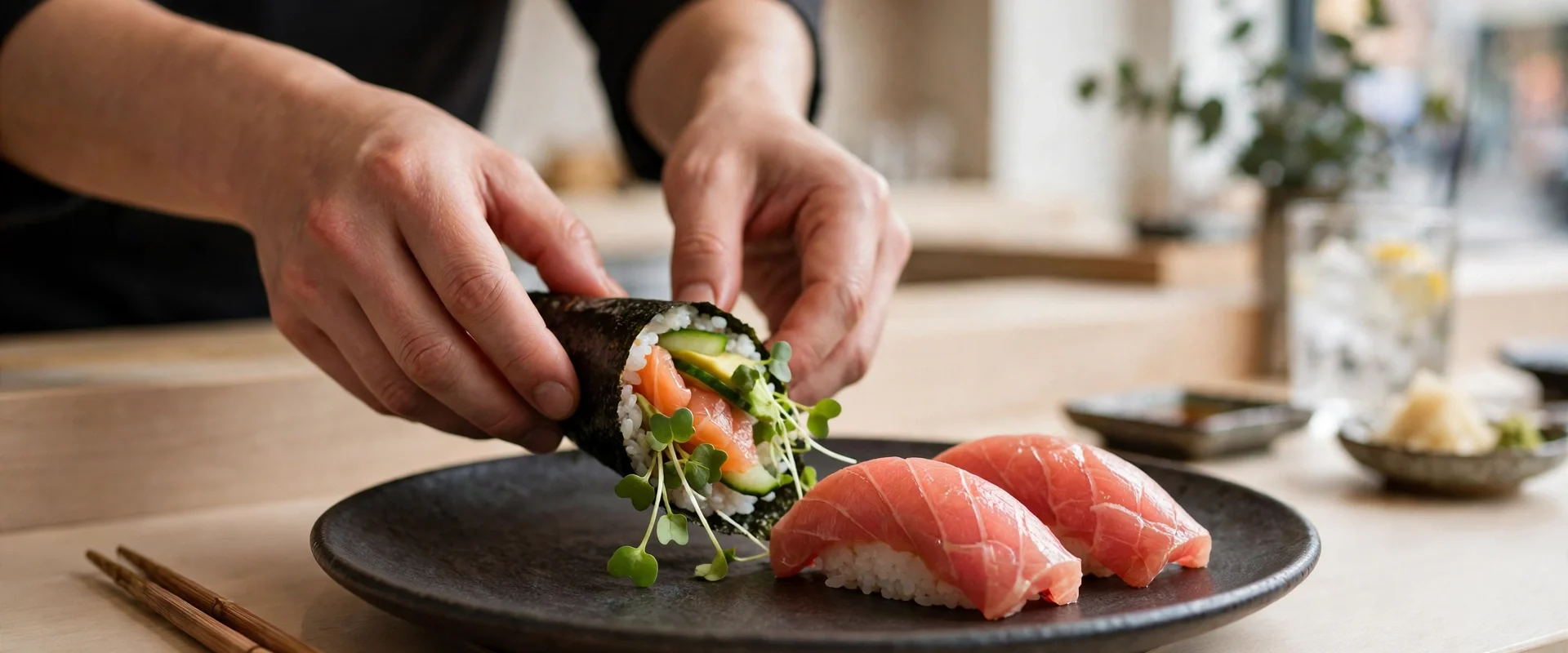
The sumi marylebone temaki are the reason to come, and this sumi marylebone review would be dishonest if it said otherwise. They run £9 to £15 each, and they arrive one at a time, crisp nori wrapped around warm rice and cold fish, meant to be eaten at once while the seaweed still crackles.
I tried the scallop with shiso flowers, the salmon with purple shiso, the yellowtail with white sesame, and the toro taku. Every one of them worked. The scallop was sweet against the floral lift of the shiso. The yellowtail had a gentle nuttiness from the sesame that never overpowered the fish. But the order I missed, and the one I would put first next time, is the double tuna temaki. It is exclusive to Marylebone, it uses two different cuts of bluefin tuna with fresh wasabi, and everyone who has tried it calls it the signature of the branch. Order it first, before you fill up on anything else.
The rice deserves its own sentence. With hand rolls and nigiri, the rice is where most restaurants at this price fail. Too sticky and the roll turns to concrete. Too loose and it falls apart before it reaches your mouth. SUMI finds the middle. The grains hold together just long enough, then come apart on the tongue without any negotiation. A dab of fresh wasabi cuts through the richness of the tuna belly, and a little finely grated lemon zest lifts the sweetness of the scallop. These are small touches, but they are the difference between a good hand roll and a great one.
The Nigiri Worth Ordering Twice
Two pieces of nigiri for £9 sounds reasonable right up to the point where you have said it six times. That is the honest maths of this sumi marylebone review, and it is worth knowing before you sit down. The nigiri is priced by the pair, and the bill climbs in small, painless steps.
The pair to order is the toro and botan ebi at £22 for two pieces. The toro is buttery and rich, the sweet prawn is clean and delicate, and together they show what this kitchen does best: fish of real quality, cut well, with almost nothing in the way. I ordered them twice, and I would order them a third time on a return visit.
The tuna tataki at £18 is lightly smoked with marigold hay and served with goma dare and onion ponzu. It is a confident plate, smoky without being heavy, and the ponzu gives it a bright edge. It is the best of the cooked fish starters.
Snacks, Tempura and the Gohan
The ankimo mousse on toasted shokupan at £9 is a lovely little snack to start with. Monkfish liver mousse sounds like a dare, but it eats like a rich pate on buttery toast, and the in house shokupan is soft and slightly sweet. It is the kind of dish that tells you the kitchen is paying attention.
There are two tempura options. One is a seasonal vegetable selection at £16, and the other follows the catch of the day at market price. The monkfish tempura is fabulously light, with a crisp batter that shatters rather than soaks, and it comes with a very good in house mayonnaise. If you like tempura, order it. If you only order one fried dish, make it this one.
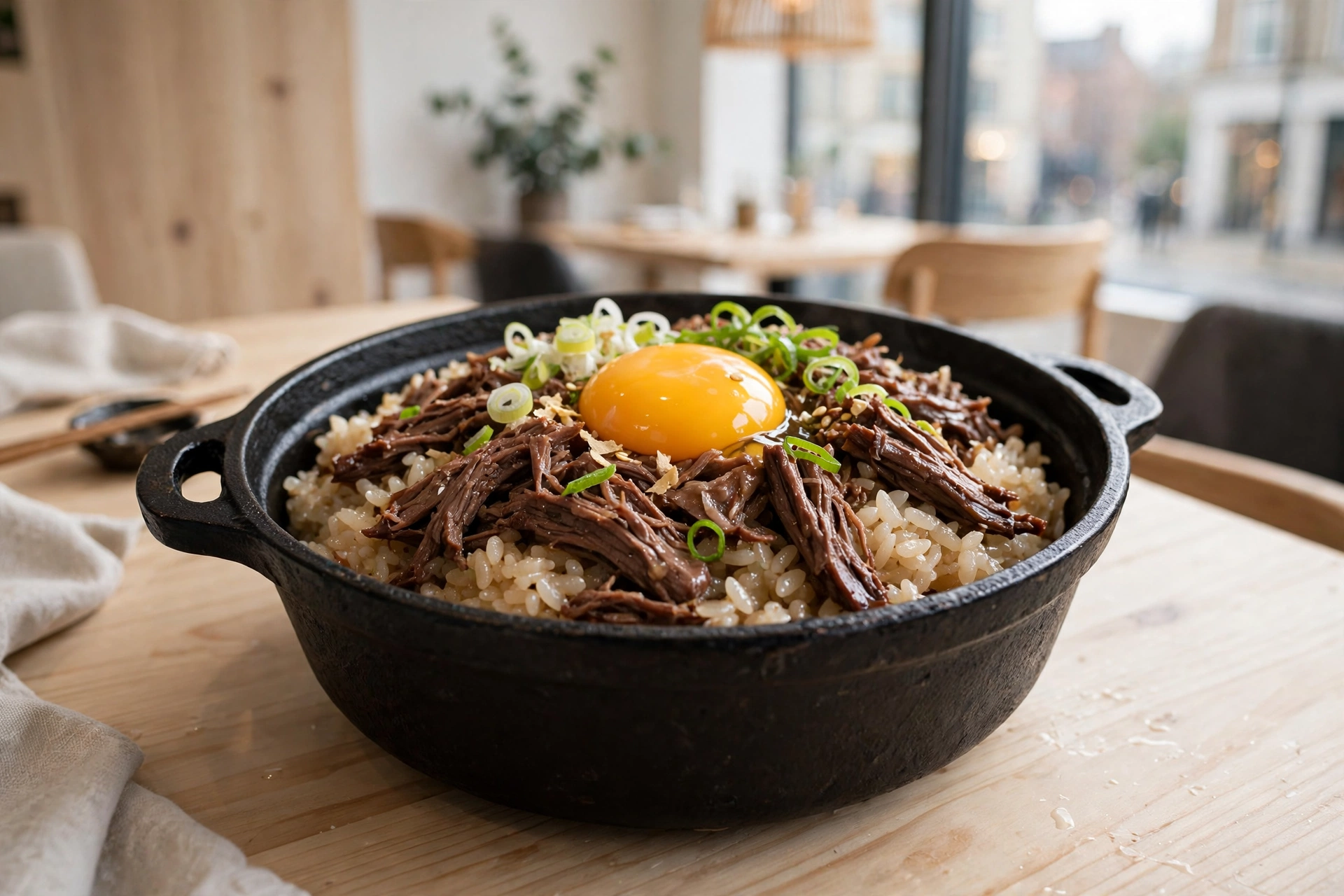
My favourite thing outside the sushi counter was the beef gohan. Gohan means cooked rice, or more literally meal, and this rice is a meal in itself. It arrives in a Le Creuset pot, and the server stirs the pulled beef, rice, and egg yolk together at the table until the whole thing goes glossy and silky. It is gorgeous, comforting, and filling, and it is the dish that turns a light sushi dinner into a proper evening meal. If you are hungry, order the gohan. It is the best value on the menu.
The One Dish to Skip
Not everything works. The duck breast on the robata at £36 was the only disappointing order of the evening, and it is a shame because it is one of the Marylebone exclusive dishes the restaurant is promoting. The duck itself was cooked well enough, but I got almost no flavour from the robata, and the plate arrives on its own with no rice, no sides, and not enough dressing or sauce to carry it. At £36, a dish needs to justify itself. This one does not. The kitchen is better at raw fish than it is at grilled meat, and the menu knows it. Stick to the sushi, the temaki, and the gohan, and you will not miss the robata section at all.
Dessert Is Worth Staying For
I do not normally order dessert in a sushi restaurant, but here the desserts feel like a thoughtful part of the menu rather than an afterthought. The kukicha coffee choux bun at £12 is a super light choux filled with roasted kukicha cream, and it eats like a cloud with a gentle roasted tea flavour. The mille crepe at £15 is layered with a Hibiki whisky infused white chocolate ganache, and it is the dessert to order if you only order one. It is rich, it is boozy in the best way, and it is the right ending to a meal built on delicate flavours.
SUMI Marylebone Prices: What Dinner Actually Costs
The sumi marylebone review would not be honest without the bill. Nigiri runs about £9 to £22 a pair, temaki £9 to £15 each, starters £9 to £18, and the robata dishes climb to £36. Desserts are £12 to £15. A proper dinner with a few temaki, a pair or two of nigiri, a snack, and the beef gohan lands around £60 to £75 a head with a drink, before the 12.5 percent service charge. That is not cheap, but it is fair for the quality of the fish, and it sits well below the omakase rooms that charge three figures a head.
The trap, if there is one, is the ordering style. Two pieces here, one hand roll there, and the bill grows in steps so small you barely notice them. Order in rounds, pause between rounds, and decide whether you are actually still hungry before you order the next round. Your wallet will thank you.
Drinks: Sake, Cocktails and Japanese Whisky
The drinks list in this sumi marylebone review deserves its own mention, because it is built around sake, Japanese whisky, and cocktails with a Japanese twist. The sake list is curated by Anthony Yukio, head of sake for Creative Restaurant Group, and the staff will guide you if you ask. The cocktails riff on familiar favourites. The Matcha is a pina colada style drink with a grassy green tea edge, and the Akane takes the tequila and pink grapefruit of a Paloma and adds heat from yuzu kosho with a splash of beetroot grenadine. Both are good, and both suit the food better than a heavy red wine ever would.
Service and Atmosphere
Service is warm, unhurried, and knowledgeable about the fish. The staff explain the daily specials without rushing you, and they are honest about what is running low. The room hums rather than roars, which suits the food. It is a grown up room, and it feels like Marylebone: polished, calm, and a little bit expensive without making a fuss about it.
The four counter seats are the best seats in the house. If you can get them, take them. Watching the chefs work is half the pleasure, and the counter is where the kitchen’s discipline is most visible. For sumi marylebone booking, use the official website and book well ahead for a Friday or Saturday, and book further ahead still in December, when the private dining room and the festive season will fill the diary fast.
SUMI Marylebone vs Notting Hill: Which Is Better?
The Notting Hill original is smaller, louder, and more of a local favourite. Marylebone is bigger, calmer, and easier to get a table in. The food is the same kitchen philosophy, and the Marylebone exclusives give it a small edge for a first visit. If you loved the original, you will love this one. If you have never been to either, start here, sit at the counter if you can, and order the temaki.
For another take on a live fire London kitchen from a chef with a similar pedigree, my KID Soho review covers David Carter’s Turkish restaurant in Soho, and my Aqua Shard afternoon tea review covers the other end of the London dining spectrum, a formal afternoon tea with a view.
The Verdict
SUMI Marylebone is exactly what it sets out to be: good sushi that consistently punches above the weight of its price point counterparts, in a room that feels like it belongs in Marylebone. That is why it earns its place among the best sushi Marylebone has to offer right now. The temaki are the best thing on the menu, the toro and botan ebi nigiri is the single best order, and the beef gohan is the dish that makes the meal feel complete. Skip the duck, order in rounds, and sit at the counter if you can.
I will be back, and next time the double tuna temaki goes first. The short version of this sumi marylebone review is simple: book the counter, order the temaki, and skip the duck.
Verdict: 8.5 out of 10. Book it for a proper sushi dinner, a date night, or a small group that likes to share. Book the counter for the full experience.
SUMI Marylebone Review FAQ
Where is SUMI Marylebone?
SUMI Marylebone is at 26 to 27 Devonshire Street, London, just off Marylebone High Street. The nearest stations are Regent’s Park and Baker Street, both a few minutes away on foot.
When did SUMI Marylebone open?
SUMI Marylebone opened on 1 November 2026. It is the second SUMI restaurant, after the Notting Hill original, and it comes from Creative Restaurant Group with Endo Kazutoshi as culinary director.
What should I order at SUMI Marylebone?
Order the temaki hand rolls first, especially the double tuna temaki, which is exclusive to Marylebone. Then order the toro and botan ebi nigiri at £22 for two pieces, the tuna tataki at £18, and the beef gohan, which is stirred at the table. Finish with the mille crepe at £15.
How much does dinner at SUMI Marylebone cost?
Expect around £60 to £75 a head with a drink, before the 12.5 percent service charge. Temaki run £9 to £15 each, nigiri £9 to £22 a pair, and desserts £12 to £15. Ordering in rounds keeps the bill under control.
Do I need to book SUMI Marylebone?
Yes, book ahead, especially for the four sushi counter seats and for Friday and Saturday evenings. You can book through the official SUMI website at sushisumi.com.
Is SUMI Marylebone worth it?
Yes. The fish is excellent, the rice is exactly right, the temaki are the best hand rolls I have had at this price in London, and the room is calm and comfortable. Skip the duck breast on the robata, and this sumi marylebone review gives it an easy recommendation.