
Table of Contents
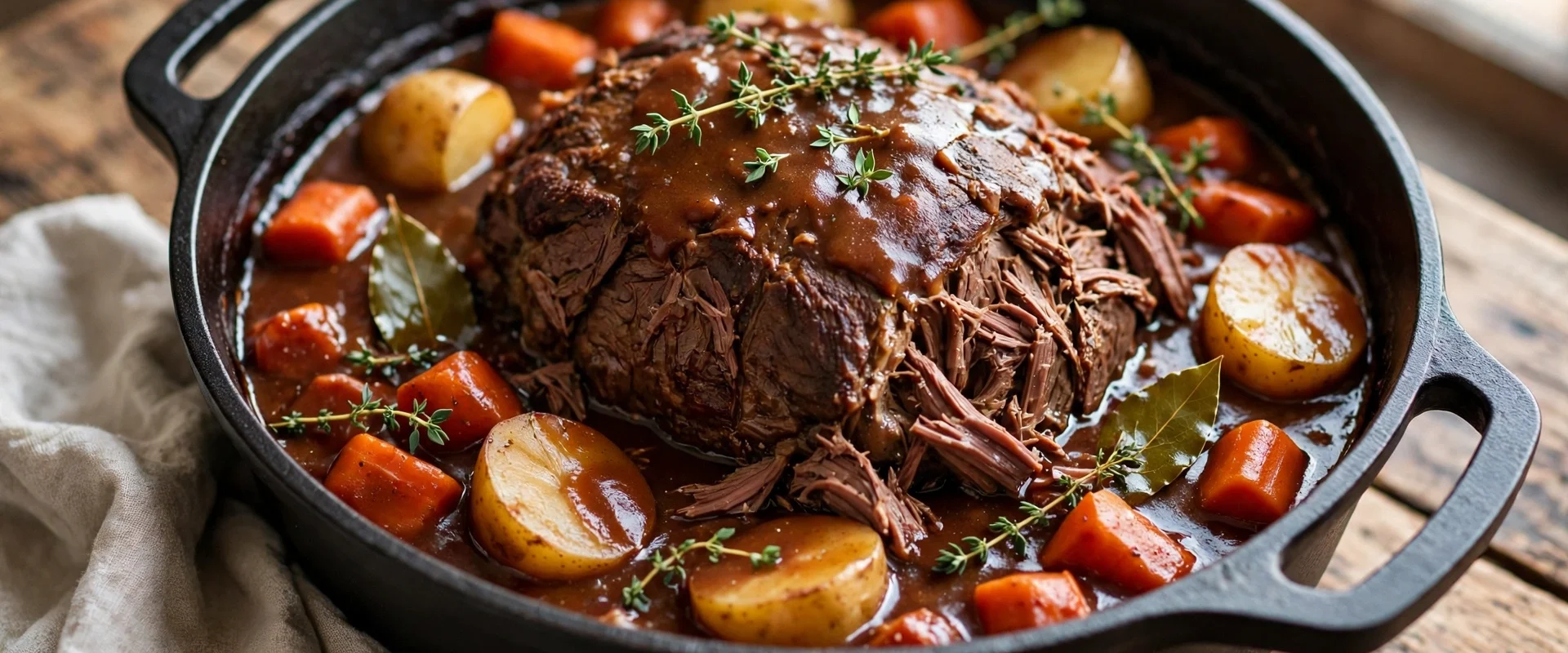
A pot roast recipe turns a tough cut of beef into fall apart, spoon tender meat in one pot. You sear a chuck joint, braise it low and slow in stock with carrots, onions and potatoes, and after about three hours the connective tissue melts into rich gravy. I tested this pot roast recipe four times in my own kitchen to lock down the exact times, temperatures and vegetable order, so yours comes out tender every time.
Key Takeaways
- Use beef chuck, the only cut that turns truly fall apart after a long braise.
- Sear the joint hard on all sides before you add any liquid, because that crust builds the flavour of the whole dish.
- Braise at 160C (325F) for about 3 to 3.5 hours, and add the vegetables in the last hour so they stay intact.
- Let the roast rest in its cooking liquid for 15 minutes before you slice it.
- This pot roast recipe feeds six and the leftovers make superb sandwiches the next day.
Pot Roast Recipe Card
Prep time: 20 minutes | Cook time: 3 hours 15 minutes | Total time: 3 hours 35 minutes | Serves: 6
Ingredients
- 1.5 kg (3.3 lb) beef chuck joint, tied if needed
- 2 teaspoons fine sea salt
- 1 teaspoon black pepper, freshly ground
- 2 tablespoons plain flour
- 2 tablespoons vegetable oil
- 2 onions, thickly sliced
- 4 garlic cloves, crushed
- 2 tablespoons tomato paste
- 250 ml (1 cup) red wine
- 500 ml (2 cups) beef stock
- 2 tablespoons Worcestershire sauce
- 2 bay leaves
- 4 sprigs fresh thyme
- 4 large carrots, cut into thick chunks
- 750 g (1.6 lb) baby potatoes, halved
- 2 tablespoons cornflour mixed with 3 tablespoons cold water, for the gravy
- Fresh parsley, chopped, to serve
Method
- Heat the oven to 160C (325F). Pat the chuck dry with kitchen paper, then season it all over with the salt and pepper and dust it lightly with the flour.
- Heat the oil in a large heavy casserole over a high heat. Sear the joint for 4 to 5 minutes on each side until it has a deep brown crust. Lift it out and set it aside.
- Turn the heat to medium. Cook the onions for 5 minutes until soft and golden, then stir in the garlic and tomato paste and cook for 1 minute more.
- Pour in the red wine and scrape the bottom of the pot to lift up all the browned bits. Let it bubble for 2 minutes.
- Add the beef stock, Worcestershire sauce, bay leaves and thyme. Return the beef to the pot, put the lid on, and slide it into the oven.
- Braise for 2 hours, then turn the beef over. Tuck the carrots and potatoes around the joint, spoon some liquid over them, and replace the lid.
- Braise for 1 hour to 1.5 hours more, until a fork slides into the thickest part with almost no resistance.
- Lift the beef and vegetables onto a warm platter and rest them for 15 minutes. Strain the cooking liquid into a pan, whisk in the cornflour mixture, and simmer for 3 minutes until it thickens into gravy.
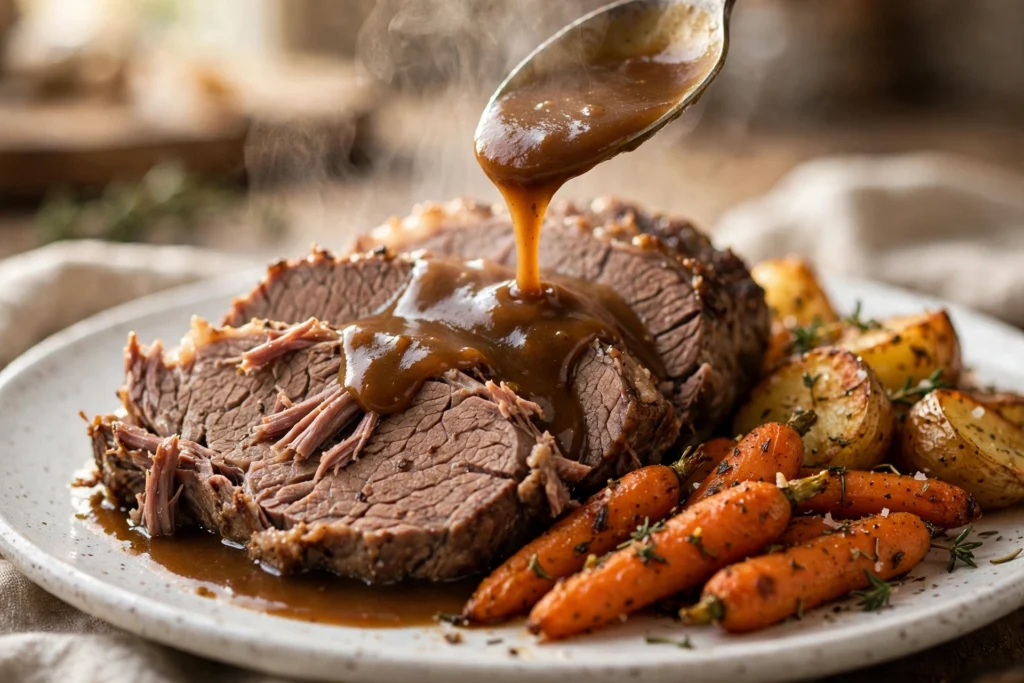
- Slice the beef thickly against the grain, spoon over the gravy, and scatter with parsley.
Nutrition per serving (approximate): 620 calories, 52 g protein, 28 g carbohydrate, 32 g fat.
Why Chuck Is the Only Cut for This Pot Roast Recipe
Chuck comes from the shoulder of the animal, a hard working muscle full of connective tissue and marbling. A long, gentle braise turns that collagen into gelatin, and the gelatin is what makes the meat feel rich and moist instead of dry. Lean cuts such as sirloin or rump dry out in the same pot because they have no collagen to melt and no fat to protect them. I tested this pot roast recipe with a topside joint once, and the result was grey and stringy, so I never repeat that mistake.
Look for a chuck joint with visible marbling and a good fat cap, about 1.5 kg for six people. Ask your butcher for a chuck roast if the label confuses you, and pick the piece with the most even thickness so it cooks evenly. If the joint is loose, tie it with kitchen string at two or three points so it holds its shape and slices neatly.
How to Sear the Beef Properly
The sear is where most of the flavour in this pot roast recipe comes from, so do not rush it. Pat the beef completely dry first, because moisture on the surface steams instead of browning. Use a heavy casserole that holds heat well, and let the oil shimmer before the beef goes in. Sear each side for a full 4 to 5 minutes without moving the joint, and sear the edges too by holding it up with tongs. You want a deep mahogany crust, not a pale tan. If the beef sticks, it is not ready to turn yet. A proper crust releases from the pan on its own when it has formed.
Once you lift the beef out, do not wash the pot. The browned bits stuck to the bottom are pure flavour, and the red wine lifts them straight into the sauce when you deglaze. That step alone makes the difference between a gravy that tastes flat and one that tastes like it cooked all day.
The Braising Liquid: Stock, Wine and Time
The liquid should come about two thirds of the way up the joint, never covering it completely. A fully submerged roast boils instead of braising, and boiled beef turns grey and dull. I use 500 ml of good beef stock and 250 ml of red wine, plus Worcestershire sauce for depth. A dry red such as a Côtes du Rhône works well, and there is no need to spend more than a few pounds on it because the cooking concentrates the flavour.
Keep the oven at 160C (325F) and the lid on. The beef needs 3 to 3.5 hours in total, and the only reliable test is the fork test. Push a fork into the thickest part and twist gently. When the meat yields with almost no resistance, it is done. The FoodSafety.gov safe minimum internal temperatures chart lists 63C (145F) with a 3 minute rest as the safe minimum for beef, but a pot roast needs to go well past that, to around 93C (200F) internally, before the collagen fully melts. Time and the fork test matter more than the number here.
When to Add the Vegetables
Vegetables added at the start turn to mush by the time the beef is tender, so this pot roast recipe adds them in the last hour. Cut the carrots into thick chunks so they survive the braise, and halve baby potatoes rather than using whole large ones, which cook unevenly. Tuck them around the joint, not under it, and spoon some cooking liquid over the tops so they braise in the sauce rather than steaming dry above it. Onions go in at the start because they melt into the sauce and sweeten it, which is exactly what you want. If you like parsnips, add two thickly cut parsnips with the carrots in the last hour.
How to Make the Gravy
Once the beef rests, the cooking liquid becomes your gravy, and it needs almost no work. Strain it through a sieve into a pan to remove the bay leaves, thyme stalks and onion remnants, then skim off any fat sitting on the surface with a spoon. Bring it to a simmer and whisk in the cornflour mixture a little at a time until it coats the back of a spoon. Taste it before you serve it. It may need a pinch of salt or a splash more Worcestershire sauce, and a teaspoon of redcurrant jelly adds a glossy finish if you have it. If the gravy tastes thin, reduce it by simmering it uncovered for 5 to 10 minutes before you thicken it. Never add raw flour straight to the pot, because it clumps.
Slow Cooker and Pressure Cooker Versions
This pot roast recipe adapts well to a slow cooker, and the method stays the same until the braise starts. Sear the beef and build the sauce in a pan first, then transfer everything to the slow cooker and cook on low for 8 hours or on high for 4.5 hours. Add the carrots and potatoes for the last 2 hours on low or the last hour on high. If you want a sliced Sunday joint instead of a fall apart braise, my slow cooker roast beef recipe shows how to hold the meat together for clean slices. A pressure cooker cuts the time to about 1 hour at high pressure with a natural release, but reduce the stock to 350 ml first because less liquid evaporates. I still prefer the oven version for flavour, because the slow evaporation concentrates the sauce in a way a sealed pot cannot match.
Common Pot Roast Mistakes
The most common mistake is impatience. A pot roast that comes out tough is almost always a pot roast that did not cook long enough, not one that cooked too long. Collagen needs sustained gentle heat to convert to gelatin, and that conversion happens in the last hour of cooking. If the fork meets resistance, put the lid back on and give it another 30 minutes before you test again. Rushing the braise by raising the oven temperature only dries the outside while the inside stays tough.
The second mistake is skipping the sear. Without it, the beef tastes boiled and the sauce tastes thin, no matter how good your stock is. The third is carving the joint straight from the pot. A 15 minute rest in the cooking liquid lets the fibres relax and reabsorb moisture, and the beef slices cleanly instead of shredding into dry strands. Slice against the grain in thick slices, and serve the vegetables and gravy alongside.
What to Serve With Pot Roast
The classic plate is the beef with its carrots and potatoes, gravy spooned over, and a green vegetable on the side. Buttered green beans or steamed broccoli add colour and a fresh note against the rich sauce. Crusty bread earns its place at this table too, because it mops up gravy better than any spoon. For wine, pour the same red you cooked with. A Côtes du Rhône or a Malbec stands up to the beef without overpowering it. If you prefer beer, a brown ale or a porter matches the malt notes in the gravy.
Leftovers and Storage
Pot roast improves overnight, which makes it one of the best make ahead dishes in this pot roast recipe collection. Store the sliced beef in its cooking liquid in a sealed container in the fridge for up to 4 days, and reheat it gently in the liquid on the hob so it stays moist. Never reheat it dry in the microwave. Leftover beef makes excellent sandwiches on crusty bread with horseradish, or shred it into the remaining gravy and spoon it over mashed potatoes. It also freezes well for up to 3 months. Freeze the beef and the gravy together in portions, then defrost overnight in the fridge.
Why This Pot Roast Recipe Belongs in Your Winter Rotation
A pot roast is a slow food in a fast world, and that is exactly why it works. One pot, one joint, a handful of vegetables and three hours of patience give you a dinner that feeds six, fills the house with a smell that pulls everyone into the kitchen, and leaves you with leftovers worth looking forward to. TikTok made this dish the most saved recipe of its week for a reason, but the real reason to cook it is simpler than a trend. It is the most forgiving way to cook beef well, and once you have made it, you will make it again. If you enjoy long, slow beef, my braised short beef ribs use the same low and slow discipline with a richer, stickier result, and my guide on how to cook braising steak explains the science behind every cut that rewards patience.
Frequently Asked Questions
What is the best cut of beef for a pot roast recipe?
Beef chuck is the best cut for a pot roast recipe. Its collagen and marbling melt during a long braise and keep the meat moist, while lean cuts dry out. Choose a joint around 1.5 kg with even thickness and a good fat cap.
How long does a pot roast take to cook?
A 1.5 kg pot roast takes 3 to 3.5 hours in a 160C (325F) oven. The fork test is the real judge. When a fork slides into the thickest part with almost no resistance, the roast is done. Add 30 minutes if the fork still meets resistance.
Can I make a pot roast recipe in a slow cooker?
Yes. Sear the beef and build the sauce first, then cook on low for 8 hours or on high for 4.5 hours. Add the carrots and potatoes for the last 2 hours on low or the last hour on high so they stay intact.
Why is my pot roast tough?
A tough pot roast usually needs more time, not less. Collagen converts to gelatin only in the last hour of a long braise, so a roast that resists the fork should go back in the oven for another 30 minutes. Raising the temperature instead only dries the outside.
What vegetables go in a pot roast?
Carrots, potatoes and onions are the classic pot roast vegetables. Add carrots and potatoes in the last hour so they stay intact, and add parsnips with them if you like. Cook green vegetables separately and serve them alongside.
How do I store leftover pot roast?
Store sliced pot roast in its cooking liquid in a sealed container in the fridge for up to 4 days, or freeze it in portions for up to 3 months. Reheat gently in the liquid on the hob so the meat stays moist.