
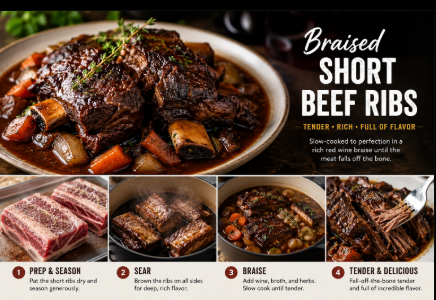
Braised short beef ribs are one of those meals that look impressive but don’t require complicated cooking skills. The key is patience. You sear the beef until it develops a deep brown crust, build a flavorful cooking liquid, and then let the ribs cook slowly until the meat becomes tender enough to pull apart with a fork.
This method works especially well for short ribs because they contain plenty of connective tissue and fat. Slow, moist cooking gives that connective tissue time to soften, which is what creates the rich, tender texture you want.
What Are Short Beef Ribs?
Short ribs come from the beef rib area and contain a good amount of meat, fat, and connective tissue. Unlike tender steaks, they are not naturally suited to fast cooking. A long braise changes their texture by giving the connective tissue enough time to soften.
That is actually what makes them so good for this recipe. Instead of trying to cook the meat quickly, you use gentle heat and moisture to transform a relatively tough cut into something rich and tender. For braising, look for meaty bone-in short ribs. The bones add to the classic presentation, but the amount of meat around the bone matters more than simply buying the largest-looking pieces.
Which Short Ribs Are Best for Braising?
If you’re standing at the butcher counter, look for English-cut short ribs with thick pieces of meat attached to the bone. These are a good choice for a long braise because they have enough thickness to stay moist while the connective tissue breaks down. Flanken-style ribs are cut differently and are much thinner. They are commonly used for quicker cooking methods, so they aren’t the first choice for the traditional oven-braised version.
Ingredients for Braised Short Beef Ribs
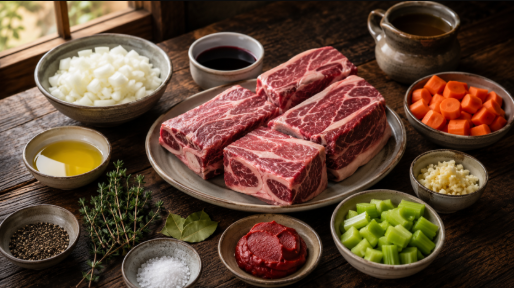
You don’t need a huge list of ingredients. The basic combination is simple, but each ingredient has a job.
| Ingredient | Amount |
|---|---|
| Bone-in beef short ribs | 4–5 lb |
| Olive oil | 2 tbsp |
| Kosher salt | To taste |
| Black pepper | To taste |
| Yellow onion | 1 large |
| Carrots | 2 |
| Celery | 2 ribs |
| Garlic | 4 cloves |
| Tomato paste | 2 tbsp |
| Dry red wine | 2 cups |
| Beef stock | 2–3 cups |
| Fresh thyme | 4–5 sprigs |
| Bay leaves | 2 |
The red wine brings acidity and depth to the sauce, while beef stock provides a savory base. Tomato paste adds concentrated flavor and helps give the sauce a deeper color. Onion, carrots, garlic, thyme, and bay leaves round everything out without overpowering the beef.
How to Make Braised Short Beef Ribs
1. Dry and Season the Ribs
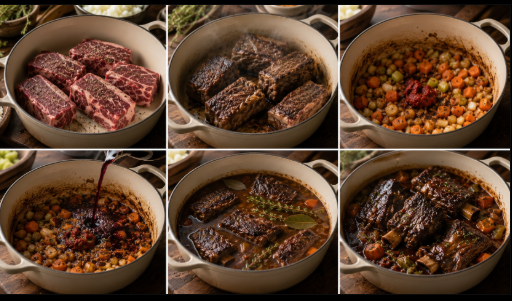
Pat the braised short beef ribs thoroughly dry with paper towels. This small step matters because wet meat tends to steam instead of brown properly. Season all sides generously with salt and black pepper. You can do this immediately before cooking or season the ribs ahead of time and keep them refrigerated.
2. Brown the Beef
Heat a large Dutch oven over medium-high heat and add the oil. When the oil is hot, place the ribs into the pot without overcrowding them. Brown the ribs on several sides until they develop a deep golden-brown crust. Work in batches if necessary. Don’t rush this part. The browned surface isn’t just for appearance. It gives the finished braising liquid a deeper roasted flavor. Current short-rib recipes consistently begin with browning the meat before adding the braising liquid.
3. Cook the Vegetables
Lower the heat to medium and add the chopped onion, carrots, and celery to the same pot. Cook them until they begin to soften, then add the garlic and tomato paste. Stir the tomato paste into the vegetables and let it cook for a couple of minutes. As the vegetables cook, scrape the browned bits from the bottom of the pot. Those little pieces contain a lot of flavor, so you want them to become part of your sauce rather than remain stuck to the pan.
4. Add the Wine and Stock
Pour the red wine into the pot and scrape the bottom again. Let it simmer for several minutes. Add enough beef stock to create a good braising environment. You don’t need to completely drown the ribs. The liquid should generally come partway up the meat.
Add the thyme and bay leaves, then return the ribs to the pot.
5. Slowly Braise the Ribs
Bring the liquid to a gentle simmer. Cover the Dutch oven and place it in a 325°F oven. Cook until the ribs are very tender. For thick bone-in ribs, expect roughly 3 to 4 hours, although the exact time can vary. Some established recipes use around three hours, while other preparations take longer.
The important thing is not to treat three hours as a magic number. Check the meat toward the end of cooking. If a fork or thin skewer still meets significant resistance, cover the pot and continue cooking.
How Do You Know When Short Ribs Are Done?
This is one of the most important parts of making braised short beef ribs. Don’t judge them only by appearance. The ribs can look beautifully browned while still being too firm to eat comfortably.
Instead, insert a fork or skewer into the thickest part of the meat. It should slide in easily with very little resistance. The meat should also look relaxed around the bone and should separate easily when pressed with a fork.
If the ribs are still tough after the expected cooking time, don’t turn up the heat immediately. They usually need more time. That’s the strange thing about braising: short ribs can be tough for hours and then suddenly become tender after enough connective tissue has broken down.
Why Are My Braised Short Beef Ribs Still Tough?
There are three common reasons.
First, braised short beef ribs may simply need more time. This is the most common explanation. A thick piece of beef cannot always be predicted by a fixed cooking time.
Second, the cooking temperature may be too low. Braising should be gentle, but the liquid still needs to maintain a simmer. If the pot never becomes hot enough, the cooking process will take much longer.
Third, the ribs may have been cut differently from the recipe. A very thick rib and a smaller rib won’t necessarily finish at the same time.
The solution is usually simple: keep the pot covered and continue cooking until the meat passes the tenderness test.
How to Make the Sauce Better
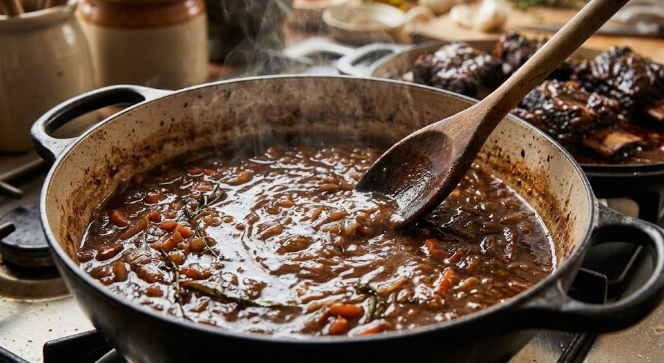
Once the ribs are tender, remove them carefully and place them on a plate. Cover them loosely while you finish the sauce.
Taste the braising liquid before doing anything else. If it tastes good but looks too thin, simmer it uncovered until it reduces and becomes more concentrated. Several braising recipes use this final reduction step to create a thicker sauce that coats the meat rather than running thinly across the plate. If the sauce contains too much fat, skim it from the surface with a spoon. For an especially clean sauce, strain out the vegetables and herbs before reducing it. If you prefer a rustic result, leave the softened vegetables in the sauce.
Can You Make Braise d Short Beef Ribs Ahead?
Yes, and this is one of the best things about this dish.
You can cook the ribs a day ahead, let them cool in their braising liquid, cover them, and refrigerate them. When chilled, the excess fat becomes much easier to remove from the surface. The next day, gently reheat the ribs in their sauce. Several established short-rib recipes recommend making the dish ahead because the meat can be refrigerated and reheated without losing the character of the braise. This also makes the recipe useful for dinner parties. Instead of trying to cook everything at the last minute, you can prepare the ribs earlier and concentrate on your sides and presentation when guests arrive.
What to Serve With Braised Short Beef Ribs
Short ribs are rich, so the best side dishes are usually simple.
Mashed potatoes are a classic choice because they soak up the sauce. Creamy polenta works in much the same way. If you want more contrast, serve the ribs with roasted carrots, green beans, sautéed greens, or a crisp salad. Crusty bread is another good option. A thick slice of bread gives you an easy way to pick up the remaining sauce without adding another complicated side dish.
Tips for Better Braised Short Beef Ribs
- Dry the ribs before searing. Better browning starts with a dry surface.
- Don’t overcrowd the pot. Cook in batches if needed.
- Brown the beef deeply. Pale ribs won’t give the same depth of flavor.
- Don’t completely drown the meat. Use enough liquid for a proper braise without turning the dish into soup.
- Keep the heat gentle. A slow braise is more useful than an aggressive boil.
- Judge doneness by texture. The fork test is more useful than blindly following the timer.
- Reduce the sauce at the end. This gives you a more concentrated finish.
- Make it ahead when possible. Chilling makes excess fat easier to remove.
The Bottom Line
Great braised short beef ribs don’t depend on complicated ingredients or advanced cooking skills. They depend on a few simple decisions: choose meaty ribs, brown them properly, build a flavorful braising liquid, and give the beef enough time to become tender.
The biggest mistake is stopping too early.
If your ribs have been cooking for three hours and still feel firm, don’t assume the recipe failed. Give them more time. Once the fork slides easily into the meat and the sauce has developed a rich, concentrated flavor, you’ll know the wait was worthwhile. Serve the ribs with mashed potatoes, polenta, or another simple side that can catch the sauce, and spoon plenty of that reduced braising liquid over the top.
FAQs
How long does it take to braise short beef ribs?
Most oven-braised short ribs take around 3 to 4 hours, but the exact time depends on the thickness of the ribs and the cooking temperature. Start checking the texture toward the end rather than relying only on the clock.
What temperature is best for braising short ribs?
A oven around 325°F is commonly used for braising short ribs. The goal is gentle, steady cooking rather than a high-temperature roast.
Should short ribs be completely covered with liquid?
No. The ribs do not normally need to be completely submerged. A partial covering of liquid inside a covered Dutch oven provides the moist environment needed for braising while allowing the exposed meat to brown and concentrate in flavor.
Why are my short ribs chewy instead of tender?
They most likely need more cooking time. Short ribs contain connective tissue that needs prolonged cooking to soften. Keep them covered and continue braising until a fork slides easily into the meat.
Can I braise short ribs without red wine?
Yes. You can replace red wine with additional beef stock. The flavor won’t be identical because wine adds acidity and complexity, but you can still make tender, flavorful braised short ribs.