
Table of Contents
How to Cook a Denver Steak: Tender, Juicy Every Time
Learning how to cook a Denver steak the right way turns one of the most underrated beef cuts into a steakhouse quality dinner at home. I tested pan searing, grilling, and reverse searing on thick cut Denver steaks so I can give you the exact times, temperatures, and resting method that deliver a juicy pink interior and a deep brown crust every single time.
Key Takeaways
- The Denver steak comes from the chuck, but it eats like a premium cut when you learn how to cook a Denver steak to medium rare and slice it against the grain.
- High heat plus a dry brine is the most reliable method for a crisp crust and a juicy interior.
- Pull the steak at 125 to 130F for medium rare, then rest it 8 to 10 minutes.
- Overcooking past medium is the number one mistake that makes a Denver steak tough.
What Is a Denver Steak?
A Denver steak is cut from the chuck primal, specifically from the serratus ventralis muscle under the blade. Beef researchers developed it in the early 2000s as part of a project to find underused chuck muscles that stay tender. Because it comes from a less worked area of the shoulder, it carries good marbling and rich beefy flavor, even though its chuck origin makes most shoppers walk right past it.
You will usually find it as a thick rectangular steak, often 1 to 1.5 inches thick. That thickness is your friend when you learn how to cook a Denver steak, because it gives you a wider margin for error than a thin sirloin.
How to Cook a Denver Steak in a Cast Iron Skillet
When I test how to cook a Denver steak in my own kitchen, the cast iron pan sear wins for reliability. You get a deep crust, total control, and no guesswork. Here is the exact process I follow.
Step 1: Dry Brine for at Least 40 Minutes
Salt the steak generously on all sides and set it on a rack over a plate, uncovered, in the fridge. A 40 minute dry brine draws moisture to the surface and then lets it reabsorb, which seasons the meat all the way through. Dry brining overnight gives an even better crust. Pat the steak completely dry with paper towels before it hits the pan.
Step 2: Bring It to Room Temperature
Let the salted steak sit on the counter for 30 to 45 minutes before cooking. A steak that starts closer to room temperature cooks more evenly, so you get less of a gray band under the crust. Do not skip this step if you want to master how to cook a Denver steak.
Step 3: Sear Hot and Fast
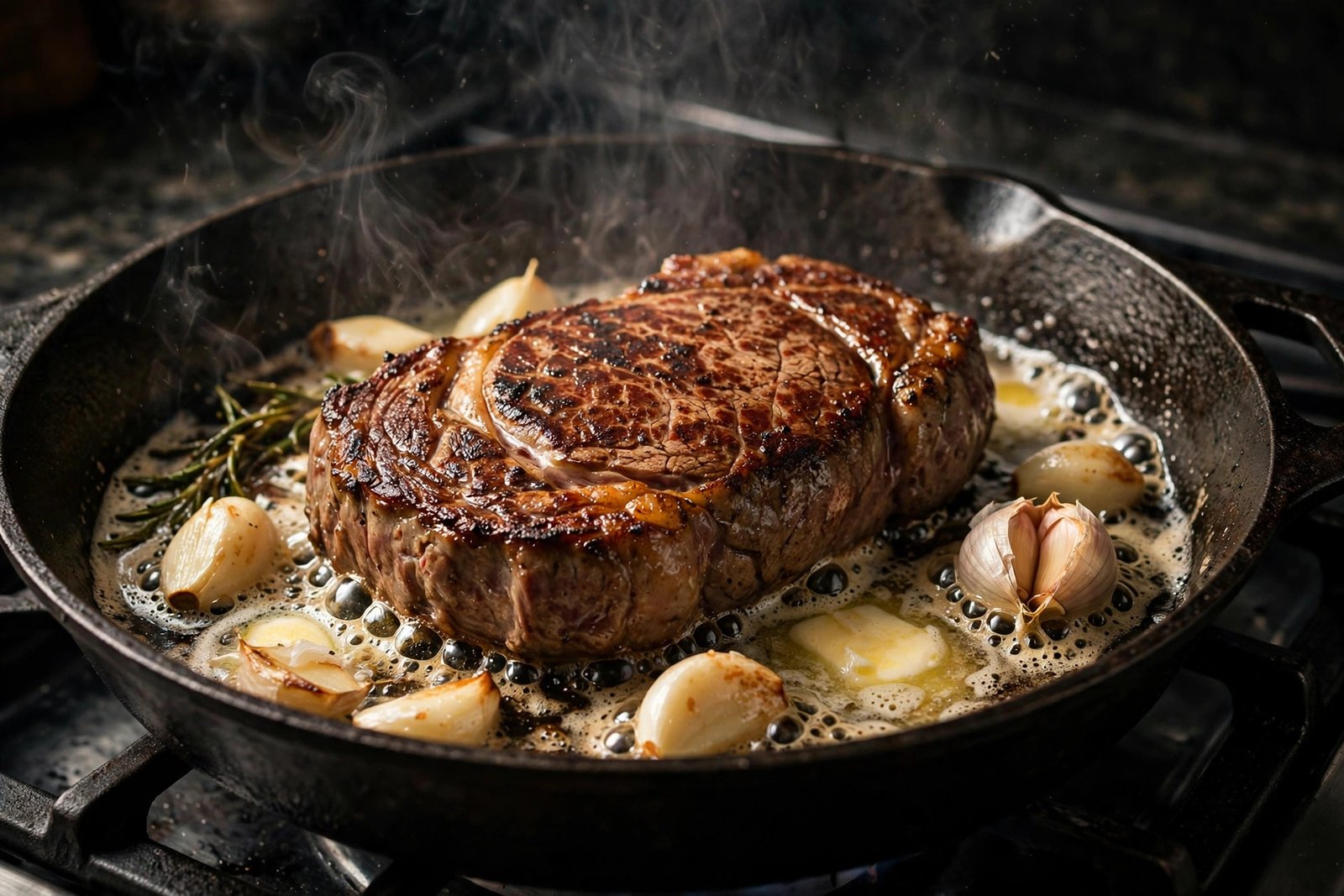
Heat a heavy cast iron skillet over high heat until it just starts to smoke, then add a thin layer of avocado oil. Lay the steak in the pan and sear 3 to 4 minutes per side without moving it. A 1.25 inch Denver steak needs about 3 minutes per side for medium rare, plus 1 minute on each edge for an even crust.
Step 4: Baste With Butter
For the last 2 minutes, add 2 tablespoons of butter, 2 crushed garlic cloves, and a sprig of thyme. Tilt the pan and spoon the foaming butter over the steak again and again. This is the step that turns a good Denver steak into a great one.
Step 5: Rest, Then Slice Against the Grain
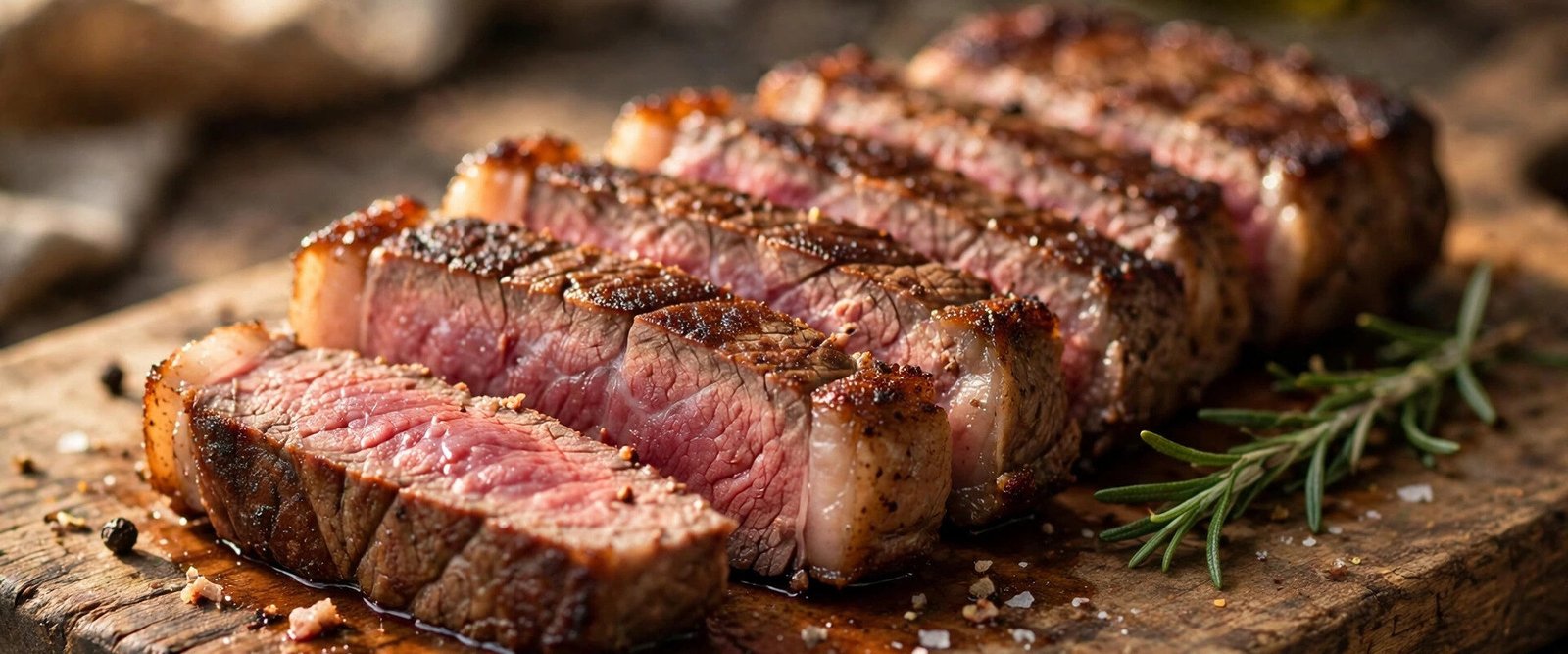
Move the steak to a cutting board and rest it 8 to 10 minutes. The internal temperature climbs 5 to 10 degrees as it rests, so pull at 125 to 130F and let carryover cooking finish the job. Slice thinly against the grain. The grain on a Denver steak is easy to spot, and cutting across it shortens the fibers so every bite stays tender.
Denver Steak Temperature and Doneness Guide
An instant read thermometer removes all guesswork from how to cook a Denver steak. These are the pull temperatures I use, meaning the reading when you take the steak off the heat.
| Doneness | Pull Temperature | Final Temperature After Rest |
|---|---|---|
| Rare | 115 to 120F | 120 to 125F |
| Medium rare | 125 to 130F | 130 to 135F |
| Medium | 135 to 140F | 140 to 145F |
| Medium well | 145 to 150F | 150 to 155F |
| Well done | 155F and up | 160F and up |
I aim for medium rare almost every time, because this cut shines at a pink center with rendered fat. My guide to medium rare steak pull temp explains the carryover cooking science behind these numbers.
How to Cook a Denver Steak on the Grill
Grilling suits this cut because the marbling picks up smoke flavor fast. A two zone fire is the most forgiving grill setup when you are learning how to cook a Denver steak. Sear over direct high heat for 2 to 3 minutes per side to build the crust, then move the steak to the cooler indirect side, close the lid, and finish to your target temperature. For a 1.25 inch steak, the indirect stage usually takes 5 to 8 minutes for medium rare. My steak grilling times chart breaks down times by cut and thickness if you want more precision. Finish with the same 8 to 10 minute rest you would use after a pan sear.
Can You Reverse Sear a Denver Steak?
Yes, and it is my favorite method for steaks over 1.5 inches thick. Cook the salted steak in a 250F oven until it reaches 115F internally, about 35 to 45 minutes, then sear 60 to 90 seconds per side in a screaming hot pan. You get edge to edge pinkness with almost no gray band. It takes longer, but once you master it, reverse searing becomes the most impressive way to show how to cook a Denver steak to guests.
Denver Steak Recipe Card
Ingredients
- 1 Denver steak, 1 to 1.5 inches thick (12 to 16 ounces)
- 1 teaspoon kosher salt per side
- 1 teaspoon cracked black pepper
- 1 tablespoon avocado oil
- 2 tablespoons unsalted butter
- 2 garlic cloves, lightly crushed
- 1 sprig fresh thyme or rosemary
Method
- Dry brine the steak with salt at least 40 minutes ahead, uncovered in the fridge.
- Bring to room temperature 30 to 45 minutes before cooking. Pat very dry.
- Season with black pepper. Heat a cast iron skillet over high heat until smoking.
- Add the oil, lay in the steak, and sear 3 to 4 minutes per side without moving it.
- Add butter, garlic, and thyme for the final 2 minutes and baste constantly.
- Pull at 125 to 130F for medium rare. Rest 8 to 10 minutes.
- Slice against the grain and serve immediately.
Mistakes That Ruin a Denver Steak
The biggest error is cooking past medium. This cut stays juicy at medium rare, but at medium well the same fat tightens up and the steak turns chewy. I saw this pattern clearly while testing how to cook a Denver steak five different ways. Second, skipping the rest. Cut in early and the juices flood the board instead of staying in the meat. Third, slicing with the grain. Long muscle fibers make even a perfectly cooked Denver steak feel tough if you slice the wrong way.
Fourth, under seasoning. A thick cut needs assertive salt, so salt more aggressively than your instincts tell you. If doneness temperatures still confuse you, my complete steak doneness guide walks through every level with exact temps.
Storage and Food Safety
Leftover Denver steak keeps in the fridge for 3 to 4 days in an airtight container. To reheat without ruining the texture, warm it gently in a 275F oven on a rack until it reaches about 110F internally, then give it a quick 45 second sear per side in a hot pan. For reference, the FoodSafety.gov safe minimum internal temperature chart lists 145F with a 3 minute rest for whole beef steaks, even though most steak lovers, myself included, pull earlier for flavor.
Frequently Asked Questions
Is a Denver steak tender?
Yes, for a chuck cut it is tender, though not quite as soft as a filet. Its marbling and fine grain taste more like a premium steak when you cook it to medium rare and slice it against the grain. Getting how to cook a Denver steak right matters more than with pricier cuts.
What is the best way to cook a Denver steak?
A hot pan sear in cast iron is the best everyday method: dry brine, sear 3 to 4 minutes per side, baste with butter, rest, and slice against the grain. Grilling with a two zone fire comes a close second, and reverse searing wins for thick steaks when you have extra time.
How long does it take to cook a Denver steak?
A 1.25 inch Denver steak takes about 8 to 10 minutes total in a hot skillet for medium rare: 3 to 4 minutes per side plus butter basting time. Confirm with a thermometer rather than the clock, because pan heat and thickness vary.
Is Denver steak good for grilling?
Yes. The marbling renders well over direct heat and picks up smoke flavor, which makes grilling one of the easiest ways to learn how to cook a Denver steak. Use a two zone setup, sear over high heat, then finish on the cooler side to your target temperature. It is one of the best value cuts for the grill.
What temperature should a Denver steak be?
Pull it at 125 to 130F for medium rare, which is the sweet spot for this cut. Medium is 135 to 140F at pull. Going past medium makes a Denver steak noticeably tougher.
Can you cook a Denver steak from frozen?
You can, but I do not recommend it. Denver steak benefits from dry brining and even cooking, and both need a thawed steak. Thaw it overnight in the fridge for the best result.