
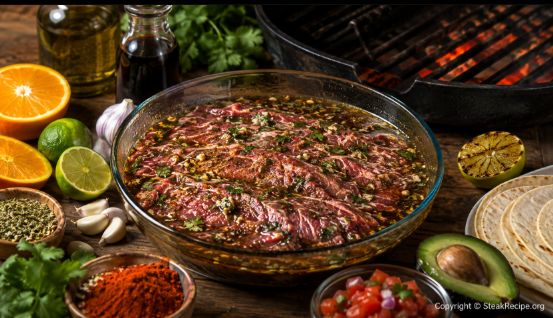
Carne Asada Marinade
Walk into ten different Mexican restaurants, order carne asada, and you’ll quickly realize something surprising. The steak never tastes the same. One version is deeply smoky with a bold garlic finish, another leans heavily on bright citrus, while another lets the natural flavor of beef remain the star. That’s because there isn’t a single authentic carne asada marinade. Every family, butcher shop, taquería, and grill master has their own formula, often passed down through generations and adjusted to match local ingredients and personal taste
Why One Carne Asada Marinade Tastes Better Than Another
If you’ve compared recipes from popular cooking websites, you’ve probably noticed they all look remarkably similar. Fresh citrus, garlic, cilantro, soy sauce, cumin, oregano, oil, and chili powder appear again and again. Yet the finished steaks can taste dramatically different. The secret isn’t simply which ingredients are used; it’s how they’re balanced and how they interact during marinating and grilling.
Think of a marinade as an orchestra rather than a shopping list. Orange juice provides gentle sweetness and encourages beautiful browning over high heat. Lime juice contributes brightness and a clean acidity that cuts through the richness of beef. Garlic builds a savory backbone, while cilantro adds a fresh herbal note that survives surprisingly well after grilling. Oil coats the meat, helping fat-soluble flavors cling to the surface while reducing moisture loss during cooking. Soy sauce or Worcestershire sauce supplies umami, making the beef taste richer without requiring excessive salt.
The Flavor Blueprint Behind Authentic Carne Asada
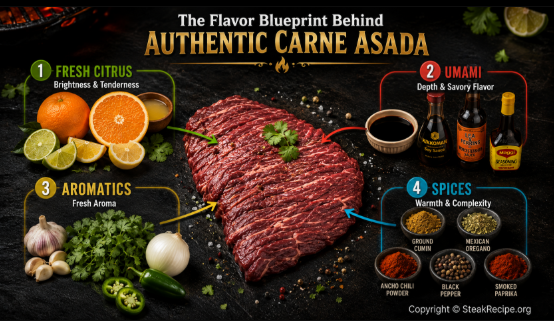
Great carne asada marinade isn’t built by chance. Every ingredient belongs to one of four essential flavor groups, and understanding these groups makes it much easier to adjust recipes confidently instead of following them blindly.
The first group is acidity, usually supplied by fresh orange and lime juice. Citrus doesn’t magically tenderize an entire steak, but it gently changes the outer layer while adding brightness that keeps rich beef from feeling heavy. Orange juice contributes mild sweetness that caramelizes beautifully over hot coals, while lime brings the sharp, unmistakable flavor most people associate with traditional carne asada. Some recipes add lemon juice, but it’s usually there to increase brightness rather than replace lime entirely.
Citrus Isn’t Just About Tenderizing the Meat
Many recipes describe citrus as if its only job is to make steak more tender, but that’s only a small part of the story. Fresh citrus dramatically changes how the finished carne asada tastes, browns, and even smells while cooking. Understanding this makes it much easier to build a marinade that feels balanced instead of overly acidic.
Orange juice is often the unsung hero of authentic carne asada. It provides natural sugars that encourage caramelization, helping the steak develop those dark, flavorful grill marks everyone loves. Unlike refined sugar, orange juice contributes sweetness without making the meat taste sugary. It also softens the sharpness of lime, creating a smoother overall flavor profile. This is why so many respected recipes rely on both juices instead of choosing one or the other.
The Ingredients That Build Layers of Flavor
Every great carne asada marinade starts with simple ingredients, but each one has a specific job. When they work together, the steak develops a rich, balanced flavor instead of tasting like one overpowering ingredient. The goal is not to make the marinade complicated. It is to make every ingredient count.
Fresh garlic is one of the first ingredients to add. It gives the beef a deep, savory flavor that becomes slightly sweet as it cooks over high heat. Freshly minced garlic works much better than garlic powder because it releases natural oils into the marinade. Four to six cloves are enough for most recipes without becoming too strong.
Soy Sauce, Worcestershire, or Maggi?
Many recipes include one of these ingredients, but they are not identical. Each creates a different style of carne asada marinade. Soy sauce is the most common choice. It adds salt and umami at the same time. The result is a rich beef flavor without needing much extra seasoning. A quarter cup is usually enough for two to three pounds of steak.
Worcestershire sauce creates a deeper flavor. It has vinegar, spices, and anchovies, which give the marinade more complexity. It works especially well when grilling over charcoal because the smoky flavor pairs nicely with its richness. Some recipes combine soy sauce with Worcestershire. Others use only one. There is no single correct answer. The best choice depends on the flavor you want.
| Ingredient | Flavor Profile | Best For |
|---|---|---|
| Soy Sauce | Salty and rich | Classic everyday marinade |
| Worcestershire | Deep and tangy | Smoky grilled steak |
| Maggi | Strong savory flavor | Bold restaurant-style taste |
A great marinade cannot fix the wrong cut of beef. Choosing the right steak is just as important as mixing the ingredients. Skirt steak is the traditional favorite. It has long muscle fibers and plenty of beef flavor. The thin shape allows the marinade to coat every part of the meat. It also cooks quickly over high heat, making it perfect for grilling.
Flank steak is another excellent option. It is slightly thicker than skirt steak and has a lean texture. It benefits from a few extra hours in the marinade because the flavors need more time to reach the center. Flat iron steak is becoming more popular. It has excellent marbling, stays juicy, and grills beautifully. Although it is not the traditional choice, it produces impressive results.
If these cuts are unavailable, sirloin flap meat can also work well. It has good flavor and responds nicely to citrus-based marinades.
| Cut | Flavor | Tenderness | Best Marinating Time |
|---|---|---|---|
| Skirt Steak | Rich | Medium | 2–6 hours |
| Flank Steak | Beefy | Medium | 4–8 hours |
| Flat Iron | Rich | High | 2–4 hours |
| Sirloin Flap | Bold | Medium | 3–6 hours |
The cut you choose also affects how you slice the finished steak. Thin slices cut against the grain make every bite more tender, regardless of which cut you buy.
Building a Carne Asada Marinade Step by Step
Mixing everything into a bowl takes only a few minutes, but the order matters more than many people realize. Start with the liquids. Add the orange juice, lime juice, oil, and soy sauce first. Stir them together until they form a smooth base. This helps distribute the flavors evenly.
Next, add the garlic and chopped cilantro. These fresh ingredients release their oils into the liquid, creating a stronger aroma before the steak is added. Now mix in the spices. Add cumin, oregano, black pepper, and chili powder one at a time. Stir well after each addition. This prevents the spices from clumping together.
Finally, taste the marinade before adding the meat. It should taste bright, slightly salty, and balanced. If the citrus feels too sharp, add a little more oil. If it tastes flat, another pinch of salt or cumin usually fixes it. Place the steak in a shallow dish or a resealable bag. Pour the marinade over the meat and turn it several times so every surface is coated. Remove as much air as possible if using a bag. This keeps the marinade in close contact with the beef.
The Complete Carne Asada Marinade Recipe
Now that you understand how each ingredient works, it’s time to put everything together. This recipe creates a balanced marinade with bright citrus, savory depth, fresh herbs, and warm spices. It works well with both skirt steak and flank steak and is easy enough for a weeknight dinner or a weekend cookout.
Ingredients
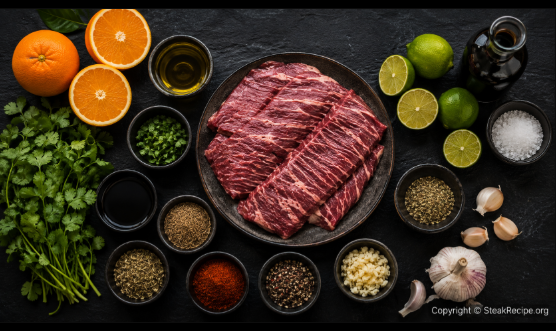
| Ingredient | Amount |
|---|---|
| Skirt steak or flank steak | 2–3 pounds |
| Fresh orange juice | ¾ cup |
| Fresh lime juice | ⅓ cup |
| Soy sauce | ¼ cup |
| Olive oil or avocado oil | ¼ cup |
| Garlic, minced | 5 cloves |
| Fresh cilantro, chopped | ½ cup |
| Ground cumin | 2 teaspoons |
| Mexican oregano | 1 teaspoon |
| Chili powder or ancho chili powder | 1 teaspoon |
| Black pepper | 1 teaspoon |
| Salt | ½ teaspoon (adjust if needed) |
Instructions
Whisk the orange juice, lime juice, soy sauce, and oil until combined. Add the garlic, cilantro, and spices. Stir well until everything is evenly mixed. Place the steak in a large zip-top bag or a shallow glass dish. Pour the marinade over the meat, making sure every side is coated. Seal the bag or cover the dish, then refrigerate.
Marinate for at least 2 hours. For deeper flavor, leave it for 4 to 6 hours. If you’re using a thicker flank steak, overnight marinating also works well. Avoid leaving the meat in the marinade for more than 24 hours, as the citrus can change the texture of the surface. Before grilling, remove the steak from the marinade and let any excess liquid drip off. Pat the surface lightly with paper towels. This helps the meat develop a better crust instead of steaming on the grill.
Marinating Time Changes Everything
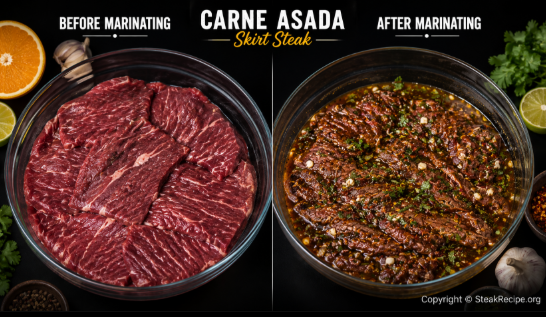
One of the biggest mistakes people make is thinking that longer always means better. That’s not how a citrus-based carne asada marinade works. A short marinade of about one hour gives the steak a fresh citrus flavor, but the seasoning stays mostly on the surface. This works if you’re in a hurry, though the flavor won’t be as deep.
After two to four hours, the garlic, herbs, and spices begin to blend into the outer layers of the meat. This is the sweet spot for skirt steak because it absorbs flavor quickly without becoming too soft. Flank steak usually benefits from four to eight hours. Since it’s slightly thicker, it needs more time for the flavors to settle into the meat.
Marinating Time Guide
| Time | What Happens |
|---|---|
| 30–60 minutes | Light surface flavor |
| 2–4 hours | Balanced flavor for skirt steak |
| 4–8 hours | Excellent for flank steak |
| Overnight | Rich flavor with balanced citrus |
| Over 24 hours | Surface may become too soft |
The goal is not to keep the steak in the marinade as long as possible. The goal is to remove it when the flavor has fully developed while the texture remains firm and juicy.
Grilling for Maximum Flavor
A great marinade deserves great grilling. Even the best recipe cannot produce restaurant-quality carne asada if the steak is cooked over low heat. Heat the grill until it is very hot before placing the meat on the grates. High heat creates the dark crust that gives carne asada its signature flavor. It also locks in the juices before they have time to escape.
Place the steak directly over the hottest part of the grill. Resist the urge to move it constantly. Let one side cook until it naturally releases from the grates, then flip it once. For most skirt steaks, this takes about 3 to 4 minutes per side. Flank steak usually needs an extra minute because it is thicker.
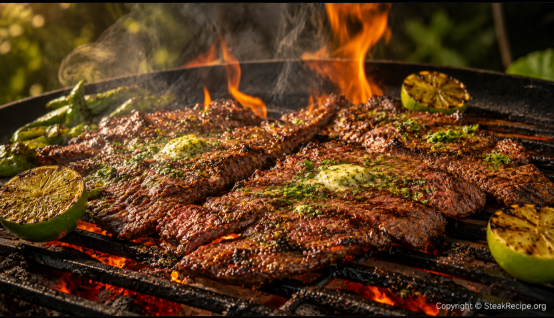
Use a meat thermometer if possible.
| Doneness | Internal Temperature |
|---|---|
| Rare | 120–125°F |
| Medium Rare | 130–135°F |
| Medium | 140–145°F |
Medium rare is the preferred choice for most carne asada because it keeps the meat juicy while allowing the smoky crust to shine. Once the steak comes off the grill, let it rest for 5 to 10 minutes. Resting allows the juices to spread back through the meat instead of running onto the cutting board.
Slice It Like a Taquería
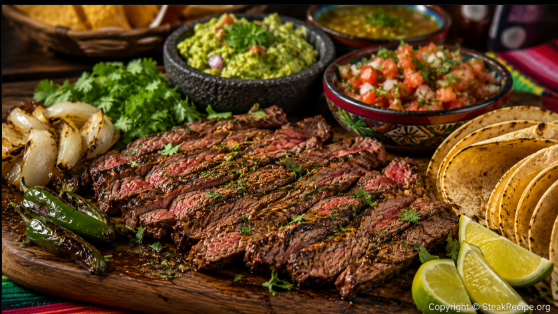
Many home cooks prepare an excellent marinade and grill the steak perfectly, only to lose tenderness with the final step. Always look at the direction of the muscle fibers before slicing. These long fibers are called the grain. Cutting against the grain shortens those fibers, making every bite easier to chew. Use a sharp knife and slice the steak into thin strips. Thick slices can feel chewy, especially with skirt and flank steak.
Professional taquerías often slice the meat at a slight angle instead of cutting straight down. This creates wider slices with a more tender texture. If you’re serving tacos, chop the sliced steak into bite-sized pieces after cutting against the grain. This makes the meat easier to eat and spreads the flavorful crust throughout every taco.
Creative Ways to Serve Carne Asada
One of the best things about a great carne asada marinade is its versatility. Once the steak is grilled and sliced, you can use it in many different meals without changing the recipe. The same batch of carne asada can become dinner one night and lunch the next day. That flexibility is one reason it remains a favorite for family gatherings and meal prep.
Warm corn tortillas are the classic choice. Add sliced carne asada, chopped onion, fresh cilantro, and a squeeze of lime for simple street-style tacos. A spoonful of salsa verde or roasted tomato salsa adds freshness without covering the smoky flavor of the beef. If you enjoy spicy food, thin slices of fresh jalapeño or pickled peppers make an excellent finishing touch.
Small Changes That Create Completely Different Marinades
One reason carne asada marinade never gets boring is that small adjustments can completely change the final flavor. You don’t need an entirely new recipe. A few thoughtful substitutions can create a style that suits your taste or matches the meal you’re planning.
For a smoky flavor, replace regular chili powder with ancho or guajillo chile powder. These dried peppers add depth without overwhelming heat. They pair especially well with charcoal grilling because their earthy flavor complements the natural smoke.
Conclusion
A memorable carne asada marinade is built on balance, not complexity. Fresh citrus brightens the beef, soy sauce adds savory depth, garlic and cilantro provide freshness, and warm spices tie everything together. Each ingredient has a purpose, and understanding that purpose helps you create better results than simply following a recipe line by line.
The quality of the steak matters just as much as the marinade. Skirt steak remains the traditional favorite because it absorbs flavor quickly and develops an excellent crust over high heat. Flank steak offers another reliable choice, while flat iron delivers outstanding tenderness for those looking to try something different.
Frequently Asked Questions
1. What is the best cut of beef for carne asada marinade?
Skirt steak is the traditional choice because it has excellent beef flavor and absorbs the marinade quickly. Flank steak is another great option if you prefer a slightly thicker cut.
2. Can I marinate carne asada overnight?
Yes. An overnight marinade works well when the citrus is balanced. Avoid leaving the steak in the marinade for more than 24 hours because the acids can soften the surface too much.
3. Can I cook carne asada without a grill?
Absolutely. A cast-iron skillet or grill pan can produce a flavorful crust. Cook over high heat and avoid overcrowding the pan.
4. Should I rinse the marinade off before grilling?
No. Simply remove the steak from the marinade and let the excess drip off. Lightly pat the surface dry with paper towels to help create a better sear.
5. Can I freeze steak in the marinade?
Yes. Place the steak and marinade together in a freezer-safe bag. Freeze for up to three months. Thaw it overnight in the refrigerator before cooking so the meat marinates as it defrosts.