
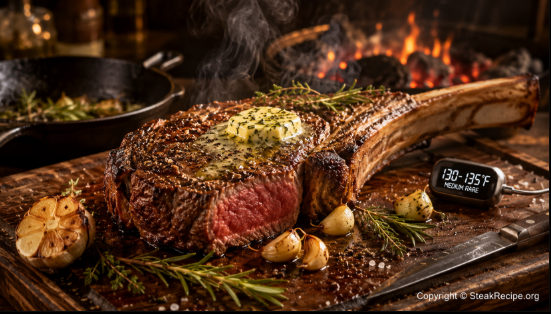
A cowboy cut steak is one of the most impressive steaks you can cook. Its thick cut, rich marbling, and long bone create a steak that looks premium and delivers exceptional flavor. Whether you’re grilling outdoors or using a cast-iron skillet at home, this cut offers a steakhouse-quality experience.
Unlike many other bone-in steaks, the cowboy cut combines bold beef flavor with a juicy texture that stays tender when cooked correctly. Its dramatic presentation also makes it a favorite for family dinners, backyard barbecues, and special occasions. If you’re wondering whether it’s worth buying, understanding what makes this steak unique is the first step.
What Is a Cowboy Cut Steak?
A cowboy cut steak is a thick, bone-in ribeye steak with a short section of the rib bone left attached. The bone is usually cleaned, or “frenched,” giving the steak its signature appearance. Most cowboy steaks are cut between 2 and 3 inches thick, making them much larger than a standard ribeye.
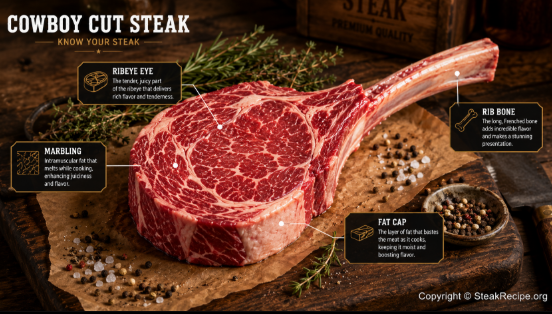
This steak comes from the rib primal of the cow, an area known for producing tender, well-marbled beef. Because of the generous fat marbling, every bite is rich, juicy, and packed with flavor. While the bone adds visual appeal, the marbling is what truly makes this steak stand out.
Where Does Cowboy Cut Steak Come From?
The cowboy cut is taken from the same section as a traditional ribeye. This part of the animal experiences very little movement, allowing the muscle to remain naturally tender. The result is a steak that cooks evenly while maintaining excellent texture.
The difference between a cowboy cut and a regular ribeye is mainly in the presentation. A standard ribeye is usually boneless or has little bone attached, while the cowboy cut keeps a portion of the rib bone intact. This creates a thicker, more eye-catching steak that’s often served in high-end steakhouses.
Why Is It Called a Cowboy Cut Steak?
The name “cowboy cut” comes from its rustic appearance and generous size. Stories suggest that cowboys preferred large, bone-in steaks because they were hearty and satisfying after long days working with cattle. Although the modern steak is professionally trimmed, the name continues to reflect its rugged style.
Today, the cowboy cut is associated with premium grilling rather than ranch life. Its long bone gives it a distinctive look, making it one of the most recognizable steaks available at butcher shops and restaurants.
Cowboy Cut Steak vs. Ribeye
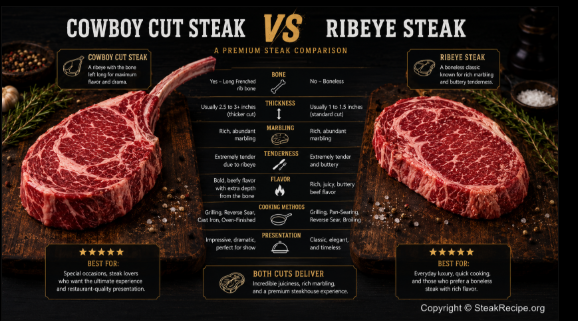
Although they come from the same section of beef, there are several differences between these two cuts.
| Feature | Cowboy Cut Steak | Ribeye Steak |
|---|---|---|
| Bone | Long rib bone attached | Usually boneless or short bone |
| Thickness | 2–3 inches | 1–1.5 inches |
| Appearance | Large and dramatic | Traditional steak |
| Cooking Time | Longer | Shorter |
| Best For | Grilling and reverse searing | Grilling, pan-searing, broiling |
In terms of flavor, both steaks are very similar because they come from the same muscle. The biggest differences are size, thickness, cooking time, and presentation.
What Does Cowboy Cut Steak Taste Like?
The cowboy cut delivers everything steak lovers expect from a premium ribeye. It has a rich, buttery flavor thanks to its abundant marbling. As the fat melts during cooking, it naturally bastes the meat, creating a juicy bite from edge to center.
The thick cut also helps prevent the steak from drying out. Instead of cooking too quickly, it develops a flavorful crust while keeping the interior tender and moist. This balance of texture and flavor is why many steak enthusiasts consider it one of the best cuts for grilling.
How to Choose the Best Cowboy Cut Steak
Not every cowboy steak is the same. Choosing a high-quality cut makes a noticeable difference in flavor and tenderness.
Look for these qualities when buying one:
- Thick, even cut with consistent shape.
- Bright red color without dark spots.
- Plenty of fine white marbling throughout the meat.
- A clean, well-trimmed rib bone.
- USDA Choice or USDA Prime grade if available.
- Fresh appearance with no excessive liquid in the packaging.
A well-marbled steak will almost always cook better than a lean one. The fat melts during cooking, keeping the meat juicy while adding deep beef flavor.
How to Season a Cowboy Cut Steak
One of the biggest mistakes people make is using too many seasonings. A quality cowboy cut steak already has outstanding flavor, so simple seasoning usually produces the best results.
Generously season both sides with kosher salt and freshly ground black pepper. Let the steak rest at room temperature for about 30 to 45 minutes before cooking. This allows the seasoning to penetrate the surface while helping the steak cook more evenly.
For extra flavor, many cooks add garlic powder, onion powder, smoked paprika, or fresh rosemary. A finishing touch of butter with crushed garlic and herbs during the final minutes of cooking creates a rich, steakhouse-style finish.
Best Cooking Methods for Cowboy Cut Steak
Because a cowboy cut steak is much thicker than a regular steak, it needs a cooking method that develops a flavorful crust without overcooking the center. High heat alone isn’t enough. The goal is to achieve a golden-brown exterior while keeping the inside juicy and tender.
Three cooking methods consistently deliver the best results:
- Grilling
- Reverse searing
- Pan-searing with oven finishing
Each method works well, so the best choice depends on your equipment and personal preference.
Grilling Cowboy Cut Steak
Grilling is the classic way to cook a cowboy cut steak. The open flame adds a smoky flavor that complements the rich marbling of the ribeye. Since the steak is thick, using two heat zones helps cook it evenly.
Start by preheating one side of the grill to high heat while leaving the other side at medium or low heat. Sear the steak over direct heat for about 2 to 3 minutes per side to create a crust. Move it to indirect heat and continue cooking until it reaches your desired internal temperature.
Flip the steak only once or twice during cooking. Frequent flipping prevents an even crust from forming. Once done, let the steak rest for at least 10 minutes before slicing to keep the juices inside.
Reverse Searing a Cowboy Cut Steak
Reverse searing has become one of the most popular methods for thick steaks because it produces consistent results. Instead of searing first, the steak cooks slowly at a low temperature before being finished over very high heat.
Place the seasoned steak in an oven set to 250°F until it reaches an internal temperature about 10°F below your target. Remove it from the oven and let it rest for a few minutes.
Heat a cast-iron skillet or grill until it’s extremely hot. Sear each side for about one to two minutes until a deep brown crust forms. This method gives you excellent control over doneness while creating a steakhouse-quality finish.
Pan-Seared Cowboy Cut Steak
If you don’t own a grill, a cast-iron skillet works exceptionally well. The heavy pan creates an even crust while retaining heat throughout the cooking process.
Preheat the skillet over medium-high heat until it’s very hot. Add a small amount of high-smoke-point oil, then place the steak in the pan. Sear both sides before transferring the skillet to a preheated oven to finish cooking.
During the final minutes, add butter, crushed garlic, and fresh herbs such as rosemary or thyme. Spoon the melted butter over the steak repeatedly. This simple technique enhances both flavor and aroma.
Cowboy Cut Steak Doneness Guide
Using a meat thermometer is the easiest way to cook a cowboy cut steak perfectly. Because of its thickness, relying on cooking time alone often leads to inconsistent results.
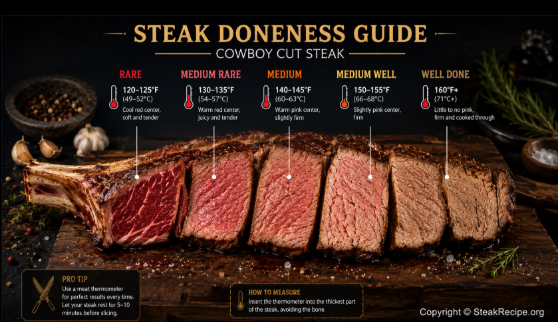
| Doneness | Internal Temperature |
|---|---|
| Rare | 120–125°F |
| Medium Rare | 130–135°F |
| Medium | 140–145°F |
| Medium Well | 150–155°F |
| Well Done | 160°F+ |
Remove the steak from the heat about 5°F before your target temperature. The meat will continue cooking while it rests, reaching the perfect final doneness.
Why Resting the Steak Is Important
Many people cut into their steak immediately after cooking. This causes the juices to run onto the plate instead of staying inside the meat. Resting allows the muscle fibers to relax and redistribute moisture throughout the steak. Even waiting ten minutes makes a noticeable difference in tenderness and juiciness. Cover the steak loosely with foil while it rests, but don’t wrap it tightly, as this can soften the crust you worked to create.
Common Mistakes to Avoid
Cooking a cowboy cut steak isn’t difficult, but a few mistakes can affect the final result.
common mistake
One common mistake is cooking the steak straight from the refrigerator. Cold meat cooks unevenly, often leaving the center undercooked while the outside becomes overdone. Let the steak sit at room temperature for about 30 to 45 minutes before cooking.
Another mistake is using too much seasoning. A cowboy cut steak already has rich natural flavor, so simple seasoning with salt and black pepper is often enough.
Skipping the meat thermometer is another problem. Since every steak varies in thickness, internal temperature is far more reliable than timing alone.
Finally, avoid slicing the steak immediately after cooking. Giving it time to rest preserves its juices and results in a much better eating experience.
Best Side Dishes for Cowboy Cut Steak
A rich and flavorful cowboy cut steak pairs best with side dishes that complement the beef without overpowering it. Simple ingredients often work better than overly complex recipes because they allow the steak to remain the centerpiece of the meal.
Classic mashed potatoes are one of the most popular choices. Their creamy texture balances the steak’s crispy crust while soaking up the flavorful juices. Roasted baby potatoes seasoned with garlic and herbs are another excellent option, especially if you’re serving the steak at a barbecue or family gathering.
For a steakhouse-style dinner, consider serving:
- Garlic mashed potatoes
- Roasted potatoes
- Creamed spinach
- Grilled asparagus
- Buttered mushrooms
- Caesar salad
- Mac and cheese
- Corn on the cob
These side dishes enhance the meal without distracting from the bold flavor of the steak.
How to Store Cowboy Cut Steak
Proper storage helps preserve both flavor and texture. If you plan to cook the steak within one or two days, keep it in its original packaging in the coldest part of your refrigerator.
For longer storage, wrap the steak tightly in plastic wrap followed by aluminum foil, or use a vacuum sealer. Freezing the steak properly helps prevent freezer burn and maintains quality for several months.
Can You Freeze Cowboy Cut Steak?
Yes, a cowboy cut steak freezes very well when packaged correctly. Removing as much air as possible prevents ice crystals from damaging the meat’s texture. After thawing, pat the steak dry with paper towels before seasoning. Removing excess moisture helps create a better crust during cooking.
Is Cowboy Cut Steak Worth the Price?
The cowboy cut steak is generally more expensive than many other beef cuts because of its size, presentation, and generous marbling. While the attached bone contributes to the overall weight, you’re also paying for a premium cut taken from the highly prized rib section.
For special occasions, many steak lovers believe the extra cost is worthwhile. The steak delivers exceptional tenderness, rich flavor, and an impressive appearance that’s difficult to match with thinner cuts. If you’re hosting guests or celebrating an event, a cowboy cut steak often provides a memorable dining experience.
Tips for Cooking the Perfect Cowboy Cut Steak Every Time
Small details can make a big difference when preparing a thick steak. Always bring the steak closer to room temperature before cooking. This helps it cook more evenly from edge to center. Pat the surface dry before seasoning, as a dry exterior develops a better crust.
Use high heat for searing, but avoid rushing the cooking process. Thick steaks benefit from slower finishing methods that gently raise the internal temperature without burning the outside. Finally, trust a quality meat thermometer rather than guessing. Monitoring the internal temperature is the most reliable way to achieve your preferred level of doneness.
Conclusion
A cowboy cut steak combines the rich marbling of a ribeye with the striking presentation of a bone-in steak. Its thick cut, tender texture, and bold beef flavor make it one of the best choices for grilling, reverse searing, or pan-searing at home.
With proper seasoning, careful temperature control, and enough resting time, this steak consistently delivers restaurant-quality results. Whether you’re cooking for a weekend barbecue or a special celebration, the cowboy cut offers an impressive meal that’s both flavorful and satisfying. Choosing a well-marbled steak and using the right cooking technique ensures you’ll enjoy every bite of this premium beef cut.
More related articles