

The Great Brisket Dilemma and the Rise of the Trisket
The current state of backyard barbecue faces a significant challenge that every pitmaster recognizes the moment they walk into a butcher shop. Brisket remains the undisputed king of the smoker, yet the price per pound has climbed to levels that make a weekend cook feel like a major financial investment. Beyond the cost, a traditional brisket requires a grueling twelve to sixteen-hour commitment that often starts in the middle of the night. This reality has paved the way for a new technique that bridges the gap between high-end barbecue and practical home cooking. We call this the Trisket Method.
The Trisket Method represents a deliberate shift in how we approach the tri-tip. Traditionally, most people treat tri-tip like a thick steak, searing it over high heat and pulling it at a medium-rare internal temperature. The Trisket Method ignores those rules entirely. Instead, you treat this cut exactly like a brisket. You cook it low and slow, pushing it well past the point of a steak and into the territory of rendered fat and collagen breakdown. This creates a category of one for the busy pitmaster who wants that iconic bark and pull-apart tenderness without the exhausting overnight shift or the triple-digit grocery bill.
Anatomy of the Tri-Tip vs. The Brisket
Understanding why the Trisket Method works requires a quick look at bovine anatomy. The tri-tip is a triangular muscle located in the bottom sirloin subprimal of the cow. While the brisket is a massive, hardworking pectoral muscle loaded with connective tissue, the tri-tip is smaller and naturally leaner. However, the tri-tip possesses a remarkably similar beefy flavor profile because it sits near the hardworking hindquarters of the animal.
Efficiency Breakdown: Brisket vs. Trisket
The Hard Math Behind the Smoke
The secret to a successful Trisket lies in the fat cap. Most grocery store butchers trim tri-tips completely clean to make them look attractive for grilling. For this method, you must find a tri-tip with the fat cap still intact. This layer of fat provides the necessary self-basting mechanism that keeps the meat moist during a prolonged smoke. Without that fat, a tri-tip will dry out long before it reaches the tenderness of a brisket. Science tells us that as the internal temperature rises, the intramuscular fat and the exterior cap begin to render, lubricating the meat fibers and creating that rich mouthfeel we associate with high-quality barbecue.
The Math of the Smoker: Cost and Time Efficiency
Practicality is the primary driver behind the Trisket trend. Consider the typical brisket which weighs between twelve and sixteen pounds. Once you trim the hard fat and account for the significant shrinkage during a long cook, you might lose forty percent of your initial investment. A tri-tip usually weighs between two and three pounds. It is a much more manageable piece of protein for a standard family dinner or a small gathering of friends.
The time savings are even more impressive. A full brisket often demands a fourteen-hour window, followed by a long rest. The Trisket Method typically takes between four and six hours from the moment you fire up the smoker to the moment you slice. This allows for a spontaneous Saturday afternoon cook. You can sleep in, enjoy your morning coffee, start the smoker at noon, and still have a world-class meal ready by dinner time. You achieve the same flavor profile and texture for half the cost and in less than half the time.

Sourcing and Trimming Your Trisket Candidate
Success begins at the meat counter. When you hunt for a tri-tip candidate, look for heavy marbling within the meat itself. Prime grade is ideal, but a high-quality Choice cut will also perform well if it has good white flecks of fat throughout the muscle. Ensure the butcher has left at least a quarter-inch of the fat cap on one side. If you see a tri-tip that looks like a clean, red steak, keep looking or ask the butcher if they have any untrimmed pieces in the back.
Your trimming approach should be minimalist. Unlike a brisket, where you might remove pounds of fat to shape the meat for airflow, the tri-tip only needs a light touch. Remove any silver skin from the non-fat side, as this membrane will never break down and will create a chewy barrier for your rub. Trim away any “shaggy” bits of fat that are hanging off the edges, as these will likely burn and turn bitter. Leave the main fat cap alone. This layer acts as a heat shield and a moisture reservoir that is essential for the long journey toward tenderness.
The Seasoning Ritual: Building the Bark
Bark is the hallmark of legendary barbecue, and you can absolutely replicate it on a tri-tip. Because the cook time is shorter than a brisket, you need a rub that works quickly to build a crust. We recommend a heavy, coarse rub that follows the traditional Texas-style “Dalmatian” mix. Use a one-to-one ratio of coarse kosher salt and sixteen-mesh black pepper. The large granules of pepper create the craggy surface area that catches the smoke.
You can bolster this mix with a small amount of granulated garlic or a hint of celery seed to enhance the color and depth. Apply the rub liberally until the meat is completely coated. Do not just sprinkle it; press the seasoning into the meat with your hands. Let the seasoned tri-tip sit at room temperature for about thirty minutes before it hits the smoker. This allows the salt to draw out a bit of moisture, creating a “slurry” that helps the spices stick and encourages the formation of a beautiful smoke ring.
Fire Management and the Smoke Profile
Consistent temperature is the foundation of the Trisket Method. You want to maintain a steady environment between $225^{\circ}\text{F}$ and $250^{\circ}\text{F}$. If the temperature spikes too high, the lean sirloin fibers will tighten and toughen before the fat has a chance to render. If it stays too low, you will struggle to develop a proper bark within the shorter timeframe.

Wood selection plays a vital role here. Since the tri-tip spends less time in the smoke than a brisket, you should favor stronger hardwoods like post oak, hickory, or pecan. These woods provide a bold, classic barbecue profile that penetrates the meat quickly. Position the tri-tip on your smoker with the fat cap facing your heat source. This allows the fat to absorb the brunt of the thermal energy, protecting the delicate meat underneath while it slowly melts and bastes the roast.
Navigating the Stall and the Power of the Wrap
Every pitmaster fears the “stall,” that frustrating period where the internal temperature of the meat stops rising as moisture evaporates from the surface. Even a smaller cut like the tri-tip will experience this phenomenon, usually when the internal temperature hits somewhere between $160^{\circ}\text{F}$ and $165^{\circ}\text{F}$. When you notice the temperature plateau, it is time to intervene.
We recommend using peach butcher paper for the wrap. While aluminum foil, known as the “Texas Crutch,” is effective at speeding up the cook, it can often steam the meat and soften the bark you worked so hard to build. Butcher paper is breathable. It traps enough heat and moisture to power through the stall and braise the meat in its own fats, but it allows enough steam to escape so your bark remains intact and crunchy. Wrap the tri-tip tightly, ensuring there are no air pockets, and return it to the smoker to finish the journey.
Probing for Tenderness: The Butter Test
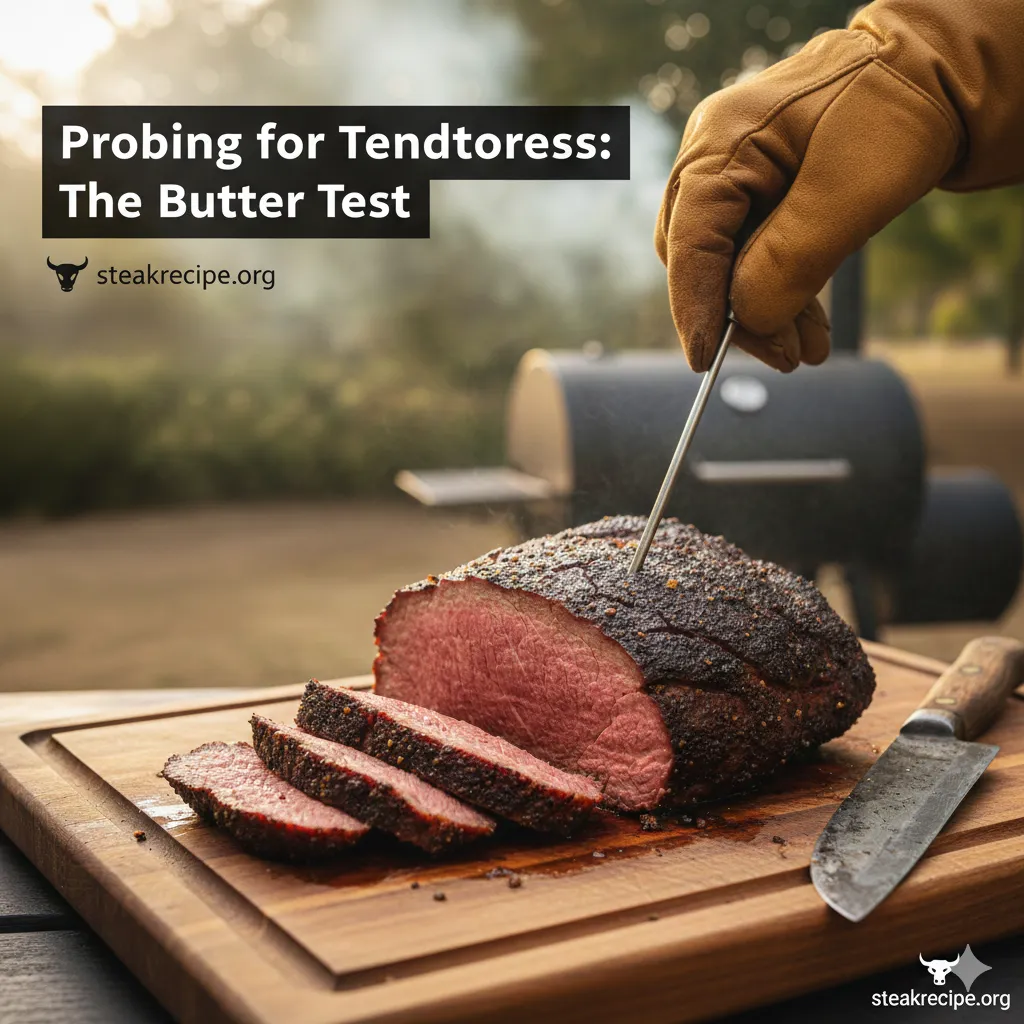
The biggest mistake a beginner makes with the Trisket Method is pulling the meat based solely on a thermometer reading. While most “Triskets” reach their peak somewhere around $203^{\circ}\text{F}$, every individual piece of meat is different. The internal temperature is merely a guide that tells you when to start checking for “probe tenderness.”
To perform the butter test, take your temperature probe or a thin skewer and gently push it into the thickest part of the meat. If you feel any resistance, it is not ready. You are looking for the sensation of the probe sliding into a stick of warm, softened butter. There should be zero tension. The meat should feel loose and supple. This shift from temperature-based cooking to feel-based cooking is what separates a backyard griller from a true pitmaster. Once it probes tender, you have successfully transformed a steak cut into a barbecue masterpiece.
The Discipline of the Rest
Patience is the final and perhaps most difficult ingredient in the Trisket Method. You must resist the urge to slice the meat the moment it comes off the smoker. During the cook, the heat forces the juices toward the center of the meat. If you cut it immediately, those juices will pour out onto your cutting board, leaving you with a dry and disappointing result.
Wrap the still-papered tri-tip in a couple of old towels and place it inside an empty, dry plastic cooler. Let it rest for at least one hour, though two hours is even better. This period allows the muscle fibers to relax and reabsorb all that rendered fat and moisture. The temperature will carry over slightly and then slowly stabilize. A well-rested Trisket will be noticeably more tender and succulent than one sliced in haste.
Mastering the Grain: The Slicing Secret
Tri-tip is a unique muscle because the grain runs in two distinct directions. If you slice it the wrong way, you will end up with long, stringy fibers that are difficult to chew, regardless of how well you cooked it. To master the slice, look at the meat before you season it and take note of how the fibers move. Usually, the grain radiates out from the corner of the triangle.
Start at the thin tip and slice against the grain until you reach the middle of the roast. At this point, you will notice the grain direction shifts significantly. You must rotate the meat or your knife about forty-five degrees to stay perpendicular to those fibers. Aim for slices about the thickness of a pencil. If you have followed the method correctly, the meat should hold its shape when lifted but pull apart easily with the slightest tug.
Serving Suggestions and Creative Leftovers
A perfectly smoked Trisket deserves a proper presentation. Serve the slices on a platter with a side of vinegary coleslaw or pickled red onions to cut through the richness of the fat. The beefy intensity of the tri-tip pairs beautifully with a classic tomato-based barbecue sauce or even a spicy chimichurri.
If you happen to have leftovers, the Trisket shines in secondary roles. The intense smoke profile makes it the ultimate protein for morning hash with eggs or piled high on a toasted brioche bun for a midday sandwich. You can even chop the remaining meat for “Trisket tacos,” topping them with fresh cilantro and a squeeze of lime. The versatility of the cut ensures that nothing goes to waste, further increasing its value compared to a massive brisket.
Conclusion: Joining the Trisket Revolution
The Trisket Method is more than just a shortcut; it is a smarter way to enjoy high-quality barbecue in a modern world. It respects your time and your budget while delivering a flavor profile that rivals the best smokehouses in the country. By applying the science of the long smoke to a smaller, more accessible cut of beef, you claim your status as a versatile and resourceful pitmaster.
The next time you crave the deep, smoky soul of a brisket but find yourself short on time or cash, remember the tri-tip sitting in the butcher’s case. Fire up your smoker, trust the process, and enjoy the rewards of the Trisket revolution. You no longer have to wait for a special occasion to serve world-class beef.
The Trisket Method: Brisket-Style Tri-Tip
Analyzing the Render
This demonstration by Malcom Reed showcases the exact transition from a traditional steak into a fully rendered, brisket-like roast. Observe how the Fat Cap remains intact to provide constant basting throughout the five-hour smoke. You can see the bark formation reacting with the salt and pepper rub to create that signature Texas crust.
Algorithm Note: The video highlights the importance of the internal stall and the shift to probe-tenderness, confirming that the “butter-like” feel is the final indicator of success for this specific cut.
Watch Slicing Technique