
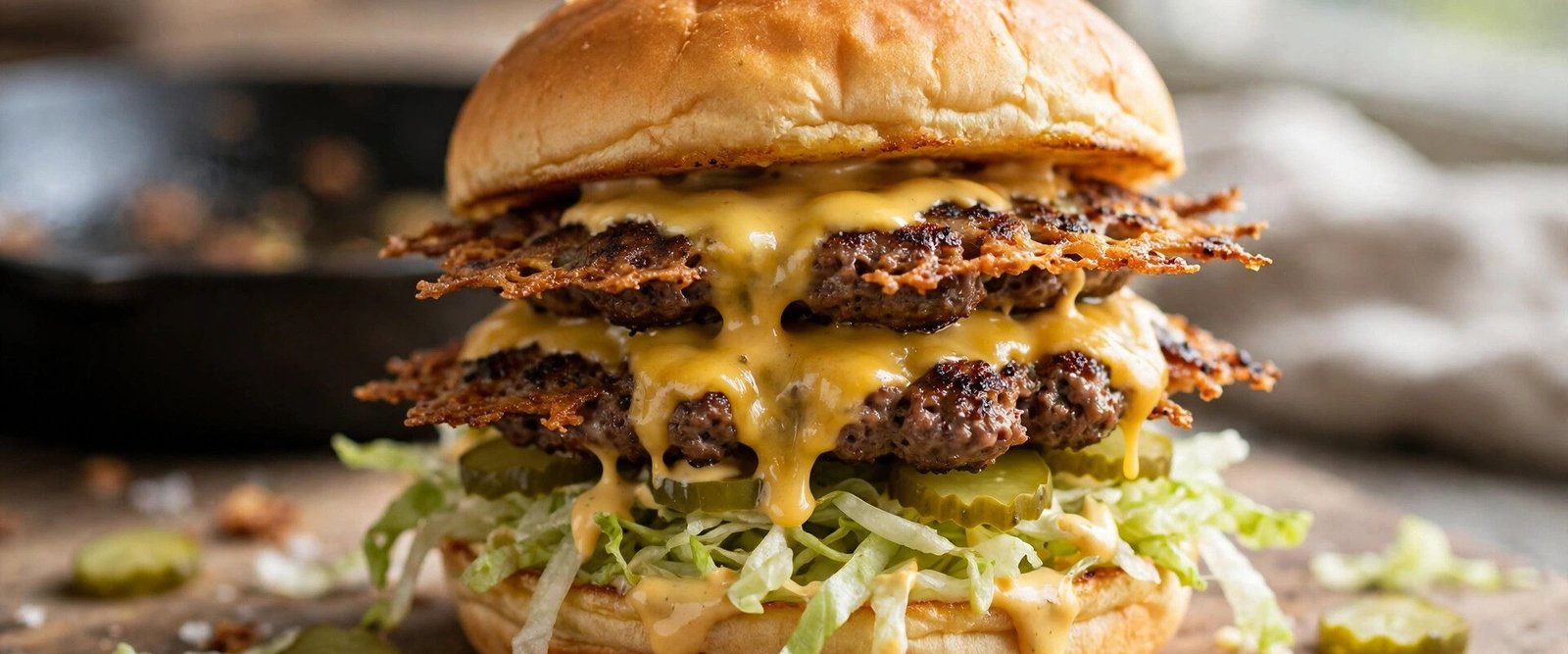
Smash Burger Recipe: Lacy Edges, Cast Iron, 10 Minutes
A great smash burger recipe starts with loose 80/20 beef balls pressed hard onto a screaming hot cast iron pan, and it finishes in about 10 minutes with lacy, caramelised edges and a juicy centre. I tested this smash burger recipe six times in my own kitchen before I trusted it, and the version below is the one I now cook every single week. It needs no special equipment beyond a heavy pan and a sturdy spatula, and it beats most restaurant burgers I have eaten in London.
Key takeaways:
- Use 80/20 beef mince, rolled into loose 90g balls, and never press the patty twice.
- Your cast iron pan must be ripping hot, around 230C, before the beef touches it.
- Smash hard for 10 seconds, season, flip once, add cheese, and build fast.
- A smash burger recipe works best with a soft potato bun, American cheese, and a simple burger sauce.
What Makes a Smash Burger Different
A smash burger is not a thick pub burger cooked a little flatter. Pressing a loose ball of beef onto a hot surface forces maximum contact with the pan, and that contact creates the Maillard reaction across the whole face of the patty instead of only around the edges. The result is a thin patty with a deep brown crust, lacy frilly edges, and a centre that stays juicy because the whole cook takes under two minutes.
The technique comes from American diners and roadside stands, where cooks smashed patties onto flat top grills with a heavy press. The same idea works perfectly at home in a cast iron skillet, and it is the reason this smash burger recipe has become the default burger in my house. If you already cook steak on a flat top, the muscle memory transfers straight across, and my guide to how to cook steak on Blackstone covers the same high heat discipline.
Smash Burger Recipe Ingredients
This smash burger recipe serves 2 people with 2 double burgers each, or 4 people with a single each. Scale the balls up, never the size of each ball. Two thin patties always beat one thick one.
- 450g 80/20 beef mince, fridge cold
- 4 soft potato buns
- 8 slices American cheese
- 1 small white onion, very finely diced
- 2 large gherkins, thinly sliced
- 1 large tomato, thinly sliced
- A handful of shredded iceberg lettuce
- Fine sea salt and cracked black pepper
- 1 tablespoon neutral oil, for the pan
Smash Burger Sauce
- 4 tablespoons mayonnaise
- 1 tablespoon ketchup
- 1 tablespoon yellow mustard
- 1 teaspoon finely chopped gherkin
- Half a teaspoon garlic powder
- A pinch of smoked paprika
Mix the sauce first and leave it in the fridge while you cook. It takes two minutes and it lifts the whole burger. The sauce keeps for three days in a sealed tub, and I use the leftovers on fries and in garlic butter steak bites wraps.
How to Make Smash Burgers Step by Step
Step 1: Roll Loose Balls
Divide the cold mince into 8 equal portions of about 90g each. Roll each one gently into a loose ball, just firm enough to hold together. Do not pack the meat tight and do not work it like dough. Loose meat smashes into a better crust, and overworked mince turns tough and springy. Keep the balls in the fridge until the pan is ready.
Step 2: Get the Pan Screaming Hot
Put your cast iron skillet over high heat for 4 to 5 minutes. Add the oil and wait until it shimmers and just starts to smoke. The pan should sit around 230C. If the pan is not hot enough, the beef steams instead of searing and you lose the crust that makes a smash burger recipe worth cooking. Open a window and switch the extractor fan on before you start, because this cook makes smoke.
Step 3: Smash Hard, Once
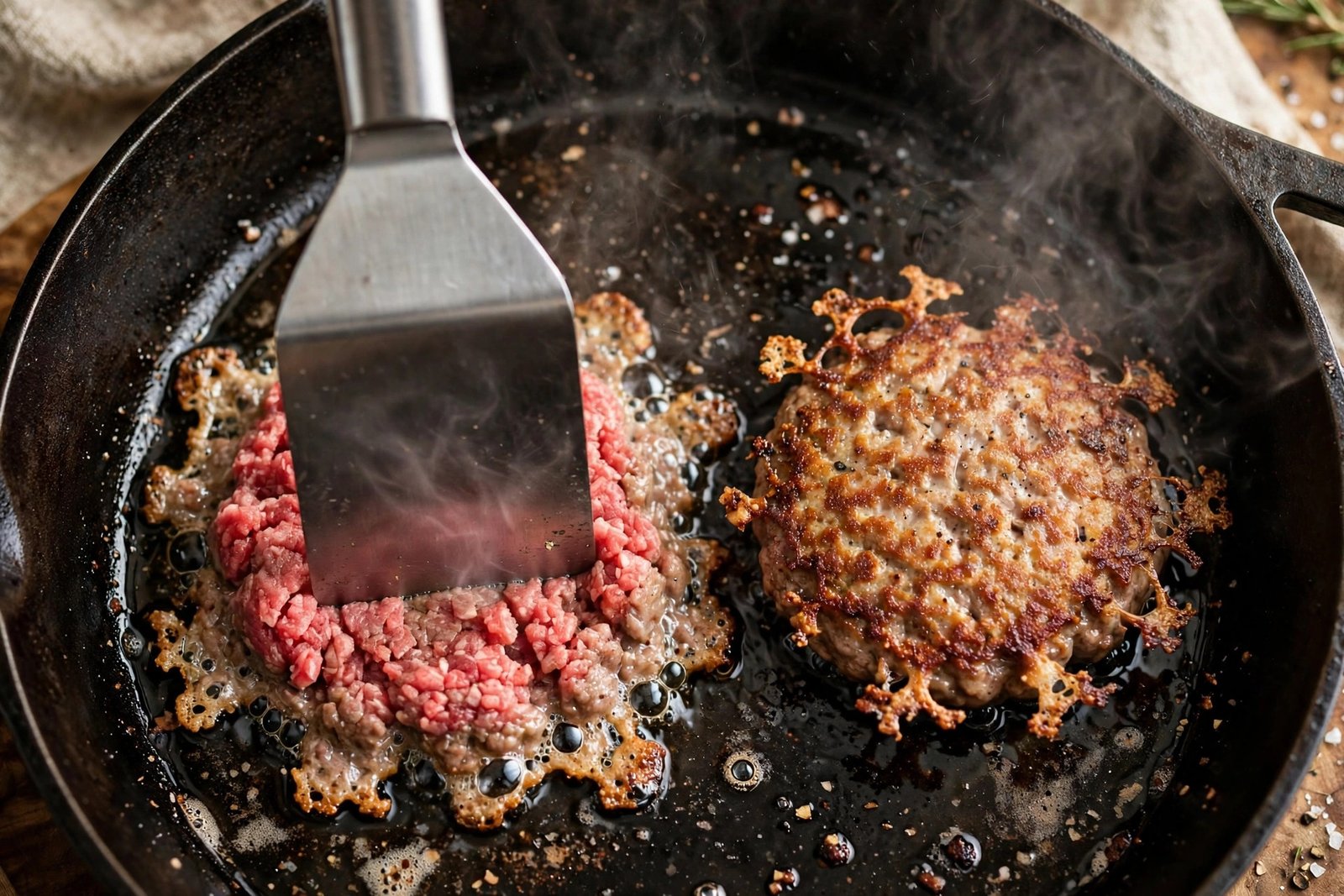
Place two balls in the pan, well spaced apart. Press each one down hard with a heavy spatula, using the flat of a second spatula or a small saucepan to push down on top if you need more force. Hold the pressure for a full 10 seconds. You want each patty about 5mm thick with ragged edges spreading out. Season generously with salt and pepper. Then leave it completely alone. This is the one rule that matters most in any smash burger recipe: press once, and never press again. Pressing a second time squeezes the juices out and dries the patty.
Step 4: Flip Once and Add Cheese
After 60 to 90 seconds the edges turn deep brown and crispy. Slide the spatula under the patty, scrape up every bit of crust, and flip. Season the second side. Lay a slice of American cheese on each patty straight away and cook for 45 to 60 seconds more. The cheese melts over the edges while the second side sears. Stack two patties together for a double, and lift them onto the bottom bun.
Step 5: Build Fast and Serve Hot
Spread sauce on both halves of a toasted bun. Set the double patties on the bottom half, add onion, gherkin, tomato and lettuce, then crown it with the top bun. Serve immediately while the cheese is still molten and the edges are still crisp. A smash burger waits for no one, and five minutes on the plate turns those lacy edges soft.
Smash Burger Recipe Card
Prep time: 10 minutes. Cook time: 10 minutes. Total time: 20 minutes. Serves: 4 single burgers or 2 doubles.
Method in brief: Mix the sauce and chill it. Roll 8 loose 90g beef balls and keep them cold. Heat a cast iron pan to around 230C with a little oil. Smash two balls at a time for 10 seconds each, season, cook 60 to 90 seconds, flip, add cheese, cook 45 to 60 seconds more. Build on toasted potato buns with sauce, onion, gherkin, tomato and lettuce.
Nutrition per double burger (estimate): about 720 calories, 42g protein, 38g carbohydrate, 44g fat. Figures vary with bun and cheese choice.
The Best Beef for a Smash Burger Recipe
Fat content decides whether a smash burger stays juicy. Use 80/20 mince, which means 80 percent lean meat and 20 percent fat. Leaner mince dries out in a thin patty because there is so little meat to hold moisture. I buy British beef mince from the butcher counter and ask for chuck mince when I can get it, because chuck has the right fat and the best beefy flavour for a smashed patty.
Keep the mince fridge cold right up to the moment it hits the pan. Cold fat renders more slowly, which gives the crust time to form before the fat runs out. Warm mince smears, sticks, and cooks grey. If your kitchen runs warm, put the rolled balls back in the fridge for 15 minutes before you cook.
Smash Burger Toppings That Actually Work
A smash burger is thin, so toppings should add contrast without piling the burger into a wobbling tower. My tested line up is American cheese, finely diced raw white onion, gherkin, tomato and shredded iceberg. The onion gives bite, the gherkin gives acid, and the iceberg gives crunch and coolness against the hot beef.
If you want to change one thing, change the sauce. The simple burger sauce above is the classic, but a spoonful of hot honey works brilliantly on a smash burger too, and my hot honey recipe makes a batch that keeps in the cupboard. Skip thick sliced red onion and heavy tomato relish, because both slide out of a thin burger. For sides, a crisp salad or fries keeps the meal balanced, and my guide to good sides for steak covers the same thinking for beef dinners.
Common Smash Burger Mistakes
Pressing twice. The second press is the most common mistake in any smash burger recipe. It flattens the patty, squeezes out juice, and gives you a dry disc. One hard press, then hands off.
A pan that is not hot enough. If the beef sizzles gently instead of roaring, the pan is too cool. The crust forms fast or not at all, and a lukewarm pan steams the meat grey. Heat the cast iron longer than you think you need to.
Overworking the mince. Mixing the beef with salt, egg or breadcrumbs before you roll the balls turns a smash burger into a meatball. Season on the pan, never in the bowl.
Building too slowly. Toast the buns and lay out every topping before the first ball hits the pan. A smash burger goes from pan to plate in seconds, and a burger built slowly goes cold while you hunt for the gherkins.
Cast Iron vs Flat Top vs Non Stick
Cast iron is my first choice for this smash burger recipe because it holds heat and builds the deepest crust. A carbon steel pan runs a close second. A flat top grill works beautifully if you own one, and the technique is identical, just with more space for a bigger batch. A non stick pan is the one option I would avoid, because most non stick coatings cannot take the 230C heat this method needs, and a cooler pan means a weaker crust. If cast iron is all you have, it is also the best tool for the job.
No press? Use the base of a heavy saucepan, or a flat metal spatula pressed down with a second spatula. I used a saucepan base for my first three tests and it worked fine. A sheet of baking paper between the press and the beef stops sticking and makes clean up easy.
How to Store and Reheat Smash Burgers
Smash burgers taste best straight off the pan, but leftovers still work. Keep cooked patties in a sealed container in the fridge for up to two days. Reheat them in a hot dry pan for 30 seconds a side, which brings back some of the crust. The microwave kills the texture, so I never use it here. Uncooked beef balls keep in the fridge for one day, wrapped tightly. Do not freeze smashed patties, because the thin shape dries out badly on thawing.
For food safety, ground beef should reach 71C in the centre, and the FoodSafety.gov safe minimum internal temperatures chart lists the same figure. A thin smashed patty reaches that temperature fast, but check with a thermometer the first time you cook this smash burger recipe so you know what done looks like in your pan.
Frequently Asked Questions
What is the best beef for a smash burger recipe?
Use 80/20 beef mince, ideally chuck mince, kept fridge cold until cooking. The 20 percent fat keeps a thin patty juicy, and chuck gives the strongest beef flavour.
How thin should I smash the patty?
Press each 90g ball to about 5mm thick with ragged, lacy edges. Thinner means more crust and a faster cook, which is the whole point of a smash burger.
Do I need a burger press?
No. A heavy spatula works, and the base of a small saucepan gives extra force. Put baking paper between the press and the beef to stop sticking.
Can I cook smash burgers on a barbecue?
Yes, if you use a cast iron griddle or a flat plate on the barbecue. You cannot smash a patty directly on grill bars, because the meat falls through and never gets the flat contact that builds the crust.
Why did my smash burger stick to the pan?
Either the pan was not hot enough, or you tried to move the patty before the crust set. A ripping hot, lightly oiled cast iron pan releases the patty once the crust forms, usually after 60 to 90 seconds.
How many patties should I stack?
Two thin patties make the best burger. A double gives you twice the crust and twice the melted cheese, and it still eats neatly. Three patties work for a big appetite, but the bun starts to struggle.