
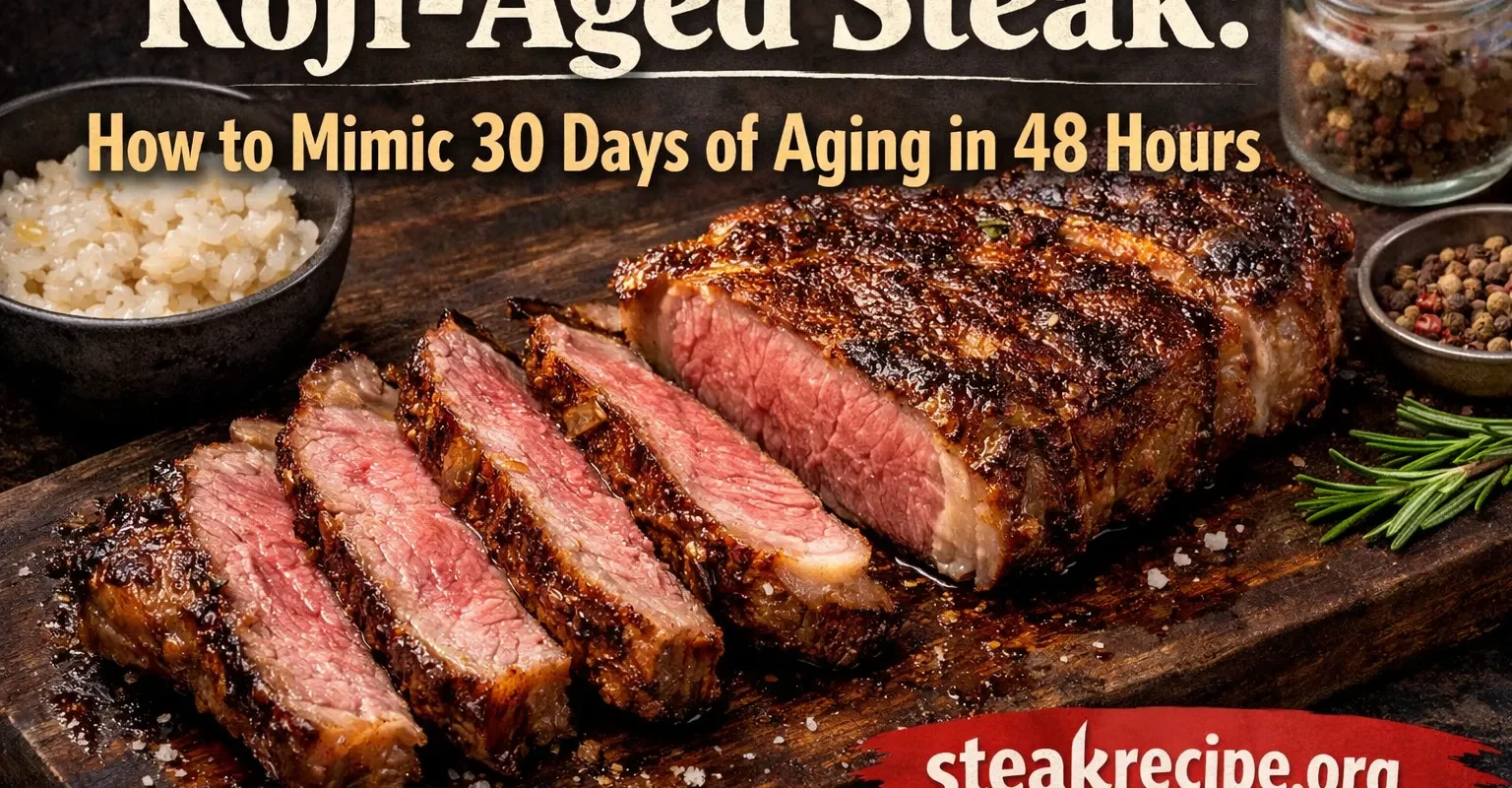
Steak lovers know the difference between a quick sear and a deeply flavored, tender dry aged steak. But dry aging takes time. What if you could get that same flavor at home in just 48 hours? That’s exactly what koji aging does. Using shio koji, a fermented rice seasoning, you can tenderize your steak, boost its umami, and mimic the flavor of a 30 day dry aged cut. In this guide, you will learn how to make koji aged steak at home, how to apply the rub, and why this shortcut works so well.
What Is Koji Aged Steak?
Koji aged steak is beef treated with koji, a fungus known as Aspergillus oryzae. This fungus produces enzymes that break down proteins and fats. This enzymatic action softens the meat while enhancing savory flavors. Traditional dry aging relies on controlled humidity, airflow, and time to produce tenderness and flavor. Koji accelerates this process. In 24 to 48 hours, it can produce results similar to a month of dry aging.
The process also intensifies the meat’s aroma and browning ability. By the time you cook it, the steak has deeper umami notes, nutty undertones, and a flavor that lingers longer on the palate. It’s a method that allows home cooks to replicate gourmet results without professional setups or long waiting periods.
Why Koji Works as a Quick Dry Age Hack
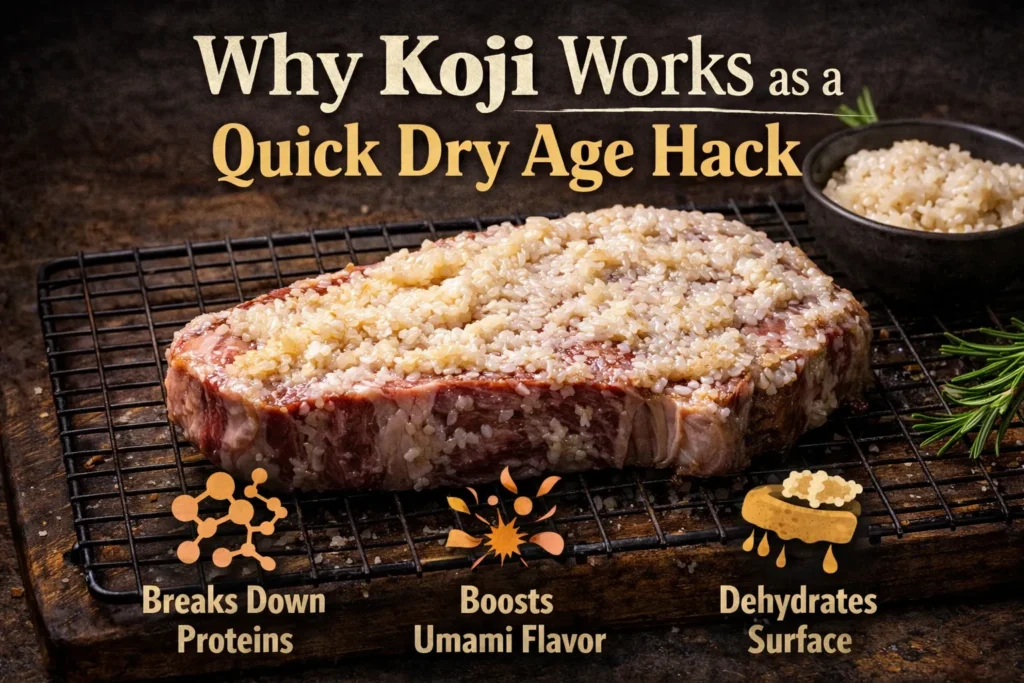
Koji is effective because it combines enzyme action with slight surface dehydration. The enzymes in koji, particularly proteases, break down muscle fibers and connective tissue. This creates a steak that feels tender without being mushy. At the same time, glutamates produced during fermentation enhance savory taste. This combination mimics the natural flavor development of traditional dry aging.
Unlike dry aging that depends on evaporation over weeks, koji works on a surface level to accelerate enzymatic breakdown. The flavor is concentrated, and browning improves during cooking. The result is a steak that tastes aged, tender, and rich, but you only need 48 hours to achieve it.
Ingredients and Tools You’ll Need
You don’t need a fancy setup to make koji aged steak at home. The essentials are simple. Choose a high quality, well marbled steak, such as ribeye, strip, or sirloin. The marbling ensures fat absorbs the enzymes and adds richness. Shio koji or dried koji rice provides the necessary enzymes and seasoning.
You’ll need a wire rack and a sheet pan to let air circulate around the meat. A refrigerator with airflow is essential to keep the steak cold during aging. That’s it. No expensive dry aging fridge or humidity controlled chamber is required.
Optional items include a small brush or spatula for applying the koji evenly. Even coverage ensures consistent flavor and tenderization.
Step-by-Step Guide to Koji Aging Your Steak
Step 1: Choose the Right Cut
Marbling is the most important factor. Fat carries flavor and protects the steak from over tenderizing. Lean cuts can dry out or become mushy. Ribeye is the easiest choice, but strip or sirloin works well too.
Step 2: Apply the Koji Rub
Spread a thin layer of shio koji over the entire steak. Avoid piling it on. Thick coatings can lead to uneven texture. If using dried koji, mix it with a small amount of sea salt and optionally a pinch of sugar. Press the mixture gently onto the surface of the steak.
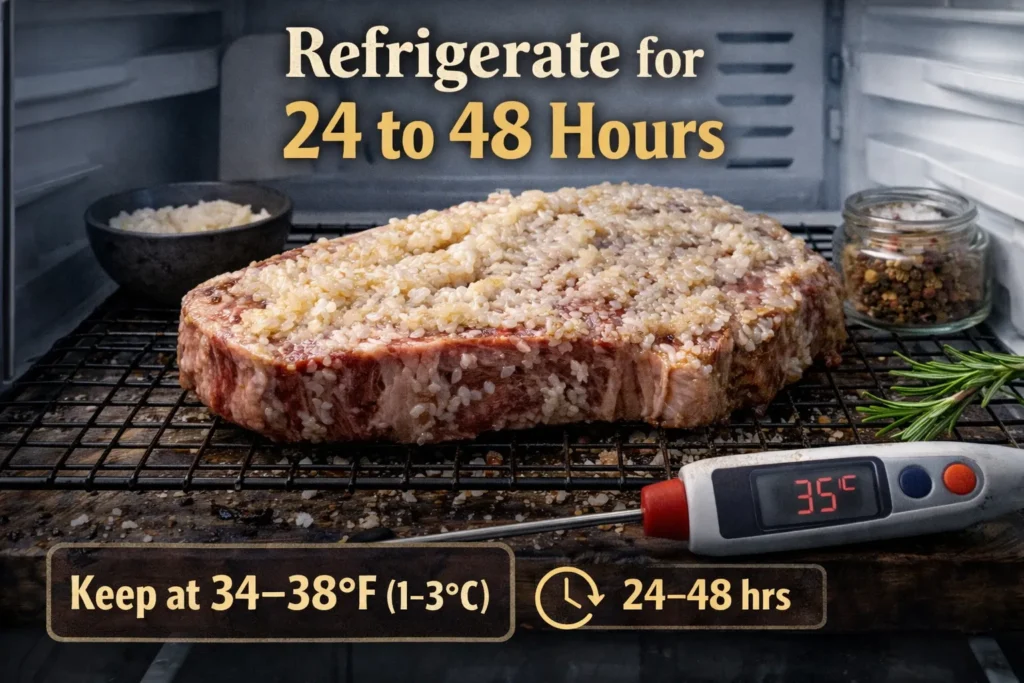
Step 3: Refrigerate for 24 to 48 Hours
Place the steak on a wire rack over a sheet pan. Refrigerate at 34–38°F. After 24 hours, you will notice slight tenderization. Forty eight hours produces deeper flavor and a richer aroma. Do not exceed 48 hours at home, as longer times risk over softening the meat.
Step 4: Rinse and Pat Dry
Before cooking, rinse off excess koji and pat the steak dry. This prevents burning during searing and removes any overly salty spots. The surface should feel slightly sticky but not wet.
Step 5: Cook the Steak
Use your preferred cooking method. Cast iron, grill, or reverse sear all work well. Aim for medium rare to medium doneness to maximize tenderness and umami flavor. The steak will sear beautifully due to enzyme induced surface changes.
Koji Rub Recipe
For those using dried koji rice, prepare a simple rub. Mix two tablespoons of dried koji with one teaspoon of sea salt. Add a pinch of sugar if you want balance. Spread evenly across the steak. This rub boosts both flavor and tenderness, allowing the steak to mimic a long dry aging process in a short time.
Understanding Fermented Steak Flavor
Koji aged steak has a unique taste. It is rich, savory, and slightly nutty. Some describe it as having faint notes of aged cheese or Parmesan. Browning is enhanced, creating a more aromatic sear. The flavor lingers longer than a typical fresh steak and adds complexity without overpowering the meat.
Unlike traditional marinades, koji doesn’t rely on acid. The enzymatic process develops natural umami and deepens the meat’s character. Each bite is more flavorful, tender, and aromatic.
Timing: 24 vs 48 Hours
The aging time directly affects flavor. Twenty four hours is enough to see a noticeable difference in tenderness. Umami is present but mild. Forty eight hours produces a deeper, more developed taste. Extending beyond 48 hours can soften the meat too much and alter texture. For most home cooks, 48 hours is ideal to balance flavor and structure.
Common Mistakes to Avoid
Applying too thick a layer of koji can over tenderize the steak. Storing the steak in a warm fridge can promote bacterial growth. Skipping the rinse step can leave excess salt and koji residue, affecting flavor and browning. Lean cuts do not absorb flavor well and may dry out. Finally, leaving the steak beyond 48 hours can create a mushy texture that is unpleasant to eat.
Is Koji Aging Safe?
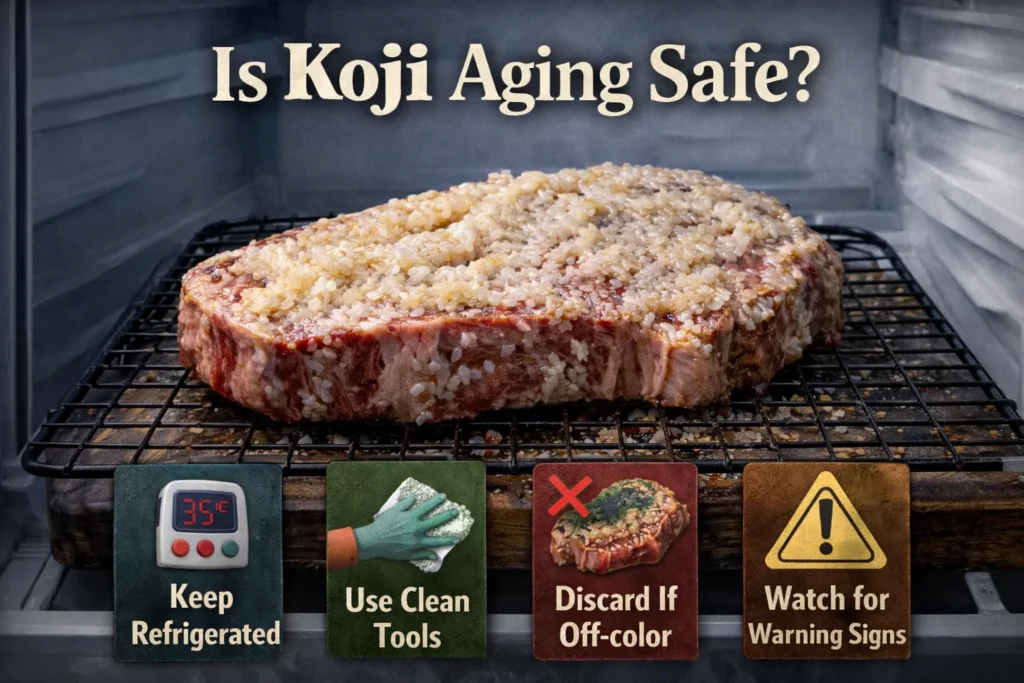
Koji aging is safe when proper hygiene and refrigeration are maintained. Keep the steak at 34–38°F. Use clean tools and hands when handling the meat. Discard any steak showing unusual color or smell. Following these precautions ensures both safety and great flavor.
Koji vs Traditional Dry Aging
Koji is not a replacement for traditional dry aging but a shortcut. It produces similar tenderness and umami but works faster. Traditional dry aging develops flavor through slow dehydration and enzymatic action over weeks. Koji achieves a comparable effect in two days by concentrating enzymatic activity on the surface. For home cooks, it’s a practical and effective way to enjoy gourmet steak at home.
Frequently Asked Questions
Can you dry age steak with koji in the fridge?
Yes. Keep the temperature between 34 to 38°F. Aging for 24 to 48 hours works best for flavor and tenderness.
Does shio koji make steak salty?
It adds mild seasoning. Rinsing lightly before cooking reduces excess salt.
Can you use koji on cheaper cuts?
Yes, but marbled cuts yield better flavor and texture. Lean cuts can dry out or over tenderize.
Do you need special equipment?
No. A wire rack, sheet pan, and refrigerator airflow are enough.
Final Verdict
Koji aging is a fast and effective way to enjoy dry aged steak at home. It works best on marbled cuts, and 48 hours gives an ideal balance of tenderness and flavor. This method allows home cooks to achieve gourmet results without professional setups or long waiting periods. If you love steak and want rich, complex flavors quickly, koji aging is a must try.
Koji-Rubbed Steak: 48-Hour Dry Aging Hack
Analyzing the Koji Effect
This practical demonstration shows how a koji rub accelerates the dry aging effect in just 24 to 48 hours. The enzymes in koji break down muscle fibers and enhance umami, producing deeper flavor and improved tenderness without long-term aging.
Technique Insight: The test highlights how surface enzymatic action mimics traditional dry aging by intensifying browning, aroma, and savory depth while maintaining proper refrigeration for safety.
Watch Koji Steak Test