
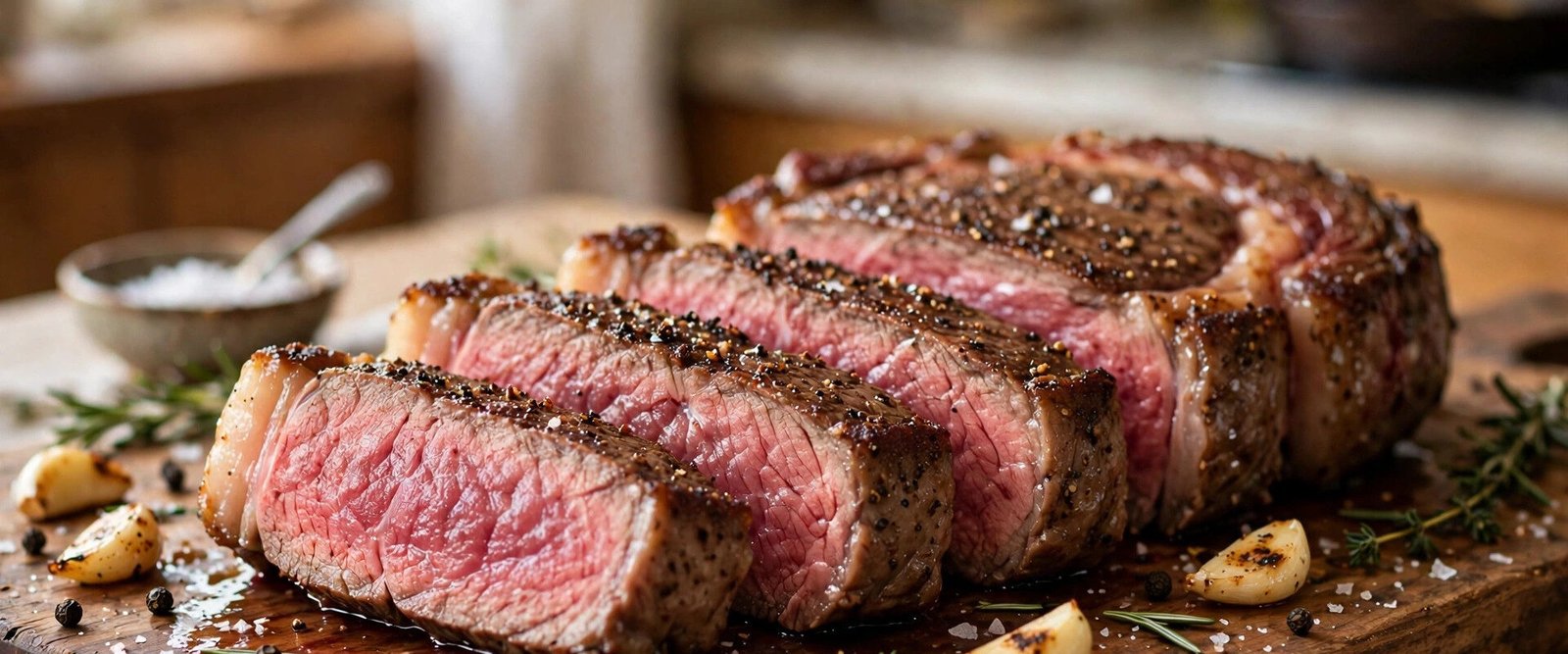
Learning how to reverse sear a steak gives you the most even pink centre you can get at home. You cook the steak gently in a low oven first, then you finish it with a fast, ripping hot sear. I tested this method on thick ribeyes, sirloins and tomahawks in my own kitchen, and it beat every other method I tried for thick cuts. If your steak is at least 4 cm thick, reverse searing is the method to use.
Key takeaways for how to reverse sear a steak
- Reverse searing means low oven first, hot sear second. That order is the whole trick.
- Use steaks at least 4 cm thick. Thin steaks overcook before the crust forms.
- Pull the steak from the oven about 5 degrees Celsius below your target doneness, because the sear adds heat.
- Rest the steak for 10 minutes after searing, then slice it against the grain.
- A wire rack and a meat thermometer matter more than any fancy pan.
What does reverse sear mean?
When you learn how to reverse sear a steak, you flip the usual order. A traditional sear starts in a screaming hot pan and finishes in the oven. The reverse sear method does the opposite. You warm the steak slowly in a low oven until it nearly reaches your target temperature, then you sear it hard for about a minute per side. The slow stage cooks the inside evenly from edge to edge and the fast stage builds the browned crust.
Why reverse searing works so well
Slow, gentle heat does three useful things. First, it dries the surface, so a dry surface browns much faster in the hot pan and you get a deep crust in seconds. Second, it cooks the interior evenly, so you avoid the thick grey band that a hot pan alone creates. Third, it gives you control, because the temperature climbs slowly and you have time to catch it at exactly the right moment.
That control is the real reason cooks who learn how to reverse sear a steak stick with it. With a thermometer in hand, you can hit medium rare on a 5 cm ribeye almost every time.
Which steaks work best for reverse searing?
Thickness decides everything here. Choose steaks at least 4 cm thick, and ideally 5 cm. Ribeye, sirloin, porterhouse, T bone and tomahawk all work beautifully. A thick cut gives the slow oven stage time to work without overcooking the centre. My favourite test cut is a thick ribeye, because the fat renders gently in the oven and then crisps in the pan.
Skip this method for thin steaks. A minute steak or a thin sirloin cooks through in the time it takes to sear, so the oven stage only dries it out. For thin cuts, a straight hot pan sear wins. Read our guide to steak doneness temperatures before you buy, and pick a cut thick enough to make this method worth it.
Equipment you need
You need a wire rack set over a baking tray, so hot air circulates around the steak. You need a reliable instant read thermometer, because guessing temperatures ruins this method. You need a heavy pan, cast iron if you have it, and a high smoke point fat such as beef dripping or a neutral oil. Butter goes in at the very end for basting, never at the start, or it burns before the crust forms.
How to reverse sear a steak step by step
Here is exactly how to reverse sear a steak, stage by stage. Follow the order and trust the thermometer at each step.
Step 1: Season and dry the steak
Take the steak out of the fridge 30 to 40 minutes before cooking and pat it completely dry with kitchen paper. Season generously on all sides with flaky salt and cracked black pepper, then place it on the wire rack over the tray. A dry, well seasoned surface makes the final crust.
Step 2: Cook low in the oven
Heat the oven to 120 degrees Celsius (250 degrees Fahrenheit) and slide the tray into the middle. Cook until the thermometer reads about 5 degrees below your target. For medium rare, pull the steak at around 49 degrees Celsius (120 degrees Fahrenheit). A 4 cm steak takes roughly 35 to 45 minutes and a 5 cm steak takes roughly 50 to 60 minutes. Trust the thermometer, not the clock, and keep our steak cooking time chart open while you cook.
Step 3: Rest briefly, then heat the pan
Let the steak sit on the rack for about 5 minutes while you heat the pan until it shimmers and just starts to smoke, then add a thin layer of beef dripping or neutral oil. This short rest stops the surface from steaming in the pan.
Step 4: Sear hard and fast
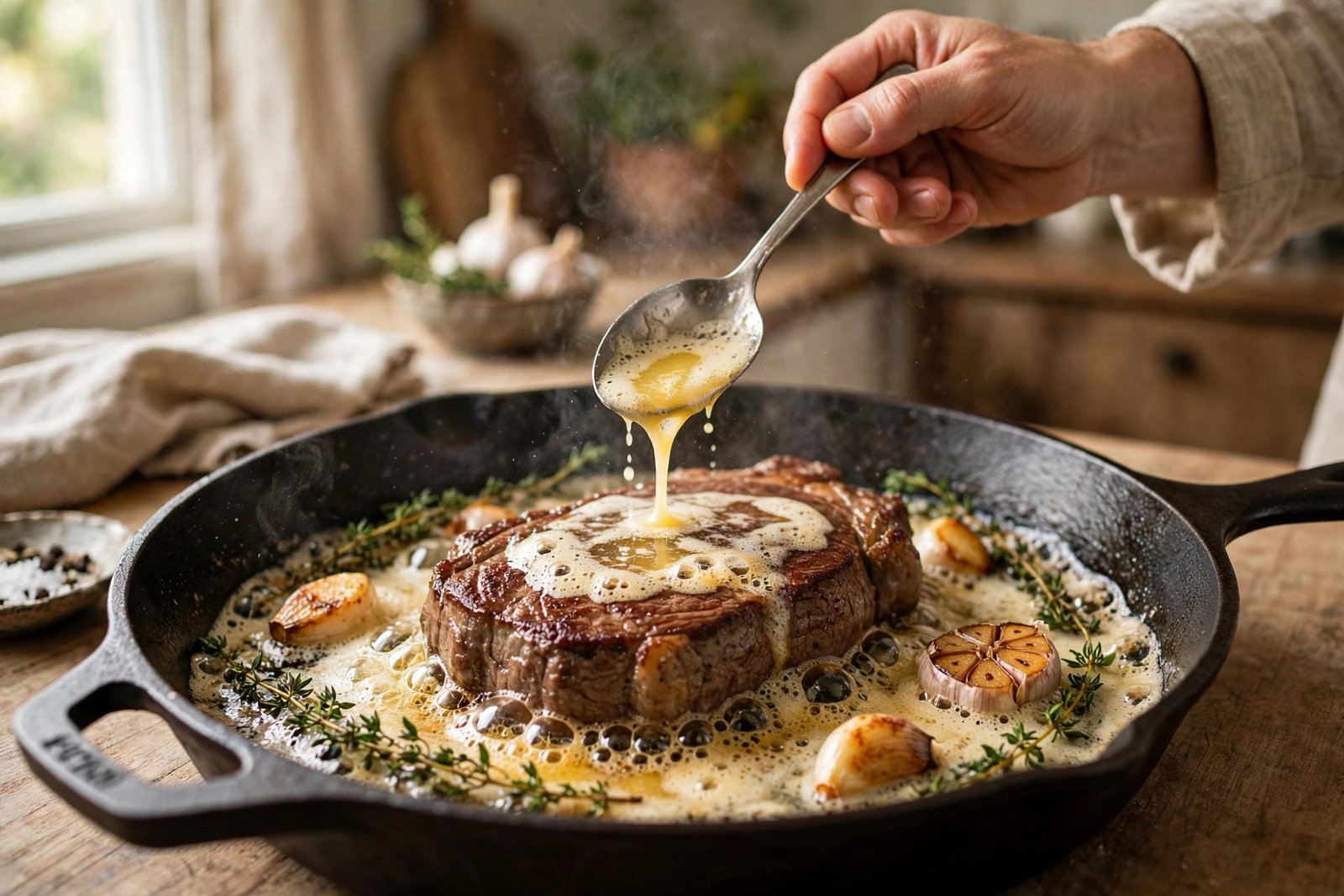
Lay the steak in the pan and do not move it. Sear for 60 to 90 seconds per side, including a quick turn onto the fat cap edge if your cut has one. Add butter, a crushed garlic clove and thyme in the last 30 seconds and baste with the foaming butter. Pull the steak as soon as the crust turns deep brown.
Step 5: Rest and slice
Rest the steak for 10 minutes on a warm plate, loosely tented with foil, so the temperature rises a few degrees and the juices settle. Slice against the grain in thick slices and serve straight away, while the crust still crackles.
Reverse sear steak temperatures
When you learn how to reverse sear a steak, these pull temperatures matter most. They are the oven temperatures, before the sear. The sear adds roughly 3 to 5 degrees, so these targets land you on the finished doneness you want. Always check the thickest part of the steak, away from bone and fat.
| Doneness | Pull from oven | Finished temperature |
|---|---|---|
| Rare | 43 degrees Celsius (110 degrees Fahrenheit) | 49 degrees Celsius (120 degrees Fahrenheit) |
| Medium rare | 49 degrees Celsius (120 degrees Fahrenheit) | 54 degrees Celsius (130 degrees Fahrenheit) |
| Medium | 54 degrees Celsius (130 degrees Fahrenheit) | 60 degrees Celsius (140 degrees Fahrenheit) |
| Medium well | 60 degrees Celsius (140 degrees Fahrenheit) | 65 degrees Celsius (150 degrees Fahrenheit) |
The FoodSafety.gov safe minimum internal temperatures chart lists 63 degrees Celsius (145 degrees Fahrenheit) with a 3 minute rest as the safe minimum for steak. Read it before you decide, especially when you cook for guests.
Reverse sear steak times by thickness
| Thickness | Oven time at 120 degrees Celsius |
|---|---|
| 4 cm | 35 to 45 minutes |
| 5 cm | 50 to 60 minutes |
| 6 cm or tomahawk | 60 to 75 minutes |
Bone in cuts sit at the longer end of each range. An oven thermometer helps here, because many home ovens run 10 degrees hotter or colder than the dial says.
Reverse sear vs sear first: which wins?
Searing first then finishing in the oven works, and it suits thinner steaks and busy weeknights. But for thick cuts, learning how to reverse sear a steak wins on evenness, because the sear first method leaves a wider grey band under the crust while the reverse sear keeps the pink centre right up to the crust.
The cold sear suits thin steaks and speed, not a 5 cm ribeye. Learning how to reverse sear a steak adds the one technique that thick cuts genuinely need.
Common reverse sear mistakes
The first mistake is skipping the thermometer. Colour and touch lie on thick cuts, and a few degrees decide the difference between medium rare and medium. The second mistake is an oven that runs too hot. Anything above 135 degrees Celsius cooks the outside too fast and costs you the even centre. The third mistake is a pan that is not hot enough. A lukewarm pan steams the steak and turns the crust soggy. The fourth mistake is slicing too soon, so wait the full 10 minutes. The final mistake is seasoning too lightly. A thick steak needs plenty of salt on every surface, including the edges.
Serving ideas
Once you know how to reverse sear a steak, serving needs little help. I serve mine with a spoon of peppercorn sauce, which takes 10 minutes and suits the rich crust perfectly. Roast potatoes and a crisp green salad round the plate out. Leftovers slice cold for sandwiches the next day and stay pink and tender.
Frequently asked questions about how to reverse sear a steak
Can I reverse sear a steak on the grill instead of the oven?
Yes. Learning how to reverse sear a steak on the grill follows the same order. Set the grill up for indirect heat at around 120 degrees Celsius, cook the steak away from the coals until it nears your target, then move it over direct high heat for the sear.
How long does reverse searing take in total?
Budget about an hour for a 4 cm steak and about 75 minutes for a 5 cm steak, including the oven stage, the sear and the rest. Most of that time is hands off.
Can I reverse sear a frozen steak?
You can, but add roughly 50 percent to the oven time and check often. A fully thawed steak gives a more even result, so thaw overnight in the fridge when you can.
What is the best pan for the final sear?
Cast iron holds heat best for how to reverse sear a steak and gives the most even crust. Avoid non stick pans here, because they cannot safely reach the heat a proper sear needs.