
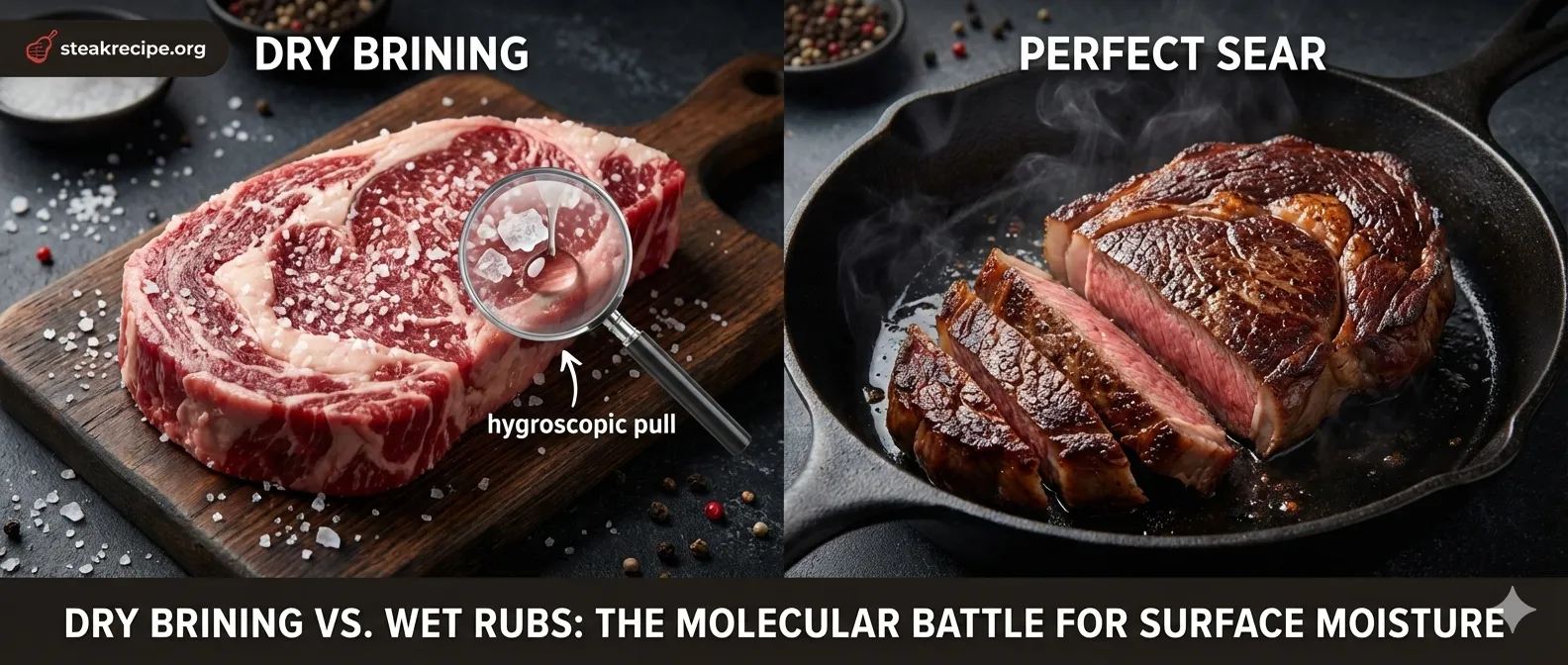
The pursuit of a perfect steak often leads home cooks to the debate between wet and dry seasoning methods. Many people still rely on wet rubs and oil based marinades to provide flavor and moisture. Science suggests a different approach is necessary for an elite culinary result. This article explores the molecular physics of meat surfaces. We look at why dry brining is the superior method for creating a world class crust.
The Core Definition of Dry Brining
Dry brining is a technical process where salt leverages osmotic pressure to relocate internal moisture. This technique creates a concentrated brine that seasons the meat from the inside out. Wet rubs fail because they introduce thermal anchors to the surface. These anchors prevent the Maillard reaction from occurring efficiently. Dry brining ensures a dehydrated surface that facilitates a rapid and deep sear.
The Surface Tension Hypothesis: Why Wet Rubs Fail the Sear
A wet rub usually consists of oil, vinegar, or water mixed with various spices. While these ingredients smell wonderful, they create a physical catastrophe for the steak surface. The primary goal of a high heat sear is to reach temperatures above 300 degrees Fahrenheit. This temperature triggers the Maillard reaction which is the chemical dance between amino acids and sugars. Water boils at 212 degrees Fahrenheit. As long as there is liquid moisture on the surface of your steak, the temperature of the meat cannot rise above the boiling point.
This creates what scientists call an evaporation tax. Every unit of heat from your pan must first work to boil away the surface liquid. This process consumes massive amounts of energy. The steak essentially steams in its own juices while the pan loses its thermal momentum. You end up with a gray and rubbery exterior instead of a mahogany crust. The center of the steak continues to cook while you wait for the surface to dry. This often leads to an overcooked interior before the outside ever achieves a proper sear.
The dilemma of dilution further complicates the use of wet rubs. Oil and acid might provide surface flavor, but they physically sabotage structural crust development. Acid can break down surface proteins into a mushy texture. Oil can smoke and turn bitter before the meat proteins actually brown. A dry surface is the only way to ensure that the heat of the pan goes directly into the protein. This direct energy transfer is what creates a crisp and flavorful edge.
The Osmotic Cycle: A Three Stage Molecular Journey
Understanding the transition from a salted surface to a seasoned interior requires a look at the osmotic cycle. This journey involves three distinct stages of molecular movement.
The first stage is the hygroscopic pull. When you apply salt to the surface of a raw steak, the crystals begin to act like tiny magnets for water. Salt is naturally hygroscopic. It seeks out moisture to dissolve itself. Within minutes, the salt crystals draw out surface moisture through the semi permeable membrane of the muscle cells. You will see beads of liquid appearing on the steak. This is the meat “sweating.”
The second stage is the brine reabsorption. This is where the process of diffusion takes over. The salt dissolves into the moisture that it pulled out of the meat. This creates a highly concentrated brine on the surface. Because the concentration of salt is higher outside the cells than inside, the liquid begins to migrate back into the muscle tissue. The meat literally drinks the seasoned brine. This process takes time but it is the only way to ensure that the interior of the steak is as flavorful as the exterior.
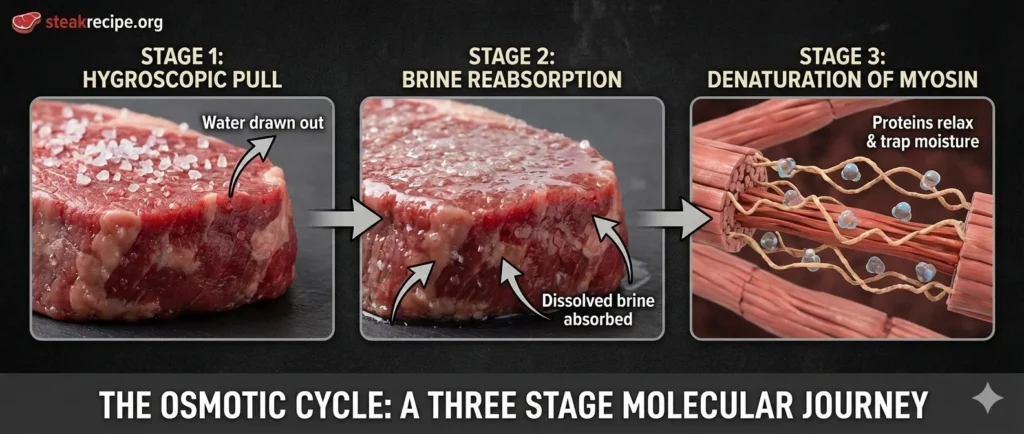
The third stage involves the denaturation of myosin. As the salt ions enter the muscle cells, they begin to interact with the structural proteins. Myosin is a primary protein responsible for the contraction of muscle fibers. The salt ions cause these protein strands to unwind and relax. This molecular uncoiling creates a loose mesh structure. This structure is much more efficient at trapping moisture during the heat of the cook. You are essentially pre conditioning the meat to stay juicy.
How Long to Dry Brine: The Diminishing Returns Scale
Timing is the most critical variable in the dehydration of the steak surface. You must understand the 45 minute danger zone. If you salt your steak and put it in the pan within 15 minutes, you are inviting failure. At this stage, the steak is in the middle of the sweating phase. The surface is covered in beads of moisture. This is the wettest your steak will ever be. Cooking at this point ensures a gray and boiled appearance. You must wait for the reabsorption phase to finish.
The 24 hour sweet spot is the gold standard for professional results. This duration allows enough time for the salt to penetrate deep into the thickest cuts. It also provides a window for the physics of surface pellicle formation to occur. A pellicle is a thin and dry skin that forms as the refrigerator air circulates around the meat. This dehydrated skin is essentially a fuel for the Maillard reaction. It turns into a glass like crust the moment it touches the fat in your pan.
You should be aware of the 48 hour threshold. Extending the dry brine beyond two days can lead to a point of diminishing returns. The salt continues to break down the protein structure. This can eventually result in a cured or ham like texture. The meat may lose its characteristic beefy bite and become overly soft. For most steaks between 1.5 and 2 inches thick, 24 hours is the ideal duration. If you are cooking a very thick roast of 3 inches or more, you can safely approach the 48 hour mark.
The Salt Hierarchy: Particle Size and Solubility
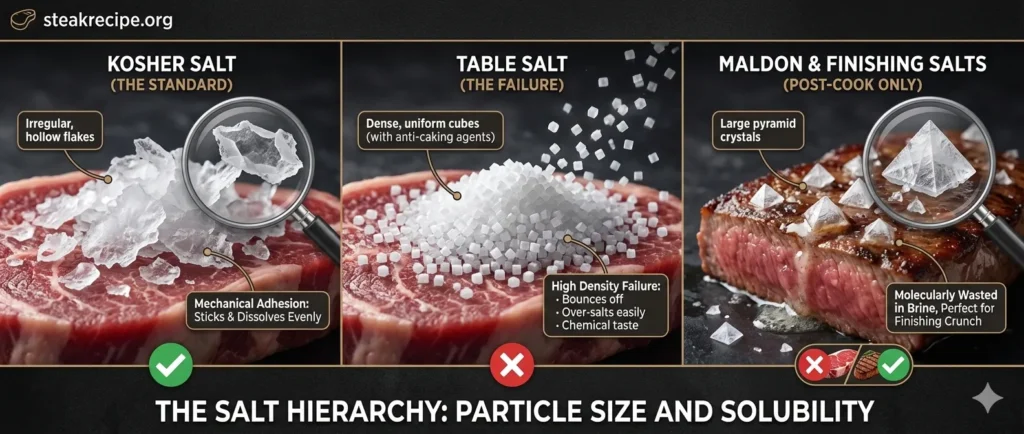
The type of salt you choose dictates the mechanical success of your brine. Kosher salt is the industry standard for a reason. Its irregular crystal shape allows for superior mechanical adhesion to the meat surface. Brands like Diamond Crystal are hollow and light. They dissolve quickly into the surface moisture. Morton’s is denser but still provides the necessary surface area for even distribution.
Table salt is a complete failure for dry brining. The crystals are too small and too dense. It is very easy to over salt a steak with table salt because the volume of salt per teaspoon is much higher than Kosher salt. Table salt also contains iodine and anti caking agents. These chemicals can produce off flavors when subjected to the high heat of a sear.
Maldon and other finishing salts are molecularly wasted in a brine. Their beautiful pyramid shapes are meant to provide crunch and a burst of saltiness at the end of the meal. If you use them for a dry brine, they simply dissolve and lose their structural identity. Save these expensive salts for the post rest period.
The 1% salinity formula is the secret to professional grade results. You should aim for a salt to weight ratio of approximately one percent. This usually equates to about one teaspoon of Kosher salt per pound of beef. This precise calculation ensures that the meat is perfectly seasoned without becoming unpleasantly salty. It provides enough ions to trigger protein denaturation across the entire cut.
Moisture Science: Why Brined Meat Feels Juicier
The perception of juiciness in a steak is a matter of weight retention and protein structure. When you cook a plain steak, the muscle fibers contract like a tightening fist as they get hot. This thermal contraction squeezes out the internal juices. This is why you see a pool of red liquid on your cutting board. A dry brined steak behaves differently.
The denatured proteins prevent the muscle fibers from wringing out water like a sponge. The relaxed myosin strands act as a biological sponge. They hold the water in place even as the temperature rises. Data shows that dry brined steaks retain significantly more internal weight after cooking than untreated beef. This is known as the 20% retention rule. You are literally keeping more of the natural juices inside the meat where they belong.
Capillary action also plays a role in this process. The salt modified protein matrix creates tiny channels that hold liquid through surface tension. When you bite into a dry brined steak, your teeth release this trapped moisture. This creates the “melt in your mouth” sensation that diners crave. It is a physical result of molecular engineering.
Perfect Crust Salt Technique: The Rain Method
Your application technique is the final step in the molecular battle. You must master the rain method for uniform distribution. Holding your hand at least twelve inches above the steak allows the salt crystals to disperse naturally through the air. This avoids salt clusters and ensures a uniform molecular coating. If the salt is uneven, the osmotic cycle will be patchy. Some areas will be dry while others are still sweating.
Pellicle formation is the goal of your refrigerator rest. You must place the steak on an uncovered wire rack. This allows for total airflow around the entire piece of meat. The refrigerator is a naturally dehydrating environment. This airflow accelerates the evaporation of any remaining surface moisture. The result is a steak that looks dark and slightly leathery before it is cooked. This is exactly what you want.
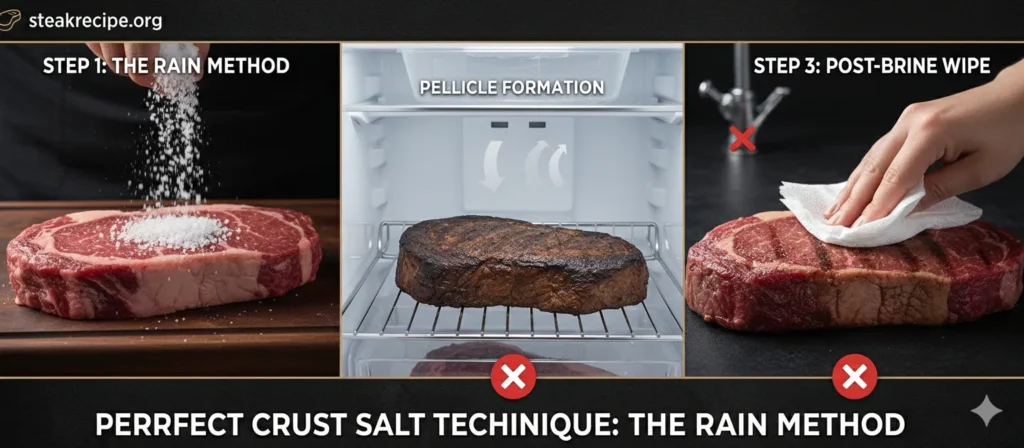
The post brine wipe is the final touch. You must never rinse a dry brined steak. Rinsing reintroduces the very moisture you worked so hard to remove. If there are any large crystals of salt or visible moisture left, simply pat the meat dry with a paper towel. This ensures the surface is ready to meet the tallow for a perfect sear.
FAQ on Dry Brining and Surface Science
Does dry brining make a steak taste too salty?
No. When you follow the one percent salinity formula, the salt distributes evenly throughout the muscle fibers. It enhances the natural beefy flavor of the meat. It does not create the sharp surface saltiness associated with table salt application.
Can I dry brine a steak using a spice rub?
You should dry brine with salt alone first. Sugars and other non osmotic spices can physically block the salt from reaching the meat surface. This interference slows down the osmotic cycle. Apply your aromatic spices and pepper just before the steak hits the pan.
Should I dry brine a steak in the refrigerator or at room temperature?
You must always dry brine in the refrigerator. Cold air is significantly drier than room temperature air. This dry environment is essential for the formation of the pellicle. The refrigerator also ensures the meat stays at a safe temperature during the long reabsorption phase.
Does dry brining work on frozen steaks?
No. The osmotic cycle requires liquid moisture to dissolve the salt and move it into the muscle. You should fully thaw your steak and pat it dry before beginning the brining process. Brining a frozen steak results in a patchy and inconsistent sear.
Is it necessary to rinse the salt off before cooking?
Never rinse a dry brined steak. Rinsing introduces surface water that ruins the dehydration process. The salt has already moved into the interior of the meat. Simply pat the surface with a paper towel to remove any stray moisture or large crystals.
Dry Brine vs. Wet Brine: The Outcome
Why This Video is Relevant
This experiment by Salty Tales provides a direct, side-by-side comparison of dry brining versus wet seasoning methods. You will see how the wet brine introduces excess surface moisture that inhibits the crust, while the dry-brined steak achieves the deep mahogany sear discussed in our guide.
Physics Proof: Pay close attention to the texture of the exterior. The dry-brined steak shows the clear development of a Pellicle, which is the key to elite crust formation.
View Detailed Experiment