
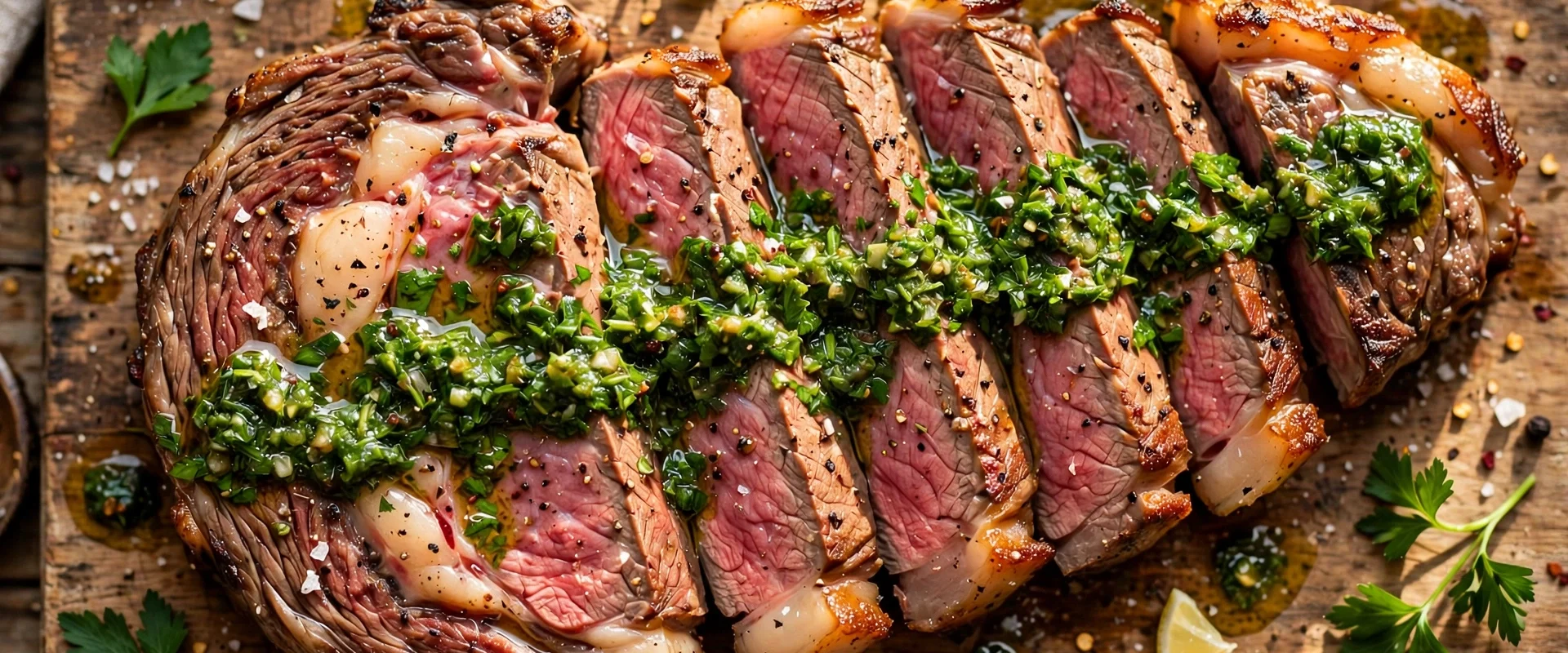
Chimichurri recipe for steak takes ten minutes, no cooking, and one bowl, and it turns a plain grilled steak into something that tastes like it came off a Buenos Aires grill. I tested this version five times over two weeks, tweaking the garlic, the vinegar, and the chop size, until the sauce stayed bright, punchy, and balanced instead of bitter or oily. This is the version I now make every time steak night rolls around.
Key Takeaways
- Chimichurri recipe for steak needs fresh flat leaf parsley, good olive oil, red wine vinegar, garlic, and chilli, and nothing else fancy.
- Chop by hand, never blend, so the sauce keeps its texture and stays green for days.
- Rest the sauce for at least 30 minutes before serving so the flavours marry.
- Spoon it over rested steak, never onto a sizzling hot pan, so the herbs stay fresh.
- It keeps in the fridge for up to a week and actually tastes better on day two.
What Is Chimichurri?
Chimichurri is Argentina’s famous uncooked herb sauce, served alongside grilled beef at every asado, the country’s beloved barbecue gathering. The classic version blends parsley, oregano, garlic, olive oil, and vinegar into a loose, spoonable sauce with a sharp, herby bite. Unlike a marinade, chimichurri usually goes on after cooking, spooned generously over sliced steak so every bite carries fresh flavour. I first tasted proper chimichurri at a friend’s asado in London, where the host spooned it over picanha straight off the grill, and this chimichurri recipe for steak recreates that flavour at home.
Why This Chimichurri Recipe for Steak Works
Most online versions fail in one of three ways. Some blend the herbs into a smooth green paste that tastes like pesto. Some drown the parsley in oil so the sauce slides off the meat. Some add so much raw garlic that the sauce burns your mouth for an hour. I tested each variable separately. Hand chopping keeps the texture loose and rustic. A ratio of three parts oil to one part vinegar keeps the sauce bright without turning sour. Three cloves of garlic give warmth without overpowering the herbs. The result is a sauce that lifts steak instead of fighting it.
Chimichurri Recipe for Steak Ingredients
This recipe makes about 240 ml, enough for four generous steak servings with some left over for sandwiches the next day. Use the best olive oil you can afford, because raw oil is the backbone of the sauce.
- 60 g fresh flat leaf parsley leaves, tightly packed (about 2 large bunches)
- 3 garlic cloves, finely minced
- 1 small shallot, very finely diced (optional but recommended)
- 1 red chilli, deseeded and finely chopped, or 0.5 tsp dried chilli flakes
- 1 tsp dried oregano
- 120 ml extra virgin olive oil
- 40 ml red wine vinegar
- 1 tbsp lemon juice, freshly squeezed
- 1 tsp flaky sea salt
- 0.5 tsp black pepper, freshly ground
How to Make This Chimichurri Recipe for Steak
Set aside ten minutes and a sharp knife. The whole method is chopping and stirring, and the sauce rewards patience more than skill.
Step 1: Chop the Parsley by Hand
Wash the parsley and dry it thoroughly in a salad spinner or with a clean tea towel. Wet leaves make a watery sauce. Pick the leaves from the thick stems, keep the tender upper stems, and chop the leaves finely with a sharp knife. You want small, distinct pieces, not a paste. Transfer the chopped parsley to a medium bowl.
Step 2: Add the Aromatics
Add the minced garlic, diced shallot, chopped chilli, and dried oregano to the bowl. Stir them through the parsley so everything distributes evenly. I tested this sauce with and without shallot, and the shallot version won every time for its gentle sweetness against the vinegar.
Step 3: Whisk in the Oil and Vinegar
Pour in the olive oil, red wine vinegar, and lemon juice. Add the salt and pepper, then stir well until the mixture looks loose and glossy. Taste it now. It should taste sharp and salty, almost too strong on its own. Remember that it will sit on rich beef, not on a spoon, so bold seasoning is correct.
Step 4: Rest Before Serving
Cover the bowl and leave it at room temperature for at least 30 minutes. This rest matters more than any single ingredient. The vinegar softens the raw garlic edge, the salt draws out the parsley flavour, and the oil carries everything together. I tested the sauce at ten minutes, thirty minutes, and two hours, and the thirty minute version tasted noticeably rounder than the fresh one.
How to Serve Chimichurri With Steak
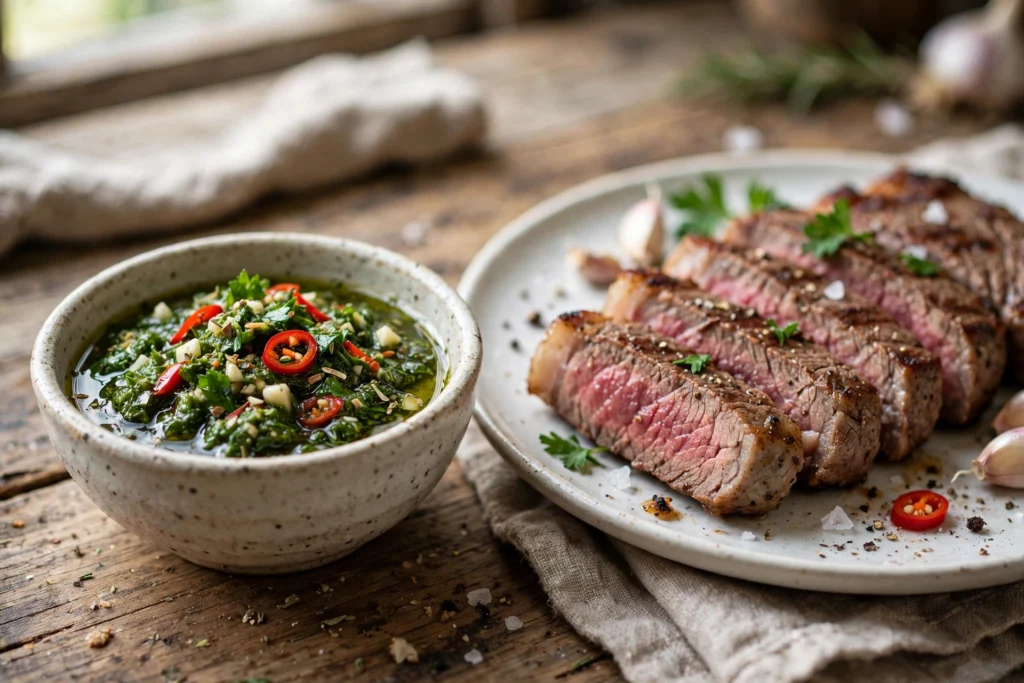
Cook your steak the way you like it, then rest it properly. I rest a thick steak for five minutes before slicing, and I check my temperatures against my steak doneness guide so the centre stays pink. Slice the steak against the grain, arrange it on a warm platter, and spoon this chimichurri recipe for steak generously over the top. Save some sauce in a small bowl on the table, because guests always ask for more.
Chimichurri loves rich, beefy cuts. It is superb on Brazilian picanha, on a thick ribeye, and on the bavette I cooked for my how to cook bavette steak guide. The bright acidity cuts through the fat on all three. For a fuller steak night spread, pair it with my peppercorn sauce recipe and let guests choose between creamy and fresh.
Chimichurri Recipe for Steak Variations I Tested
Once you master the classic, small tweaks give you new sauces without new skills. I tested all four of these, and each one earned a place in my rotation.
- Spicy chimichurri: keep the chilli seeds in and add a second chilli. This version suits leaner cuts like sirloin that need extra punch.
- Smoky chimichurri: add 0.5 tsp smoked paprika. The smokiness pairs beautifully with steak cooked on a grill or Blackstone.
- Red chimichurri: swap half the parsley for roasted red pepper, finely diced, and add a pinch of cumin. This is the Argentine chimichurri rojo style.
- Mint chimichurri: replace a quarter of the parsley with fresh mint. This lighter version works well with lamb, and it also suits a summer steak salad.
How to Store Chimichurri
Pour the sauce into a clean jar, press the herbs down, and pour a thin layer of olive oil over the top to seal out air. This chimichurri recipe for steak keeps in the fridge for up to seven days. The colour dulls slightly after day three, but the flavour stays excellent, and I honestly prefer the day two version. For longer storage, freeze chimichurri in ice cube trays, then move the cubes to a freezer bag. Frozen cubes keep for three months and thaw in minutes, which makes weeknight steak feel effortless.
One caution from my testing: never leave chimichurri sitting out for hours on a hot day. The raw garlic and fresh herbs deserve refrigeration, and food safety guidance on perishable sauces is clear that two hours at room temperature is the limit. The FoodSafety.gov cold food storage chart gives the same rule for prepared foods, and I follow it for every sauce I make.
What to Serve With Chimichurri Steak
Chimichurri steak needs sides that stay simple so the sauce stays the star. I serve this chimichurri recipe for steak with crispy roast potatoes, a tomato and red onion salad, and grilled corn on the cob in summer. Crusty bread matters too, because guests will mop up every drop of sauce left on the plate. For a full menu, my good sides for steak guide lists fifteen options that work with bold sauces like this one.
Chimichurri Recipe for Steak: Recipe Card
Prep time: 10 minutes | Rest time: 30 minutes | Total time: 40 minutes | Serves: 4 | Course: Sauce | Cuisine: Argentine
Ingredients: 60 g flat leaf parsley, 3 garlic cloves, 1 small shallot, 1 red chilli, 1 tsp dried oregano, 120 ml extra virgin olive oil, 40 ml red wine vinegar, 1 tbsp lemon juice, 1 tsp flaky sea salt, 0.5 tsp black pepper.
Method: 1. Chop the parsley finely by hand. 2. Stir in the garlic, shallot, chilli, and oregano. 3. Whisk in the oil, vinegar, and lemon juice, then season. 4. Rest for 30 minutes, then spoon over rested, sliced steak.
Nutrition per serving (about 60 ml): approximately 260 calories, 27 g fat, 2 g carbohydrate, 1 g protein, 480 mg sodium. Values are estimates and vary with the oil used.
Frequently Asked Questions
Can I make chimichurri in a food processor?
You can, but pulse it only two or three times and stop while the herbs still look chopped. A fully blended sauce turns into a green paste, loses the classic texture, and can turn bitter from overworked herbs. I tested both methods side by side, and the hand chopped version won on flavour and appearance every time.
How long does chimichurri last in the fridge?
Chimichurri keeps for up to seven days in a sealed jar in the fridge, with a thin layer of oil on top. The flavour peaks on day two. Discard it if it smells sour beyond its normal vinegar tang or if the herbs turn dark and slimy.
Is chimichurri spicy?
Classic chimichurri carries gentle warmth, not serious heat. One deseeded red chilli gives background warmth that most guests enjoy. Leave the seeds in or add chilli flakes if you want real heat, and skip the chilli entirely for a mild version that still tastes complete.
Can I use curly parsley instead of flat leaf parsley?
Yes, but flat leaf parsley gives a stronger, cleaner herb flavour, and curly parsley can taste slightly bitter raw. If curly parsley is all you have, use it, and add an extra handful to make up for its milder flavour.
What steak cuts go best with chimichurri?
Chimichurri suits rich cuts best: picanha, ribeye, bavette, skirt, and flank. The acidity cuts through fat and lifts the beef flavour. It also works on leaner cuts like sirloin, where it adds the moisture and punch the meat lacks on its own.