

Table of Contents
Yes, you can make a beef wellington recipe at home that slices clean, keeps the pastry crisp and leaves the fillet pink in the middle. The secret is not skill. It is temperature control at four points: a hard sear, a dry mushroom duxelles, a chilled wrap and a hot oven. I tested this beef wellington recipe three times in my own kitchen before I trusted this beef wellington recipe for Christmas, and the version below is the one that worked every time.
Key Takeaways
- A beef wellington recipe works when the fillet, the duxelles and the pastry are all cold before they go in the oven.
- Pull the wellington at 52C for medium rare. The temperature climbs 3 to 5 degrees while it rests.
- Use a 500g centre cut fillet, not the thin tail end, so the centre cooks evenly.
- Roll the pastry tight in cling film and chill it for 30 minutes. A loose wrap is the main cause of a soggy base.
- Rest the wellington for 15 minutes before you cut it, or the juices run out and the pastry goes soft.
Why This Beef Wellington Recipe Works
Most beef wellington recipe failures come from the same three mistakes. The mushroom layer stays wet, the pastry goes in warm, or the fillet overcooks while the pastry finishes. Every time I cook this beef wellington recipe, the same four temperatures decide the result. This version fixes all three. I cook the mushrooms until the pan is dry and the mix holds its shape. I chill every layer before assembly. I bake at 220C so the pastry sets fast while the fillet stays pink.
Beef wellington is the festive centrepiece for a reason. Beef is the most searched meat in December, and a wellington turns a simple fillet into the dish everyone photographs. It looks grand, it feeds six, and it costs far less than booking a table for six at a restaurant. The work is mostly waiting: chilling, resting and letting the oven do its job.
Beef Wellington Recipe: Ingredients
Serves 6. Prep 45 minutes plus chilling. Cook 35 to 40 minutes. Rest 15 minutes.
For the fillet
- 500g beef fillet, centre cut, trimmed
- 1 tablespoon vegetable oil
- 1 teaspoon flaky sea salt
- 1 teaspoon cracked black pepper
- 1 tablespoon English mustard
For the mushroom duxelles
- 400g chestnut mushrooms, finely chopped
- 2 banana shallots, finely chopped
- 2 garlic cloves, crushed
- 1 tablespoon butter
- 1 tablespoon fresh thyme leaves
- Salt and black pepper
For the wrap and pastry
- 6 slices Parma ham or prosciutto
- 320g ready rolled puff pastry, all butter if you can find it
- 1 egg, beaten, for the egg wash
- Flaky sea salt, to finish
How to Make Beef Wellington: Step by Step
Step 1: Sear the fillet hard
Heat the oil in a heavy pan until it shimmers. Season the fillet all over with salt and pepper. Sear it for 90 seconds on each side, including the ends, until it has a deep brown crust. This sear builds flavour and it also seals the surface so less juice escapes later. Brush the hot fillet with mustard on all sides, then set it aside to cool completely. A warm fillet melts the pastry from the inside, so do not rush this.
Step 2: Cook the duxelles until the pan is dry
Melt the butter in the same pan. Add the shallots and cook for 2 minutes until soft. Add the mushrooms, garlic and thyme, then season. Cook on a medium high heat for 10 to 12 minutes, stirring often. The mushrooms give up a lot of water first, then the water boils away. Keep going until the mix looks like a thick dark paste and the pan is dry when you drag a spoon across it. This is the step that stops a soggy base, so do not stop early. Spread the duxelles on a plate and cool it completely.
Step 3: Wrap the fillet in Parma ham
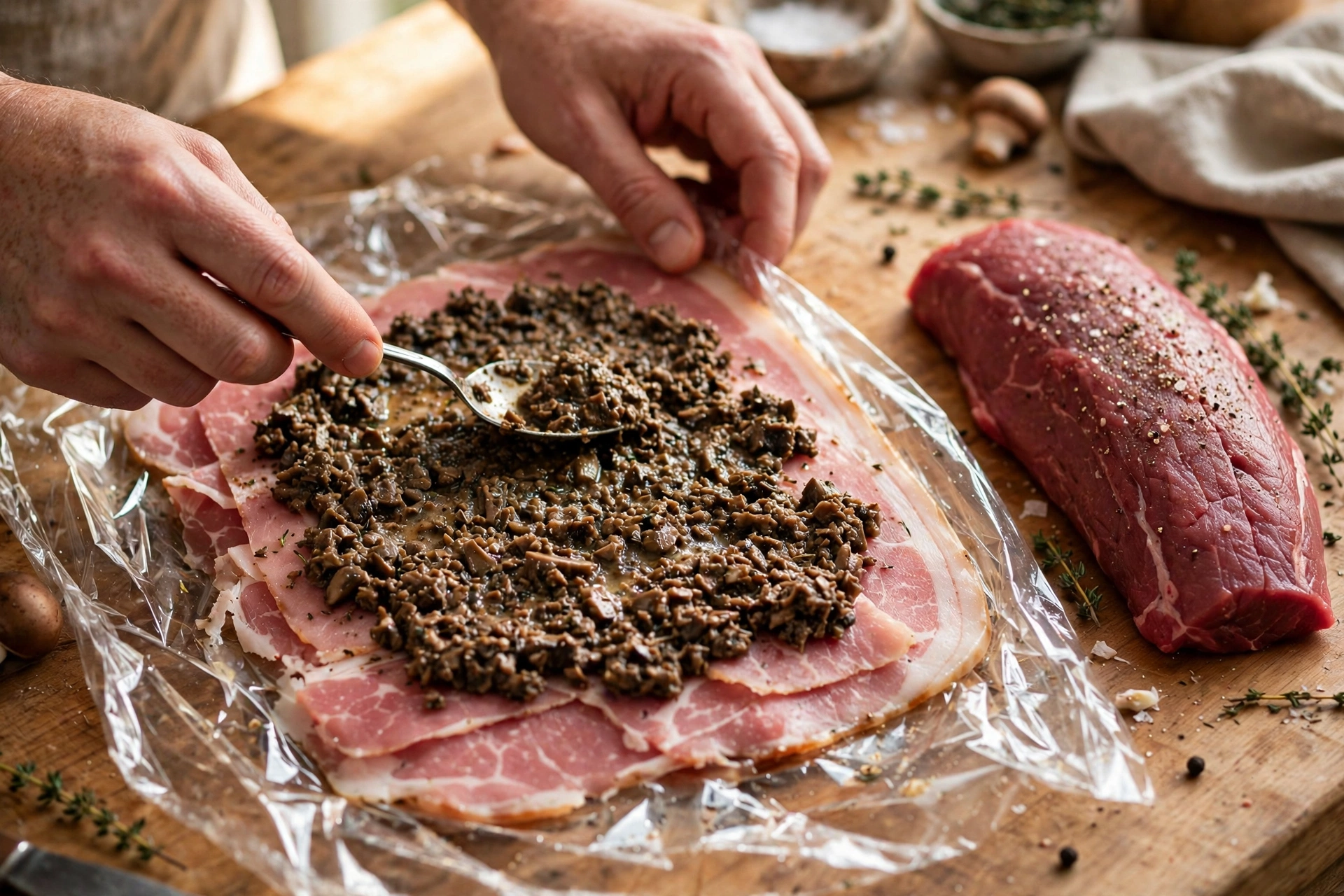
Lay a large sheet of cling film on the worktop. Arrange the Parma ham slices in a row, overlapping slightly, to make a rectangle a little wider than the fillet. Spread the cold duxelles evenly over the ham. Sit the cold fillet at the bottom edge, then use the cling film to roll it up tight, like a sausage. Twist the ends to tighten the roll. Chill it in the fridge for 30 minutes. This chill sets the shape and keeps the layers tight when you cut it later.
Step 4: Wrap in pastry and chill again
Unroll the puff pastry on a lightly floured surface. Unwrap the chilled fillet and place it in the centre of the pastry. Brush the pastry edges with beaten egg. Fold the pastry over the fillet, trim the excess and seal the joins with egg wash. Roll it seam side down. Score the top lightly with the back of a knife if you like a pattern, then brush all over with egg wash and sprinkle with flaky sea salt. Chill for another 30 minutes. A cold wellington hits a hot oven and the pastry puffs before the heat reaches the fillet.
Step 5: Bake hot and rest before slicing
Heat the oven to 220C (200C fan, 425F). Put the wellington on a lined baking tray. Bake for 35 to 40 minutes until the pastry is deep golden and puffed. This is the moment the whole beef wellington recipe comes together, so do not open the oven door in the first 20 minutes. For medium rare, pull it at 52C on a probe thermometer in the centre. The temperature climbs to around 55C while it rests. Rest the wellington for 15 minutes before you slice it with a sharp serrated knife. Resting keeps the juices in the meat and stops the pastry base going soft.
Beef Wellington Temperature Guide
Temperature is the whole game in a beef wellington recipe, because you cannot see the fillet once the pastry closes over it. Use a probe thermometer and trust it over the clock. Pull the wellington at 50C for rare, 52C for medium rare and 57C for medium. Never take it past 60C at the pull, because carryover cooking adds 3 to 5 degrees during the rest and the fillet will be grey by the time you serve it. If you do not own a probe, bake for 35 minutes for a 500g fillet and check the pastry colour, but a thermometer costs less than the fillet and it removes the guesswork. FoodSafety.gov lists 63C as the safe minimum internal temperature for whole cuts of beef, with a 3 minute rest, so if you cook for guests who want that margin, pull at 60C and rest it well.
What Cut of Beef for Beef Wellington
Use a centre cut beef fillet, also sold as tenderloin. It is the only cut that cooks evenly inside pastry, because it is one even cylinder with almost no fat to render. Ask the butcher for the thick middle section, around 500g for six servings, and skip the thin tail end. The tail cooks faster than the middle and leaves one end overdone. A cheaper cut like topside or silverside will not work here. Those cuts need long slow cooking, and a wellington bakes fast and hot. Save the braising cuts for my how to cook braising steak guide, where low and slow is the point. If fillet feels too dear, make a wellington for four with a 350g piece and cut the pastry and duxelles by a third.
Common Beef Wellington Mistakes
The pastry base is soggy
Wet duxelles is the usual cause. Cook the mushrooms until the pan is dry, chill every layer, and bake on a preheated tray so the base gets heat from below. A pizza stone or a heavy baking sheet left in the oven while it heats works well.
The pastry splits or leaks
Too much filling, a loose roll or warm pastry. Roll the ham wrap tight in cling film and chill it. Trim the pastry so you have one clean seam, not a thick overlap, and seal the joins with egg wash before the final chill.
The fillet is overcooked
The oven was too cool or the wellington stayed in too long. Bake at 220C, not 180C. A cooler oven needs more time, and that time cooks the fillet through. Trust the probe, not the pastry colour.
The slices fall apart
You cut it too soon. Fifteen minutes of rest lets the pastry set and the meat relax. Use a serrated knife and one smooth stroke per slice, not a sawing motion.
Make Ahead and Freezing
A beef wellington recipe suits Christmas Day because most of the work happens the day before. If you want a beef wellington for Christmas, assemble the whole wellington, wrap it in cling film and keep it in the fridge for up to 24 hours. Brush it with egg wash just before it goes in the oven. You can also freeze the assembled, unbaked wellington for up to a month. Bake it from frozen at 200C for 50 to 55 minutes, and check the centre temperature before serving. Do not freeze a baked wellington. The pastry never recovers its crispness after thawing.
What to Serve With Beef Wellington
Keep the sides simple so the wellington stays the star. Roast potatoes, honey glazed carrots and a green vegetable cover the plate without fighting the pastry. My good sides for steak guide has the full list, and the roast potatoes there are the same ones I serve with this beef wellington recipe. A red wine gravy or a simple jus works better than a thick sauce, which hides the pastry. For doneness on any steak you serve alongside, my steak doneness guide lists the pull temperatures for every level from rare to well done.
Beef Wellington Recipe Card
Beef Wellington Recipe: Crisp Pastry, Pink Centre
Prep: 45 minutes plus 1 hour chilling. Cook: 35 to 40 minutes. Rest: 15 minutes. Serves 6.
Ingredients: 500g centre cut beef fillet, 1 tablespoon vegetable oil, 1 teaspoon flaky sea salt, 1 teaspoon cracked black pepper, 1 tablespoon English mustard, 400g chestnut mushrooms, 2 banana shallots, 2 garlic cloves, 1 tablespoon butter, 1 tablespoon fresh thyme leaves, 6 slices Parma ham, 320g ready rolled puff pastry, 1 egg beaten.
Method: Sear the seasoned fillet for 90 seconds per side and brush with mustard. Cook the mushroom duxelles until the pan is dry and cool it. Wrap the fillet in Parma ham and duxelles, roll tight in cling film and chill 30 minutes. Wrap in pastry, seal with egg wash, chill 30 minutes. Bake at 220C for 35 to 40 minutes until golden, pull at 52C for medium rare, rest 15 minutes, slice and serve.
Nutrition per serving (estimate): 520 calories, 38g protein, 28g fat, 24g carbohydrate.
Frequently Asked Questions
Can I make beef wellington the day before?
Yes. Assemble the whole wellington, wrap it in cling film and refrigerate for up to 24 hours. Brush with egg wash just before baking and add 2 to 3 minutes to the bake time because it goes in cold.
What temperature should beef wellington be when done?
Pull it at 52C for medium rare. The temperature rises 3 to 5 degrees during the 15 minute rest, so it serves at around 55C. Pull at 50C for rare and 57C for medium.
Why is my beef wellington soggy on the bottom?
The mushroom layer was too wet or the layers went in warm. Cook the duxelles until the pan is dry, chill the wrapped fillet and the finished wellington before baking, and bake on a preheated tray.
Can I use shop bought puff pastry for beef wellington?
Yes, and most cooks should. Ready rolled all butter puff pastry gives a crisp, even result with far less work than homemade. Avoid pastry made with vegetable fat if you can, because it browns less well and tastes plainer.
Can I make beef wellington without Parma ham?
Yes. Use thinly sliced prosciutto, serrano ham or even crepes. The ham layer adds salt and a barrier between the duxelles and the pastry, so keep some layer there rather than skipping it altogether.
How do I slice beef wellington without it falling apart?
Rest it for 15 minutes, then cut with a sharp serrated knife in one smooth stroke per slice. Aim for slices about 3cm thick so each one holds its layers.