
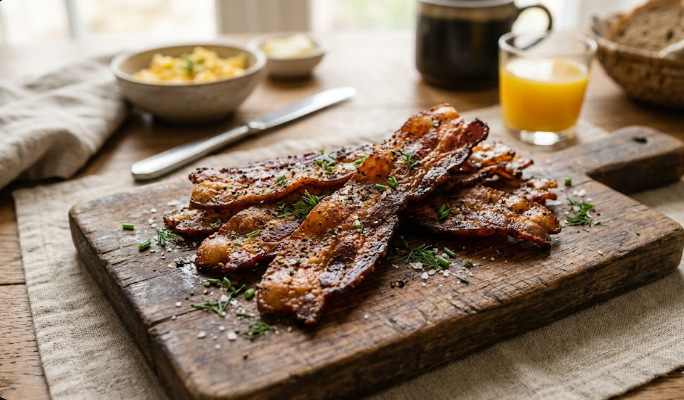
Beef bacon comes from the beef navel, a fatty cut from the belly of the cow in roughly the same position as pork belly on a pig. You cure it with salt, sugar, and curing salt, smoke or bake it low and slow, then chill it, slice it, and fry the slices exactly like pork bacon. The result tastes richer and beefier than pork bacon, with a deep savoury chew that works at breakfast and in burgers, salads, and baked beans.
Key Takeaways
- Use beef navel if you can find it. Brisket flat is the easiest substitute and still slices and fries well.
- The cure is measured by weight: 2.5 percent kosher salt, 0.25 percent curing salt No. 1, and 2.5 percent brown sugar, all based on the weight of the meat.
- Cure for 5 to 7 days in the fridge, then smoke at 200 to 225 degrees F until the meat reaches 150 degrees F inside.
- Store cooked beef bacon in the fridge for up to 1 week or freeze it for up to 1 month for best quality.
Which Cut Makes Beef Bacon?
Butchers cut traditional beef bacon from the navel plate, the fatty belly section under the ribs. Navel has the layered fat and lean streaks that make bacon fry up with crisp edges and a tender centre. Ask a butcher for it by name, because most shops keep it for grinding unless a customer requests it.
If navel is not available, use a brisket flat. It is leaner, so the finished bacon eats meatier and less rich, but the cure and smoke method stays the same. Avoid the brisket point for bacon. Its fat runs in thick seams rather than layers, and the slices fall apart in the pan. Kosher and halal butchers stock beef bacon cuts most reliably, since their customers ask for it often.
Ingredients for the Cure
This cure is written for 1 kg (about 2.2 lb) of beef navel or brisket flat. Scale every ingredient by the exact weight of your meat. Weighing the cure matters because the curing salt must stay in a safe, accurate range, the same principle behind the salt ratios in my dry brining guide.
- 1 kg beef navel or brisket flat, skin off
- 25 g kosher salt (2.5 percent)
- 2.5 g curing salt No. 1, also called Prague powder No. 1 (0.25 percent)
- 25 g dark brown sugar (2.5 percent)
- 4 g coarse black pepper
- 3 g garlic powder
- 3 g smoked paprika (optional, for colour and a light smoke note)
Curing salt No. 1 gives beef bacon its rosy colour and protects the meat during the long cure and low smoke. Measure it on a gram scale, never by spoon. If you choose to skip it, cure for no more than 5 days, smoke the meat to 155 degrees F, and eat the bacon within a few days. The colour will be grey brown rather than pink, and the flavour less like classic bacon.
Step 1: Cure the Beef
- Mix all the dry cure ingredients in a small bowl until the pink curing salt disappears evenly into the mix. No streaks.
- Rub the cure over every surface of the beef, including the edges.
- Seal the beef in a zip bag or vacuum bag with any cure that fell off during rubbing.
- Refrigerate for 5 to 7 days. Flip the bag once a day and massage the liquid that collects back over the meat. The beef will firm up and darken as the cure works.
When I cure navel at home, day 5 gives a mild bacon flavour and day 7 gives a deeper, saltier result. I use 7 days for thick pieces over 2 inches and 5 days for thinner ones.
Step 2: Rinse, Dry, and Rest
- Take the beef out of the bag and rinse the surface cure off under cold water.
- Pat it completely dry with paper towels.
- Rest it uncovered on a rack in the fridge for 12 to 24 hours. This dries the surface into a tacky layer called a pellicle, which grabs smoke and builds colour.
If your bacon ever tastes too salty, soak the cured beef in cold water for 1 hour after rinsing and pat it dry before the fridge rest. That pulls the surface salt back without undoing the cure.
Step 3: Smoke or Bake
Smoker method
- Run your smoker at 200 to 225 degrees F with a mild fruit wood such as apple or cherry. Beef bacon takes smoke quickly, so avoid strong woods like mesquite.
- Smoke the beef until the centre reaches 150 degrees F. Expect 3 to 4 hours for a typical navel piece.
- Rest it on the counter for 30 minutes, then refrigerate it uncovered until fully cold, at least 4 hours or overnight.
The low and slow approach is the same patience game as my trisket method. Low heat renders fat gently instead of squeezing it out.
Oven method (no smoker)
- Heat the oven to 200 degrees F and set the cured, rested beef on a rack over a tray.
- Bake until the centre reaches 150 degrees F, about 3 to 4 hours.
- Add 1 teaspoon of liquid smoke to the cure mix before rubbing if you want a smoke flavour without a smoker.
- Chill fully before slicing, exactly as with the smoker method.
Step 4: Slice and Fry
Slice the cold bacon with your longest, sharpest knife. Cut 2 to 3 mm slices for standard bacon or 5 mm slices for a thick cut. Cold meat and a long slicing stroke give you even slices that do not tear. A partially frozen piece, 30 minutes in the freezer, slices even cleaner.
Cook the slices three ways:
- Pan: Lay the slices in a cold cast iron pan, set the heat to medium, and fry 3 to 4 minutes per side until the edges crisp. Starting cold renders the fat gently and keeps the slices flat.
- Oven: Bake on a rack over a tray at 400 degrees F for 15 to 20 minutes. Best for a full batch.
- Air fryer: Cook at 375 degrees F for 8 to 10 minutes, flipping once.
Serve it anywhere pork bacon goes. It is excellent next to eggs, crumbled over salads, or stacked on a burger with a slice from my steak sides guide alongside.
Storage and Food Safety
The USDA cold storage guidance on FoodSafety.gov gives bacon 7 days in the fridge and 1 month in the freezer for best quality, and home cured beef bacon should follow the same limits. Wrap the unsliced piece tightly and refrigerate it for up to 1 week. Slice only what you need. Freeze slices in a single layer with parchment between them for up to 1 month, and thaw them overnight in the fridge. Cooked leftovers keep 4 to 5 days refrigerated. When in doubt, throw it out. No breakfast is worth a bad stomach.
Frequently Asked Questions
What part of the cow is beef bacon?
The navel plate, the fatty belly cut under the ribs. Brisket flat is the most common substitute and works with the same cure and cooking times.
Does beef bacon taste like pork bacon?
It tastes like bacon made from beef. The cure, smoke, and fry method is identical, but the flavour is deeper and beefier, and the chew is firmer. Most people who try it describe it as richer than pork bacon.
Can I make beef bacon without curing salt?
Yes, with limits. Cure for no more than 5 days, cook the meat to 155 degrees F, and eat it within a few days. The bacon will be grey brown instead of pink and the flavour will taste more like smoked beef than classic bacon. For a full 7 day cure and proper bacon flavour, use curing salt No. 1 measured by weight.
Why is my beef bacon too salty?
The cure sat too long for the thickness of the meat, or the cure was measured by volume instead of weight. Soak the cured beef in cold water for 1 hour before the drying rest to pull surface salt out, and always weigh the cure.
Is beef bacon healthier than pork bacon?
Not in any meaningful way. Beef navel is a fatty cut, and the calories and saturated fat land close to pork bacon. Beef bacon exists for flavour and for people who avoid pork, not as a health food.
Can I cure beef bacon with a wet brine instead?
Yes. Dissolve the same cure weights in 1 litre of cold water, submerge the beef for 5 to 7 days in the fridge, then rinse, dry, and smoke as written. The dry cure in this recipe gives a firmer texture and a stronger bacon flavour, which is why I use it.