
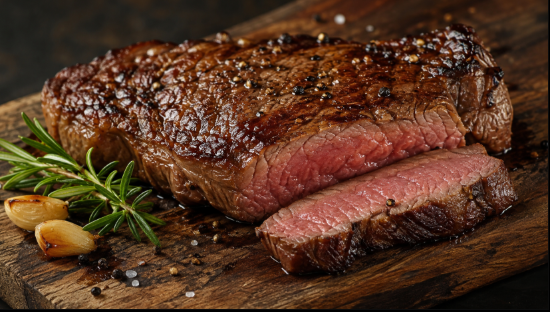
Top sirloin steak is one of those cuts that can be either surprisingly delicious or frustratingly tough. The difference usually comes down to how you choose, season, and cook it. Unlike a heavily marbled ribeye, top sirloin is relatively lean, so it gives you plenty of rich beef flavor without feeling overly fatty but it also has less room for overcooking.
That makes top sirloin an excellent everyday steak when you know how to handle it. It works on the grill, in a skillet, under the broiler, or even in recipes where you slice the steak into smaller pieces. Beef. It’s What’s For Dinner lists grilling, skillet cooking, stir-frying, broiling, skillet-to-oven cooking, and sous vide among the suitable methods for this cut.
What Is Top Sirloin Steak?
Top sirloin steak is a lean, beefy cut taken from the top portion of the sirloin primal. The sirloin itself is divided into top and bottom sections, and top sirloin produces steaks that are particularly well suited to high-heat cooking.
You may see several names for similar cuts at a butcher counter, including boneless top sirloin steak, top sirloin center-cut steak, top sirloin butt steak, and cap-off top sirloin steak. The exact shape and trimming can vary depending on how the larger sirloin section has been fabricated. What makes this steak attractive is its balance. It has a stronger beef flavor than many very lean cuts, but it doesn’t carry the amount of marbling found in ribeye. That means you get a steak that feels substantial and flavorful without being especially rich or greasy.
Where Does Top Sirloin Come From?
Top sirloin comes from the sirloin section of the beef loin, toward the rear of the animal. The sirloin is separated into top and bottom sirloin portions, with different cuts coming from each area.
This location helps explain why top sirloin has a firmer texture than cuts from less-used muscles. It isn’t as naturally tender as filet mignon, but it also isn’t as tough as some of the harder-working beef cuts. Understanding that difference is useful when cooking. You shouldn’t treat top sirloin like a ribeye that can tolerate plenty of extra heat because its marbling protects it. With top sirloin, temperature control matters.
Is Top Sirloin Steak Tender?
Yes, top sirloin can be tender, but it isn’t naturally as tender as filet mignon or a well-marbled ribeye.
Its relatively lean structure means overcooking can quickly make it firmer and drier. The good news is that you can greatly improve the eating quality by choosing a good steak, avoiding excessive cooking, resting it after cooking, and slicing it against the grain.
If your top sirloin regularly turns out tough, don’t immediately blame the cut. Check your technique first. A steak that has been cooked far beyond your preferred doneness will lose moisture, and slicing it incorrectly can make the muscle fibers feel even longer and tougher.
What Does Top Sirloin Steak Taste Like?
Top sirloin has a bold, beef-forward flavor with a relatively lean mouthfeel. It doesn’t have the buttery richness you get from a heavily marbled ribeye, but that is exactly what some steak lovers prefer. The flavor also makes it easy to season. Salt and pepper are enough for a classic steak, while garlic butter, chimichurri, steak sauces, spice rubs, or marinades can take it in completely different directions. If you enjoy the actual taste of beef rather than relying heavily on fat for flavor, top sirloin is worth trying.
How to Choose a Good Top Sirloin Steak
When shopping, don’t simply grab the first package labeled “sirloin.” Top sirloin is a specific section, and different sirloin cuts can have different characteristics.
Look for a steak that:
- Has an even thickness.
- Has some visible marbling rather than being completely devoid of fat.
- Has a clean, fresh appearance.
- Is thick enough to develop a crust without immediately overcooking.
- Has a shape that will cook evenly.
A steak around 1 to 1½ inches thick is particularly practical for grilling or pan-searing because it gives you enough time to brown the outside while controlling the inside.
You don’t need ribeye-level marbling. Top sirloin is naturally lean. A small amount of fine marbling is enough to contribute flavor and moisture.
Should You Marinate Top Sirloin Steak?
A marinade can add flavor, but it isn’t mandatory. For a good-quality steak, a simple salt-and-pepper seasoning can actually let the beef stand out better. If you do use a marinade, keep the flavor balanced. Garlic, herbs, Worcestershire sauce, soy sauce, olive oil, citrus, or vinegar can all work depending on the recipe. Another option is dry brining. Season the steak with salt ahead of cooking, then pat the surface dry before it goes onto the grill or into the skillet. A dry surface is important for developing a deep brown crust.
What Is the Best Seasoning for Top Sirloin?
For a classic steak, start with:
Salt + black pepper + a little garlic
That’s enough to produce a flavorful result without covering up the beef.
For something different, try smoked paprika, onion powder, rosemary, thyme, chili flakes, or a steak seasoning blend. After cooking, garlic-herb butter is an easy way to add richness to this relatively lean steak. Chimichurri is another excellent choice because its fresh herbs and acidity contrast nicely with the savory beef.
How to Cook Top Sirloin Steak
The best cooking method depends on the thickness of the steak, but grilling and pan-searing are two of the easiest choices.
The basic process is simple:
- Pat the steak dry.
- Season it.
- Heat your grill or skillet properly.
- Sear the steak over high heat.
- Check the internal temperature with a thermometer.
- Remove it at the appropriate temperature.
- Let it rest.
- Slice against the grain.
The biggest mistake is trying to judge doneness entirely by cooking time. USDA specifically recommends using a food thermometer and inserting it into the thickest part of the steak, away from bone, fat, or gristle.
How to Grill Top Sirloin Steak
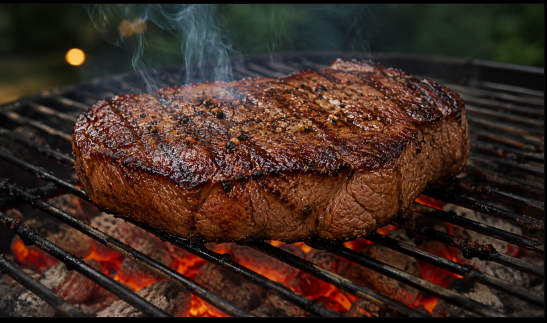
Preheat the grill well before cooking. For a roughly 1-inch steak, direct high heat can create the crust you want without requiring an excessively long cooking period. Place the steak on the hot grate and let it sear before flipping. Once the second side has browned, begin checking the internal temperature rather than continuing to cook based solely on the clock. For thicker steaks, a two-zone grill can be even better. Sear the steak over direct heat, then move it to the cooler side to finish cooking more gently.
How to Pan-Sear Top Sirloin Steak
A heavy skillet, especially cast iron, is excellent for top sirloin.
Heat the skillet until it is properly hot. Pat the steak dry, add a small amount of high-heat oil, and place the steak into the pan. Let it develop a brown crust before flipping. During the final stage, you can add butter, smashed garlic, and herbs and spoon the foaming butter over the steak. For a thicker steak, sear both sides and then finish it in the oven. This gives you more control than leaving the steak over direct stovetop heat until the center is fully cooked.
Top Sirloin Steak Temperature Chart
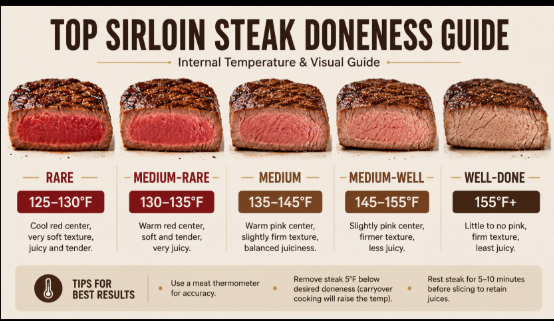
Internal temperature is more reliable than cooking time because steak thickness, pan temperature, grill heat, and starting temperature all vary.
| Doneness | Approximate Internal Temperature | Texture |
|---|---|---|
| Rare | 120–125°F | Cool to warm, red center |
| Medium-rare | 130–135°F | Warm, red-pink center |
| Medium | 135–145°F | Pink center |
| Medium-well | 145–150°F | Slightly pink |
| Well-done | 150°F+ | Little or no pink |
There is an important food-safety distinction here. USDA recommends that beef steaks reach at least 145°F (62.8°C), followed by a minimum 3-minute rest.
So while steak lovers often discuss medium-rare temperatures around 130–135°F, that is a culinary preference and is below the USDA’s recommended minimum for food safety.
How Long Should You Cook Top Sirloin Steak?
There isn’t one perfect cooking time for every top sirloin steak.
A thin steak may finish quickly, while a thick steak can require considerably more time. USDA’s general beef guidance, for example, lists approximately 4–5 minutes per side for a ¾-inch steak when broiling or grilling, but also emphasizes using a thermometer because appliances and grills vary. Use time as a starting point, not the final answer.
For the most consistent result, check the steak with an instant-read thermometer near the end of cooking.
How Do You Keep Top Sirloin From Getting Tough?
Three things make the biggest difference:
Don’t overcook it.
Top sirloin is lean, so excessive heat can quickly dry it out.
Don’t skip the rest.
Give the steak time to settle after cooking instead of cutting into it immediately.
Slice against the grain.
Look for the direction of the muscle fibers and cut across them rather than parallel to them.
That final step is surprisingly important. Even a correctly cooked steak can feel tougher when sliced with the grain because the bite contains longer muscle fibers.
Should You Rest Top Sirloin Steak?
Yes.
After cooking, transfer the steak to a plate or cutting board and let it rest before slicing. For food safety, USDA recommends at least 3 minutes of rest after a beef steak reaches 145°F. A thicker steak may benefit from a somewhat longer rest for eating quality, but you don’t need to leave it sitting around for twenty minutes.
The goal is simple: don’t immediately cut into a hot steak the second it leaves the pan.
Top Sirloin vs. Ribeye
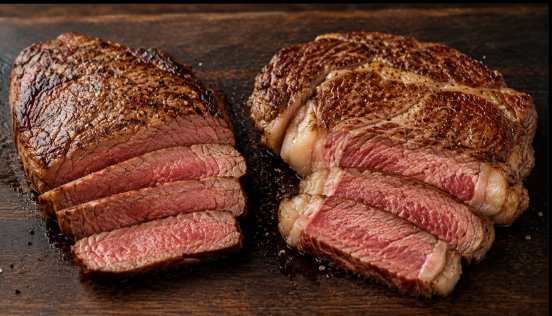
The biggest difference between top sirloin and ribeye is fat.
| Feature | Top Sirloin | Ribeye |
|---|---|---|
| Fat | Relatively lean | Highly marbled |
| Flavor | Bold, beefy | Rich and buttery |
| Texture | Firm, satisfying | More tender and juicy |
| Cooking | Requires more attention | More forgiving |
| Best for | Everyday steak meals | Rich steakhouse-style meals |
Ribeye is the better choice if you want maximum richness and marbling.
Top sirloin makes more sense when you want a leaner steak with strong beef flavor and plenty of versatility.
Neither is automatically “better.” They’re simply different steaks for different preferences.
Top Sirloin vs. Sirloin Steak
This comparison can be confusing because sirloin is a broader category, not necessarily one specific steak.
Top sirloin is a particular portion of the sirloin. Other steaks sold with “sirloin” in the name can come from different areas and therefore may have different textures and cooking characteristics. That’s why the exact label matters when shopping. If you specifically want top sirloin, look for the words “top sirloin” rather than assuming every steak labeled sirloin is equivalent.
What Goes Well With Top Sirloin Steak?
Top sirloin pairs with both classic and fresh sides.
Good options include:
- Roasted or mashed potatoes
- Grilled asparagus
- Green beans
- Sautéed mushrooms
- Corn
- Simple green salad
- Garlic bread
- Roasted vegetables
For sauces, try chimichurri, garlic butter, mushroom sauce, peppercorn sauce, or a simple steak sauce.
Because top sirloin isn’t excessively fatty, acidic sauces such as chimichurri can be particularly good. They add freshness without making the meal feel too heavy.
Is Top Sirloin Steak Healthy?
Top sirloin can fit into a balanced diet and provides substantial protein and several micronutrients.
Beef. It’s What’s For Dinner lists a 3-ounce serving of cooked, lean top sirloin with visible fat trimmed at approximately 150 calories, 26 grams of protein, 4.9 grams of total fat, and 1.9 grams of saturated fat. It also provides nutrients including iron, zinc, selenium, vitamin B6, and vitamin B12.
Actual nutrition varies according to the steak’s size, trimming, grade, and preparation, so these numbers should be treated as reference values rather than exact figures for every steak.
Common Top Sirloin Mistakes to Avoid
Cooking it straight from a wet package:
Pat the surface dry first so the steak can brown properly.
Using a cold pan:
A properly heated cooking surface is essential for a good crust.
Cooking only by time:
Thickness and heat vary. Use a thermometer.
Overcooking the steak:
This is probably the fastest way to turn lean sirloin dry.
Cutting with the grain:
Always look at the muscle fibers before slicing.
Using too much sauce:
Top sirloin already has a strong beef flavor. A simple sauce can complement it better than a heavy one.
Final Verdict: Is Top Sirloin Steak Worth Buying?
Absolutely.
Top sirloin isn’t trying to be a ribeye, and that’s exactly why it deserves its own place on the steak menu. It gives you bold beef flavor, a relatively lean profile, several cooking options, and enough versatility to work for both a quick weeknight dinner and a weekend barbecue. The key is respecting what the cut needs. Keep the surface dry, use enough heat to develop a crust, monitor the internal temperature, avoid unnecessary overcooking, let the steak rest, and slice it against the grain.
FAQs
Is top sirloin steak a good steak?
Yes. It is a flavorful, relatively lean steak that works especially well on the grill or in a skillet. It is firmer than highly marbled cuts but can be very tender when cooked properly.
What is the best way to cook top sirloin steak?
Grilling and pan-searing are excellent choices. For thicker steaks, searing followed by an oven finish can provide better temperature control.
Why is my top sirloin steak tough?
The most common causes are overcooking, choosing a particularly lean or thin steak, and slicing with the grain. Cooking to the appropriate temperature and slicing against the grain can make a major difference.
Is top sirloin better than ribeye?
It depends on what you want. Ribeye is richer and more heavily marbled, while top sirloin is leaner and has a strong beef flavor. For everyday value and a less fatty steak, top sirloin is an excellent option.
What temperature should top sirloin steak reach?
For food safety, USDA recommends coonmking beef steaks to 145°F (62.8°C) and allowing them to rest for at least three minutes.