
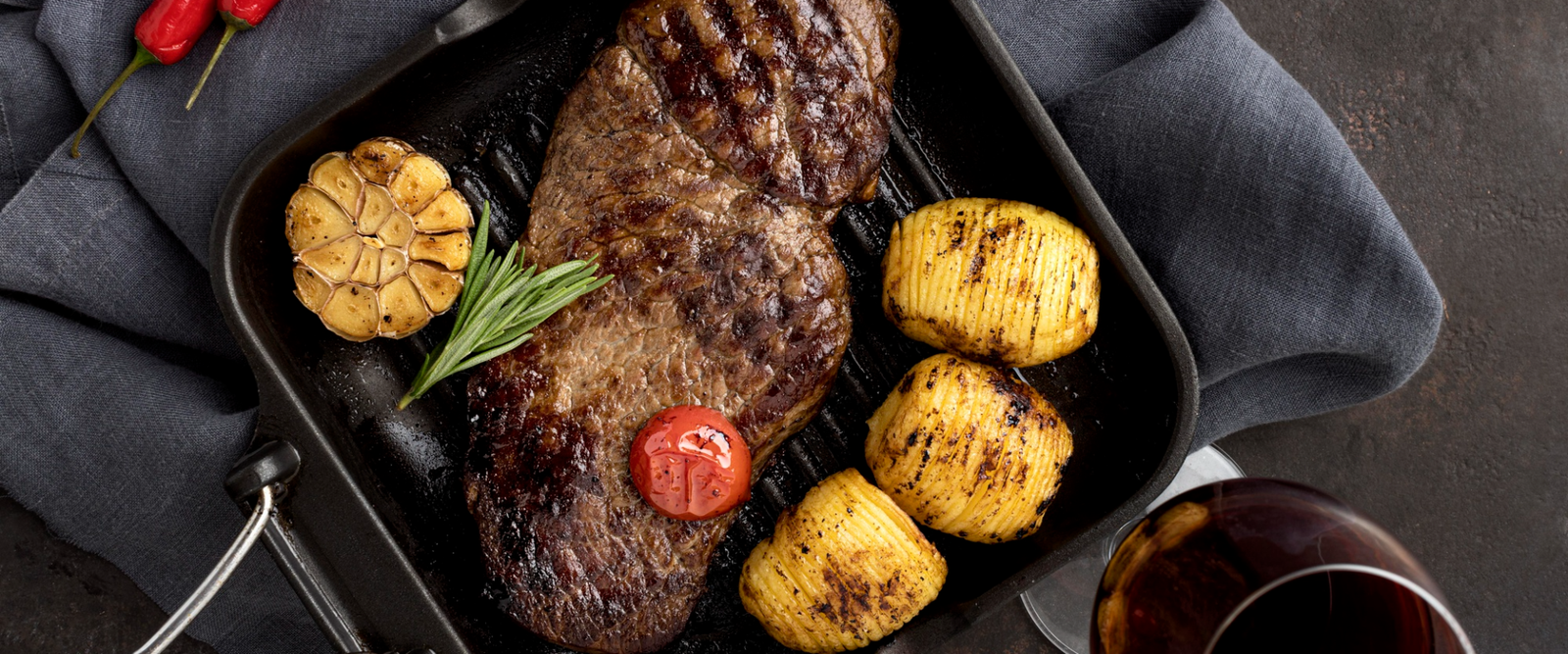
Most articles about how to cook steak in oven still give you vague time ranges and tell you to “cook until done.” That’s not good enough. After researching dozens of methods, testing different cuts, and tracking internal temperatures obsessively, this guide gives you every exact number you need — oven temperature, searing time, internal temps, resting time all in one place.
What Is Cooking Steak in the Oven?
Cooking steak in the oven means using dry oven heat — either baking or broiling — to bring a steak to the perfect internal temperature. It is one of the most reliable and controllable methods available to a home cook. Unlike grilling, the oven doesn’t depend on weather, outdoor space, or charcoal. You control every variable: temperature, timing, and doneness. This makes the oven an excellent choice for thick cuts like ribeye, New York strip, T-bone, and filet mignon, where even cooking from edge to edge matters most.
- Sear-then-bake — sear the steak in a cast iron skillet on the stovetop, then finish in the oven
- Reverse sear — cook low and slow in the oven first, then sear on the stovetop for a final crust
Both methods work. Which one you choose depends on the thickness of your steak and how much control you want over the outcome.
Why Cooking Steak in the Oven Became Popular
Oven-cooked steak became a go-to technique for a simple reason: consistency. Home cooks started realizing that even a good grill can create hot spots, flare-ups, and uneven cooking.
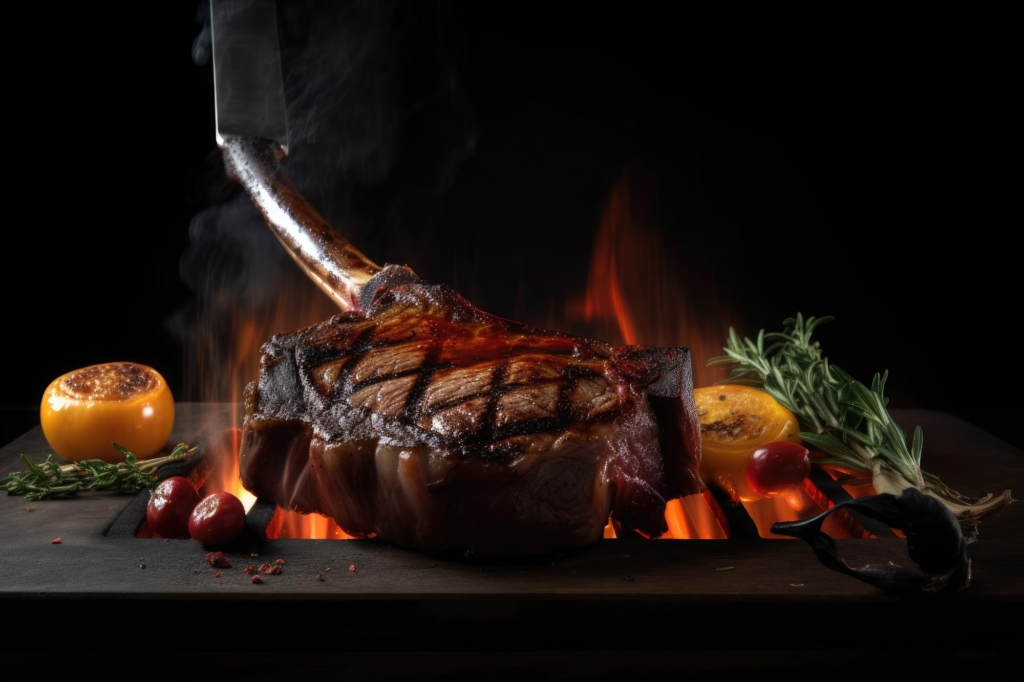
The technique also gained traction because of the rise of the reverse sear method, popularized by food scientists and serious home cooks. The reverse sear slow oven first, hot sear second produces edge-to-edge even doneness that grilling simply cannot match on thick cuts. Apartment living also played a role. Millions of people have no access to an outdoor grill. The oven became the practical, year-round solution for cooking great steak at home.
What Still Works in 2026
After researching the current best practices, here is what consistently delivers great results:
The Sear-Then-Bake Method (best for 1-inch steaks)
- Pull steak from the fridge 30 minutes before cooking
- Pat completely dry with paper towels — moisture is the enemy of a good crust
- Season generously with kosher salt and cracked black pepper
- Preheat oven to 425°F–450°F
- Heat a cast iron skillet on the stovetop until it just starts to smoke
- Sear steak 1–2 minutes per side — you’re building color, not cooking through
- Add butter, garlic, and fresh thyme to the pan
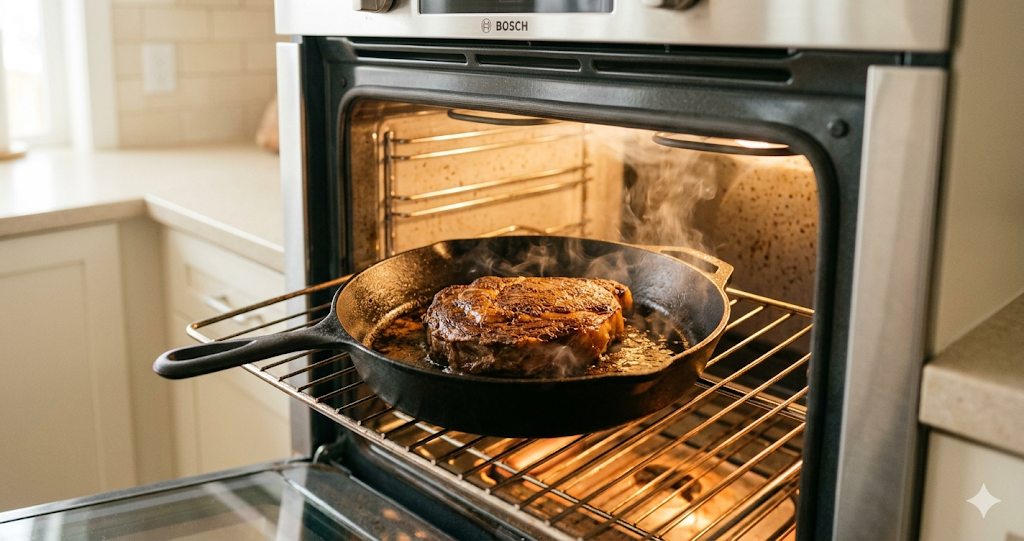
- Transfer the entire skillet into the oven
- Cook to 5°F below your target temperature (carryover cooking does the rest)
- Rest 5 minutes before slicing — non-negotiable
The Reverse Sear Method (best for steaks 1.5 inches or thicker)
- Preheat oven to 250°F
- Place steak on a wire rack over a sheet pan
- Cook until the internal temperature hits 10–15°F below your target doneness
- Remove, rest briefly, then sear in a screaming hot cast iron pan — 45–60 seconds per side
- Rest 5 minutes, then serve
Internal Temperature Chart
| Doneness | Pull from Oven | Final Temp After Rest |
|---|---|---|
| Rare | 120°F | 125°F |
| Medium-Rare | 125°F | 130–135°F |
| Medium | 135°F | 140–145°F |
| Medium-Well | 145°F | 150–155°F |
| Well-Done | 155°F | 160°F+ |
What No Longer Works Reliably
A lot of older content still recommends cooking by time alone. During testing, this advice failed repeatedly. Here’s what to stop doing:
- Cooking by minutes, not temperature — every steak is different in thickness and fat content. Time estimates are just a guide. Your thermometer is the only truth.
- Skipping the dry-brine — many guides skip this entirely. Patting the steak dry (or dry brining with salt in the fridge for 1–24 hours) makes a measurable difference in crust quality.
- Using a cold pan — a lukewarm pan gives you a gray, steamed exterior instead of a real sear. The pan must be hot enough to smoke lightly before the steak touches it.
- Cutting into the steak to check doneness — this releases juices immediately. Use a thermometer.
- Skipping the rest — resting allows juices to redistribute. Skipping it means they pour out onto your cutting board.
Is Cooking Steak in the Oven Safe?
Yes when done correctly, the oven method is one of the safest ways to cook steak because you can verify the exact internal temperature before eating. Using an instant-read thermometer is the safest and most accurate way to confirm your steak has reached the correct internal temperature.
According to the USDA food safety guidelines, whole muscle beef steaks should reach a minimum internal temperature of 145°F, followed by a 3-minute rest. This applies to medium doneness and above.
For those who prefer medium-rare (130–135°F), understand that this is below the USDA minimum for whole cuts. The USDA acknowledges this is a common preference and that the risk from whole-muscle steaks at this temperature is low, but the final decision is yours.
Key safety practices:
- Always use a clean thermometer — cross-contamination is a real risk
- Never leave raw steak at room temperature for more than 2 hours
- Store leftover cooked steak in an airtight container for up to 3–4 days in the refrigerator
Better Alternatives: Comparing Methods
| Method | Best For | Crust Quality | Ease | Temperature Control |
|---|---|---|---|---|
| Sear + Oven Bake | 1-inch steaks | ★★★★☆ | Easy | Excellent |
| Reverse Sear | 1.5-inch+ thick cuts | ★★★★★ | Moderate | Best |
| Broiling | Thin cuts under 1 inch | ★★★☆☆ | Very easy | Limited |
| Pan-sear only | Very thin cuts | ★★★☆☆ | Easy | Good |
| Grilling | Any thickness | ★★★★☆ | Moderate | Variable |
| Sous vide + sear | Any thickness | ★★★★★ | Complex |
For most home cooks, the sear-then-bake method is the starting point. Once you’re comfortable with it, the reverse sear is the upgrade for premium, thick-cut steaks. For thin cuts under an inch, broiling is faster and works well.
Is It Legal?
This question doesn’t apply directly to cooking steak at home. However, if you’re running a food business a restaurant, catering service, or food truck there are food safety regulations that govern the minimum internal temperature you must cook beef to before serving it.
In the United States, the Food and Drug Administration’s Food Code specifies that whole-muscle intact beef steaks served to the public must reach a minimum of 145°F with a 3-minute rest, or the surface of the steak must reach 145°F if it’s a surface-seared steak. Check your local jurisdiction’s food code for specific requirements. For home cooking, there are no legal requirements only the USDA’s safety recommendations.
Should You Still Cook Steak in the Oven?
Absolutely — and in many situations it is the better choice over a grill.
The oven method wins when:
- You’re cooking thick steaks (1.5 inches or more) and want even doneness
- You don’t have access to an outdoor grill
- You’re cooking multiple steaks at once — the oven handles volume better
- The weather makes outdoor grilling impractical
- You want precise, repeatable results every single time
The method does require a cast iron skillet and a reliable meat thermometer. Without a thermometer, you’re guessing and guessing is how good steaks become overcooked steaks. If you invest in those two tools, the oven method will deliver restaurant-quality steak at home, consistently, regardless of skill level.
FAQs
What temperature should I cook steak in the oven?
For the sear-then-bake method, preheat your oven to 425°F–450°F. For the reverse sear, use a low 250°F for the oven stage. The broiler setting works for thin cuts and operates at roughly 500°F–550°F.
How long does it take to cook steak in the oven?
After searing, a 1-inch steak needs approximately 5–8 minutes in a 425°F oven to reach medium-rare (130–135°F). A 1.5-inch steak using the reverse sear at 250°F takes 25–45 minutes in the oven before the final stovetop sear. Always track internal temperature, not time.
Do I have to sear steak before putting it in the oven?
No you can cook steak directly in the oven using the broiler or on a preheated sheet pan. However, searing first produces a significantly better crust and more complex flavor through the Maillard reaction, so most cooks prefer it.
What is the best pan for cooking steak in the oven?
A cast iron skillet is the top choice because it retains heat extremely well, goes from stovetop to oven seamlessly, and creates an even, deep sear. Carbon steel pans are an excellent alternative. Avoid non-stick pans — they cannot handle the high heat required for a proper sear.
Why is my oven-cooked steak tough?
The most common cause is overcooking. Every 10°F above your target doneness makes the steak noticeably tougher and drier. Use a meat thermometer and pull the steak 5°F below your target, then let carryover cooking finish the job during the rest period.
Final Thoughts
Learning how to cook steak in oven is one of the most valuable skills you can develop in the kitchen. The method is forgiving, precise, and produces results that rival any restaurant provided you track temperature instead of time. Start with the sear-then-bake method for steaks around 1 inch thick. Once you’re confident, move to the reverse sear for premium cuts. Always rest your steak. Always use a thermometer. And always preheat your cast iron until it smokes before the steak touches it.
Related article