
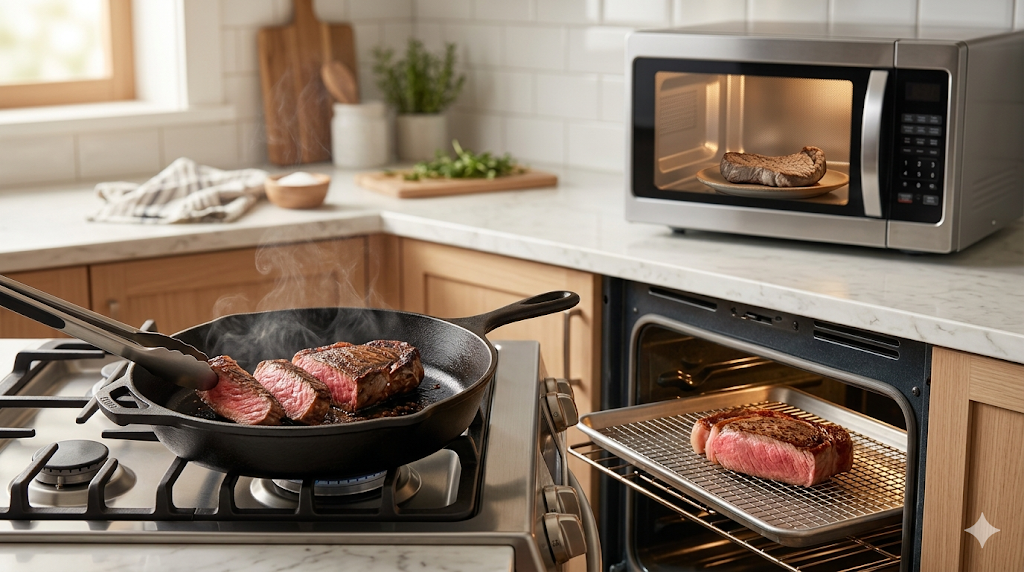
A lot of guides online tell you to just toss your leftover steak in the microwave for two minutes and call it done. That’s how you ruin a good steak. After testing a few different methods at home oven, pan, and microwave, it’s clear that the order and the heat level matter just as much as the time. This guide breaks down how to reheat steak without turning it into a chewy, gray slab of meat. No fancy equipment needed, just a bit of patience.
What Does “Reheating Steak” Actually Mean?
Reheating steak isn’t the same as cooking it. The meat is already cooked, so the goal is simply to bring it back up to a warm, eating temperature without pushing it past the doneness it already has. If your steak was medium-rare, the aim is to gently warm it back toward that same internal temperature, not to cook it further. That’s the part most people get wrong.
Why So Many People Get This Wrong
The microwave is fast, so it’s the first thing most people reach for. The problem is that microwaves heat unevenly and very quickly, which tightens the muscle fibers in the meat and pushes the juices out. The result is a steak that’s hot on the outside and rubbery all over. Steak is forgiving the first time you cook it, but leftovers are much less forgiving. Once the proteins have already tightened once during cooking, a second blast of high heat tightens them again, and that’s when you lose the juiciness.
What Actually Works When You Reheat Steak
After trying a few approaches, two methods stood out as reliable:
1. Oven plus a quick pan sear (best for thick cuts like ribeye or sirloin)
- Let the steak sit out for about 20–30 minutes so it isn’t ice cold
- Preheat the oven to 250°F (120°C)
- Place the steak on a wire rack set over a baking sheet, so air moves around it
- Warm it until the center reaches about 110°F (this takes roughly 20–30 minutes, depending on thickness)
- Pat it dry, then sear it in a hot pan for 30–45 seconds per side to bring back the crust
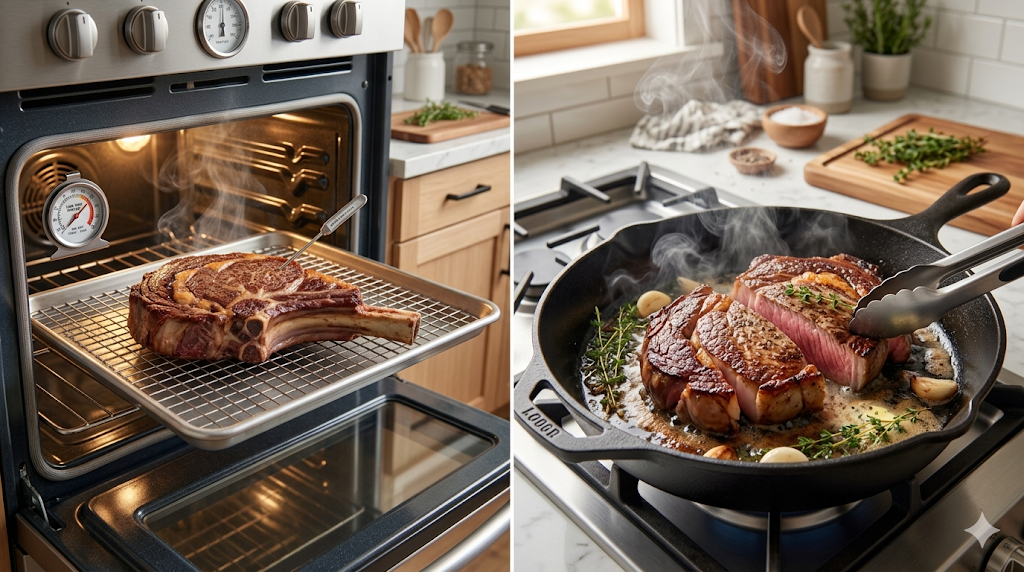
2. Stovetop with a splash of liquid (best for thinner cuts or sliced steak)
- Heat a pan on medium-low
- Add a small splash of beef broth, butter, or oil
- Cover the pan loosely so steam keeps the meat moist
- Flip once, just until warmed through — this only takes a few minutes
Both methods rely on low, gentle heat first, with a fast finish if you want the crust back. That order is the part that actually makes the difference.
What Doesn’t Work Reliably
- Full-power microwave — heats unevenly and dries the meat out fast
- Reheating sliced steak in the oven — thin slices dry out before the inside even warms
- Skipping the resting step before reheating — going straight from fridge to high heat causes a cold center and an overcooked edge
- Reheating the same steak more than once — each round of heat pulls out more moisture
- If your steak is already sliced, it’s honestly better to serve it cold in a salad or sandwich rather than trying to reheat it. Reheating thin slices almost always makes them tougher.
Is It Safe to Reheat Steak?
Yes, reheating steak is safe as long as it was stored properly. A few basic rules:
- Refrigerate leftover steak within 2 hours of cooking
- Keep it in the fridge for no more than 3–4 days
- When reheating, bring the internal temperature to at least 165°F (74°C) if food safety is your main concern, though most people stop earlier for taste and texture
- If it smells off, looks slimy, or has been sitting out too long, don’t risk it — throw it out
If you’re reheating purely for safety reasons (like for a young child, elderly person, or anyone with a weaker immune system), go with the full 165°F mark rather than stopping at a lower temperature for juiciness. For more details on safe leftover storage times, the USDA FoodSafety.gov guidelines are a reliable reference.
Better Alternatives to Reheating
Sometimes the steak just isn’t worth saving as a whole piece. Here’s how the main options compare:
| Method | Best For | Texture Result | Time Needed |
|---|---|---|---|
| Oven + pan sear | Thick cuts, whole steaks | Closest to fresh | 25–35 minutes |
| Stovetop with broth | Thin cuts, sliced steak | Moist, slightly softer | 5–10 minutes |
| Air fryer (300°F) | Quick reheats, medium cuts | Decent, slightly drier | 6–8 minutes |
| Serve cold (salads, sandwiches) | Already-sliced steak | No texture loss | 0 minutes |
| Microwave (low power, covered) | Emergencies only | Often rubbery | 1–2 minutes |
Is It Legal to Reheat Steak?
This isn’t a legal question at all there’s no law about reheating food at home. The only real concern is food safety, which comes down to proper storage and reaching a safe temperature, not legality.
Should You Still Reheat Your Steak?
If the steak is a thick, whole cut and you have 20–30 minutes, reheating it properly is absolutely worth it. You’ll get something very close to the original. If it’s thin, sliced, or you’re short on time, you’re often better off eating it cold or turning it into something new, like a steak sandwich, fried rice, or a salad topping.
Frequently Asked Questions
Can I reheat steak in the microwave?
You can, but it’s the least reliable method. If it’s your only option, use low power (around 30–50%), cover the steak, and check it every 30 seconds.
How long does reheated steak last in the fridge?
Once reheated, treat it like fresh leftovers eat it within a day or two and don’t reheat it a second time.
What temperature should reheated steak reach?
Aim for around 110°F before searing if you want it medium-rare, or 165°F if food safety is your main priority.
Can I reheat frozen steak?
Thaw it in the fridge overnight first. Reheating straight from frozen leads to an uneven result — cold in the middle, overcooked on the edges.
Does resting the steak before reheating actually matter?
Yes. Letting it sit out for 20–30 minutes before reheating helps it warm evenly instead of staying cold in the center while the outside overcooks.
Final Thoughts
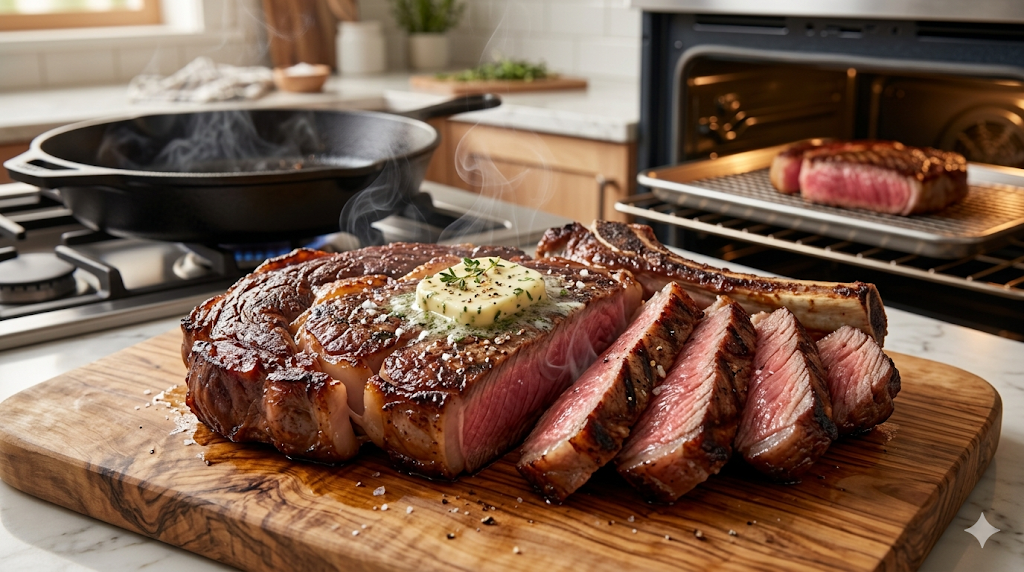
Reheating steak isn’t complicated, but it does need a bit more care than just zapping it in the microwave. The oven-then-sear method gives the closest result to a freshly cooked steak, while a quick stovetop warm-up with some liquid works well for smaller portions. Whatever method you pick, the rule stays the same: low heat first, fast finish second. Get that order right, and your leftover steak will taste like it was barely a leftover at all.
Related article