
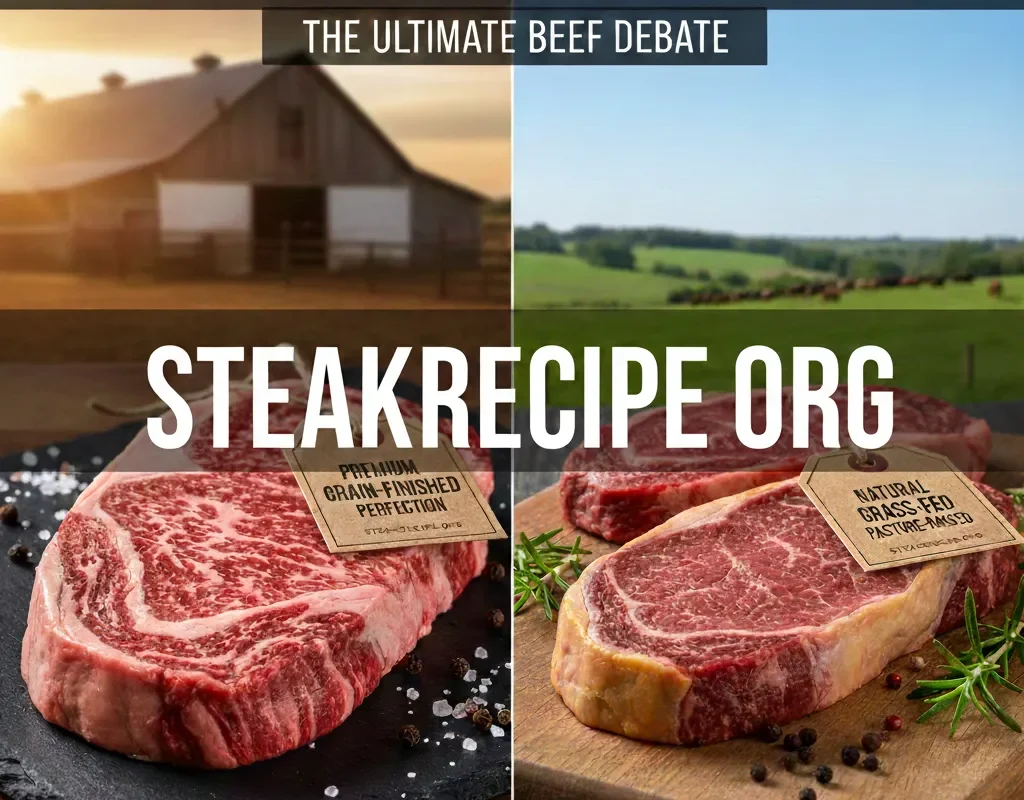
Standing in the meat aisle often feels like a test of your values and your palate. You face two distinct labels that represent completely different worlds of cattle ranching and nutritional science. One steak carries the 100% grass fed and finished badge while the other boasts the rich marbling of grain-finished beef. Most shoppers assume the difference is merely price or marketing.
The truth is much deeper because the final months of a steer’s life dictate the chemical makeup of every bite you take. Choosing between these two options means deciding between industrial efficiency and biological integrity. This guide breaks down the hard facts so you can choose the right fuel for your body and the best flavor for your grill.
Grain Finished vs Grass Fed at a Glance
Grass fed beef comes from cattle that graze on open pastures for their entire lives. These animals consume a diverse diet of forage and hay which results in a leaner muscle profile and a higher concentration of vitamins. Grain-finished cattle also start on grass but move to a feedlot for their final phase of growth. Producers feed these animals a high-calorie diet of corn and soy to maximize weight gain and create that signature white fat.
This industrial finishing process creates a consistent and buttery flavor that many modern diners prefer. Grass-finished beef offers a more complex and mineral-forward taste that reflects the health of the soil and the variety of the pasture. Understanding this fundamental fork in the road helps you align your grocery budget with your health priorities.
From Pasture Management to Feedlot Realities
Cattle possess a unique biological design as ruminants which allows them to convert sunlight into high-quality protein through grass consumption. Their complex four-compartment stomach facilitates a process called cellulose digestion where specialized microbes break down tough plant fibers in a stable environment. When a steer stays on pasture, its metabolic rhythm remains steady and natural.
The introduction of feedlot realities completely shifts this internal chemistry because the animal must handle grain starch fermentation. This sudden influx of high-energy carbohydrates causes a spike in insulin and forces the body to store fat at an accelerated rate. This metabolic shift fundamentally changes the cellular composition of the meat and the types of lipids stored within the muscle fibers. While grain finishing produces tender meat quickly, it overrides the natural evolutionary timeline of the bovine and produces a different chemical product than nature intended.
Why Omega Ratios Matter for Human Health
Nutritional density remains the most powerful argument for the health benefits of grass finished beef in modern wellness communities. The most critical factor involves the ratio of Omega-3 to Omega-6 fatty acids which plays a vital role in managing inflammation within your body. Grass fed beef typically maintains a ratio near one to three which mirrors the diet of our ancestors.
Commercial grain diets often push this ratio as high as one to twenty which significantly contributes to systemic inflammation when you eat it regularly. The concentration of omega 3 in steak from pasture-raised cattle supports your heart health and cognitive function. These animals also produce much higher levels of Conjugated Linoleic Acid and Vitamin E. Choosing grass-finished beef ensures you receive a nutrient-dense profile that supports your long-term health rather than just providing empty calories.
The Marbling Paradox: Evaluating Culinary Quality and Fat Composition
A visual steak fat marbling comparison reveals the primary indicator of meat grade and quality in the modern market. Grain-finished beef earns high marks for its heavy intramuscular fat which appears as delicate white flecks within the muscle. This fat has a soft texture and a low melting point because it consists of specific triglycerides that result from a grain-heavy diet. Grass fed beef presents a different fat composition where most of the energy stores appear as subcutaneous fat on the outside of the cut.
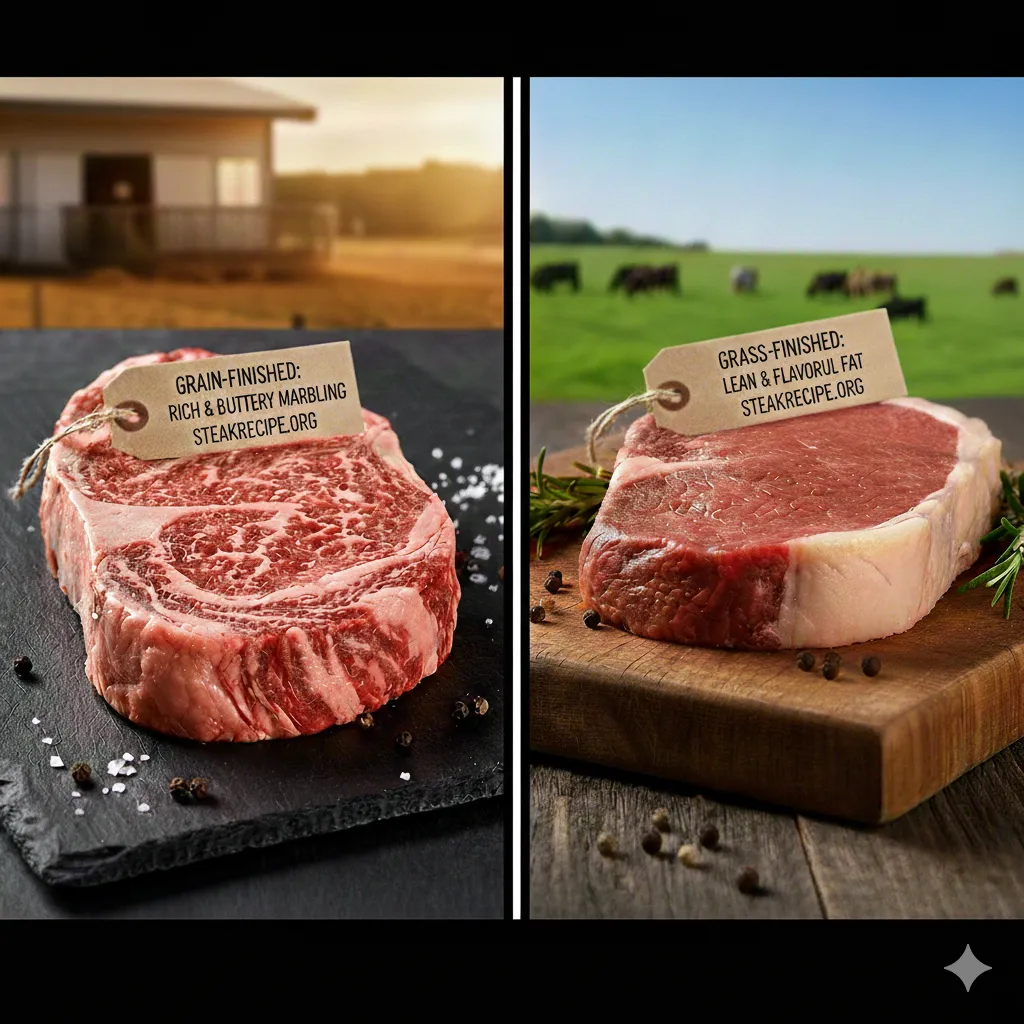
This fat often carries a distinct yellowish hue because the animal accumulated high levels of beta-carotene from the green plants it consumed. While grass fed beef is leaner, it possesses a robust muscle structure that requires careful handling. This marbling paradox forces you to choose between the rich softness of grain-fed fat and the clean, nutrient-dense profile of grass fed meat.
Grass Fed Beef Taste vs Grain Fed Performance
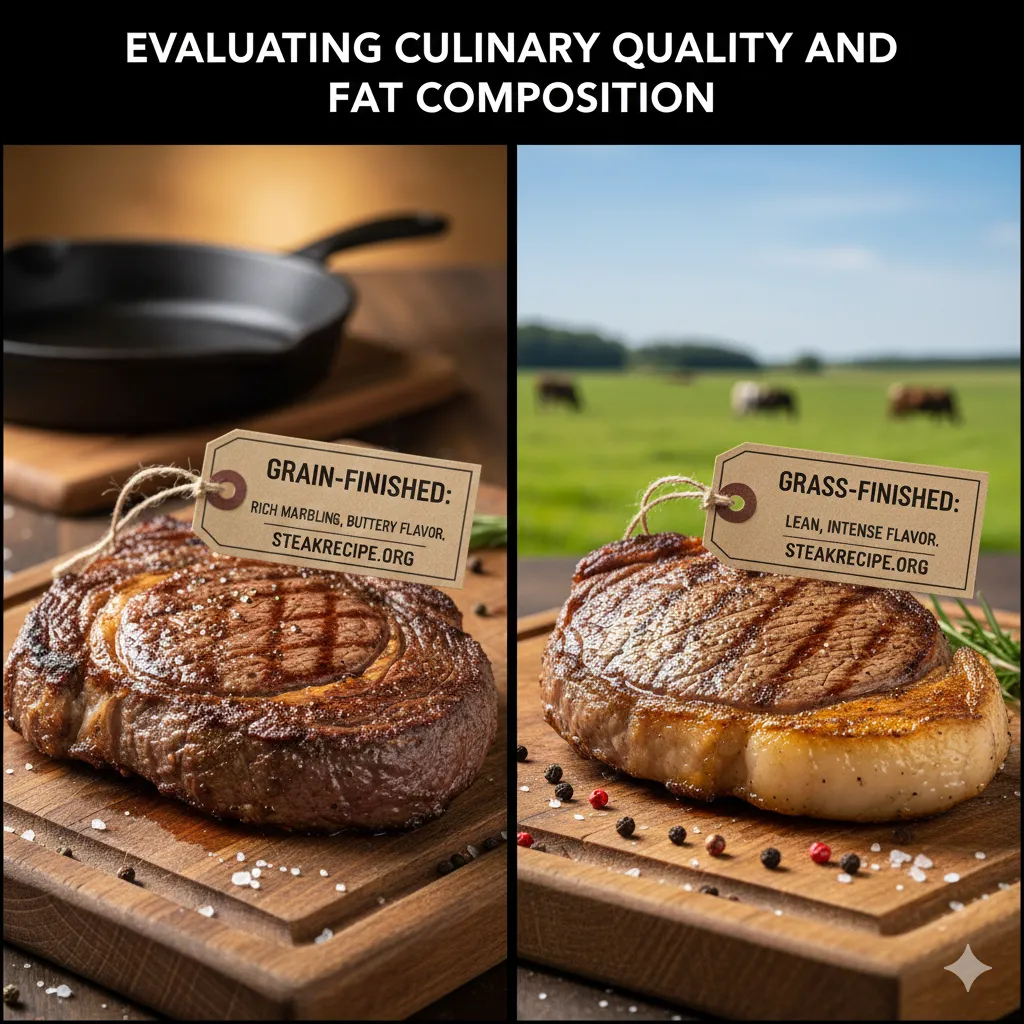
The ultimate test occurs at the dinner table where the grass fed beef taste vs grain fed debate becomes personal. Grain-finished beef provides a mild and sweet flavor that many people describe as buttery or corn-like in its finish. The high fat content creates a rich mouthfeel that coats the tongue and masks the underlying mineral notes of the beef. Grass-finished beef offers an earthy and complex flavor profile that experts often compare to fine wine.
It carries hints of the specific forage present in the animal’s environment which results in a bold and authentic taste. This sensory experience provides a direct connection to the land and the season of the harvest. While grain-fed beef offers reliable softness, grass fed beef provides a deeper and more rewarding flavor for those who appreciate the true character of the animal.
Regenerative Agriculture and Sustainable Sourcing
Sustainable beef sourcing involves more than just the quality of the cut because it directly impacts the health of the planet. Regenerative agriculture practices use cattle as a tool for environmental restoration through rotational grazing. This method mimics the natural movement of wild herds which stimulates grass growth and promotes carbon sequestration in the soil. Well-managed grass-finished beef can actually help pull carbon out of the atmosphere and store it underground.
Industrial grain finishing relies on massive monoculture crops that require synthetic fertilizers and pesticides. These chemicals can degrade soil health and harm local water systems over time. Supporting farmers who prioritize pasture-based systems ensures the long-term viability of our food systems while protecting natural biodiversity.
Adjusting Techniques for Leaner vs Marbled Cuts
Cooking a grass-finished steak requires you to abandon the aggressive high-heat methods used for grain-fed cuts. Grass fed beef is much leaner and more sensitive to heat which means it can become tough if you overcook it. You must focus on precision cooking and use lower temperatures to prevent the muscle fibers from tightening too quickly. Many professional chefs recommend the reverse sear method to bring the meat to its target temperature slowly before finishing with a quick sear.
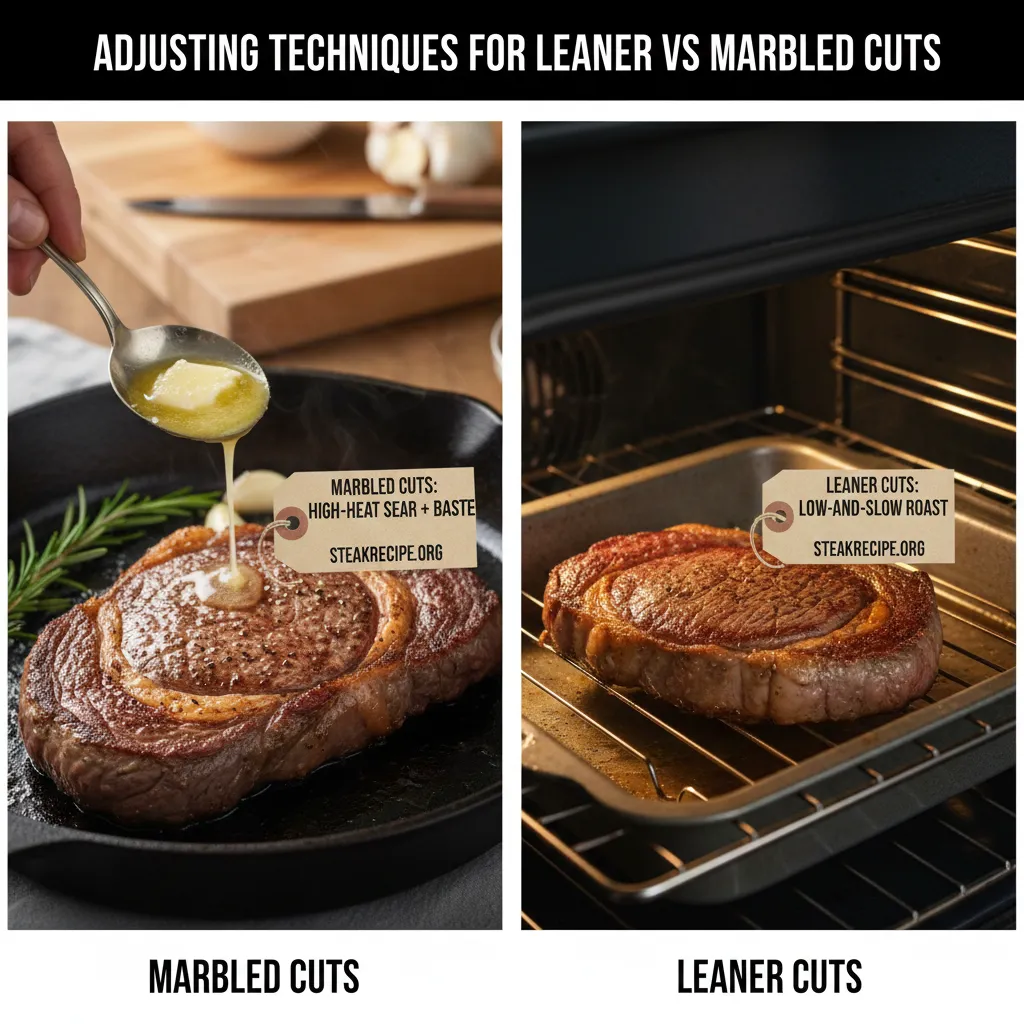
The Maillard reaction still creates a beautiful crust on grass fed beef but you must monitor the internal temperature with a digital thermometer. Allowing the meat to rest for at least ten minutes after cooking is essential because it lets the juices redistribute throughout the fibers. These simple adjustments ensure that your healthy grass fed steak tastes every bit as tender as a marbled grain-fed cut.
Final Selection Guide: Which Steak Should You Buy Today
Making your final choice depends on your specific goals for the meal and your lifestyle priorities. A grain-finished ribeye remains a solid choice for a special occasion where you want that classic steakhouse richness and effortless tenderness. However, grass-finished beef is the superior choice for your daily diet if you want to optimize your nutritional intake and support ethical farming.
You must look for 100% grass fed labels to ensure the animal never consumed grain during its life. Certifications from the American Grassfed Association help you identify authentic products that align with your health and environmental values. Understanding the science behind these labels empowers you to make an informed decision for your family and your future.
Grass-Fed vs Grain-Fed: The Quality Debate
Analyzing the Profile
This high-level discussion explores why Grass-Fed Beef delivers a richer, denser, and more iron-forward taste compared to industrial alternatives. While Grain-Finished beef is often prized for its soft texture and heavy marbling, it lacks the complex nutrient density found in pasture-raised animals.
Algorithm Note: The expert commentary highlights that consumer perception of “quality” is often skewed by tenderness, whereas the biological value of the meat is directly tied to the animal’s natural grazing lifestyle and environmental terroir.
Watch Expert Debate