

The culinary landscape of 2026 has shifted dramatically toward metabolic health and at the center of this revolution lies a surprising hero: a perfectly cooked steak. As GLP 1 diet, medications and natural metabolic agonists become the gold standard for weight management, the conversation around beef has evolved from simple protein counting to a sophisticated strategy for hormonal satiety. We are no longer just eating for calories. We are eating to trigger the specific biological signals that tell the brain the body is satisfied. This is the era of the protein-first metabolic diet where the quality of your ribeye or sirloin is amplified by the fiber-rich architecture of your side dishes. To master this new way of eating, you have to understand that steak is the foundation while the fiber is the structural support that keeps the satiety house standing for hours.
The Metabolic Shift: Why Steak is the Ultimate Tool for GLP 1 Diet Success
Protein-first meal planning is not just a catchy phrase for fitness influencers. It is a clinical necessity for anyone looking to optimize their metabolic health. When you consume high-quality beef, you are delivering a concentrated dose of leucine. This is an amino acid that serves as a primary signal to your muscle tissue to stay put while fat is being burned. This is especially critical in the context of GLP-1-driven weight loss where the risk of losing lean muscle mass, a condition known as sarcopenia, is significantly elevated. A steak provides the dense micronutrient profile required to keep your metabolic rate humming while you drop weight.
Beyond the muscle preservation, we have to consider the thermic effect of food. Your body spends significantly more energy breaking down the complex structures of animal protein than it does processing simple carbohydrates or even plant-based proteins. This means that a steak-heavy dinner actually works for you while you sleep. By prioritizing steak for satiety, you are leveraging a food that is naturally low in insulin-stimulating sugars and high in the fatty acids that help stabilize blood sugar levels throughout the night. It is a metabolic powerhouse that provides a level of sustained energy that chicken or white fish simply cannot match.
Understanding the Ileal Brake and Satiety Signaling
To truly win at the satiety game, you need to understand a biological mechanism called the ileal brake. This is a feedback loop in the small intestine that slows down the movement of food when it senses the presence of undigested fats and fibers. When this brake is activated, your body naturally releases GLP-1. This is the very hormone that modern medications are designed to mimic. By pairing your steak with specific types of fiber, you are effectively hacking your own biology to prolong the feeling of fullness. This synergy between protein and plant matter ensures that the nutrients stay in your system longer and provide a steady drip of fuel rather than a spike and a crash.
Satiety is often confused with physical fullness but they are entirely different sensations. Physical fullness is the result of mechanoreceptors in the stomach wall being stretched by volume whereas satiety is a hormonal state controlled by the brain. You can fill your stomach with water and feel full for twenty minutes but without the hormonal signaling triggered by beef protein and complex fibers, you will be hungry again before the dishes are dry. The GLP-1 steak plate aims for both. You get the volume from cruciferous vegetables to stretch the stomach and the protein from the steak to satisfy the brain hunger centers.
Selecting the Right Cut: Steak for Satiety Without Excess Inflammation

When you are browsing the butcher counter with metabolic health in mind, your selection criteria should shift toward lean efficiency. While we all love a highly marbled wagyu, the goal of weight loss steak recipes is often to maximize protein while keeping systemic inflammation low. Cuts like the Top Sirloin, Flank Steak, and the often-overlooked Eye of Round are the absolute champions of this category. These cuts provide a massive amount of protein per calorie which allows you to eat a larger portion of meat without overshooting your daily energy requirements.
Grass-fed beef is another critical component of the GLP-1 steak plate. Research consistently shows that grass-fed cattle produce meat with a superior ratio of Omega-3 to Omega-6 fatty acids compared to grain-fed counterparts. In a metabolic diet, reducing the intake of pro-inflammatory Omega-6 fats is vital for maintaining gut health and insulin sensitivity. Furthermore, the sheer chew factor of a lean, high-quality steak contributes to the satiety process. The physical act of chewing dense muscle fiber sends early signals to the hypothalamus that a substantial meal is being consumed. This starts the satiety clock long before the first calorie is even absorbed.
High-Fiber Steak Sides: Engineering the Perfect Plate
The magic of the GLP-1 diet dinner ideas we are discussing lies in the high fiber steak sides that accompany the meat. We are looking for functional fibers that do more than just provide bulk. Soluble fiber is found in abundance in artichokes and Brussels sprouts. This fiber turns into a gel-like substance in the gut. This gel traps glucose and fats to slow their entry into the bloodstream and prevent the insulin spikes that lead to fat storage. A side of roasted Brussels sprouts isn’t just a garnish. It is a biological speed-limiter for your meal.
We also have to talk about resistant starch which is a hidden gem for anyone focused on the gut-brain axis. When you cook fingerling potatoes and then allow them to cool completely before eating, a portion of their starch converts into resistant starch. This type of fiber isn’t digested in the small intestine. Instead, it travels to the colon where it feeds the beneficial bacteria that produce short-chain fatty acids like butyrate. These fatty acids have been shown to further stimulate natural GLP-1 production. A chilled potato salad with a vinegar-based dressing is the perfect high-fiber partner for a hot sliced flank steak.
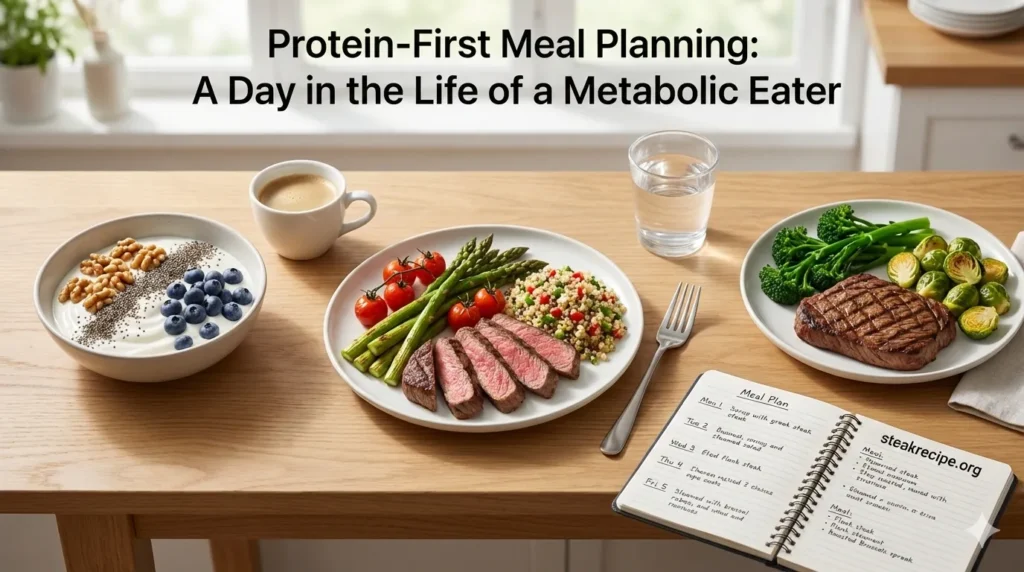
Protein-First Meal Planning: A Day in the Life of a Metabolic Eater
The most effective way to structure your GLP-1 steak plate is by following a strict order of operations at the dinner table. This is a tactic used by metabolic specialists to flatten the post-meal glucose curve. You should always eat your steak first. By hitting your system with a concentrated dose of protein and fat at the beginning of the meal, you stimulate the release of cholecystokinin and other satiety hormones. This blunts the appetite before you even move on to your vegetables.
Following the steak, you should consume your fiber-rich greens and only at the very end of the meal should you touch any complex carbohydrates like sweet potatoes or berries. This sequence ensures that the protein and fiber act as a buffer for the sugars which leads to a much more stable energy level in the hours following your dinner. It is a simple shift in habit that can yield profound results for your waistline and your focus. The golden ratio for these plates should ideally be forty grams of protein paired with ten to fifteen grams of fiber. This creates a nutritional profile that is almost impossible for the body to ignore.
Troubleshooting Digestive Slowdown: Managing High Satiety
One of the common side effects of a high-protein, high-fiber metabolic diet, especially when combined with GLP-1 medications, is a significant slowdown in digestion. While this is exactly what we want for satiety, it can lead to discomfort if not managed correctly. Hydration is the non-negotiable partner of fiber. If you increase your fiber intake without upping your water consumption, you are essentially creating a biological traffic jam. Every gram of fiber requires water to move efficiently through the colon.
Digestive bitters or a small amount of apple cider vinegar before the meal can also be incredibly helpful. These substances stimulate the production of bile and stomach acid. This ensures that your body is chemically prepared to break down the dense proteins in your steak. As you become more accustomed to the GLP-1 steak plate, you will notice that your hunger cues become much more subtle. You will no longer experience the frantic, shaky hunger of a high-carb diet. Instead, you will feel a gradual, calm decline in energy that signals it is time for your next protein-first meal.
The Future of Metabolic Dining
The GLP-1 steak plate represents a shift away from the restrictive dieting mindsets of the past and toward a model of nutritional abundance. We are choosing to eat the most nutrient-dense, satisfying foods available to us. By focusing on protein-first meal planning and high-fiber steak sides, we are working with our bodies rather than against them. This is how you build a sustainable, enjoyable lifestyle that happens to produce world-class health results. You aren’t just eating a steak. You are engineering your internal environment for success.
Protein-First: The Science of GLP-1 Satiety
Learn how the order of your meal triggers the ileal brake and stabilizes your post-prandial glucose curve.