
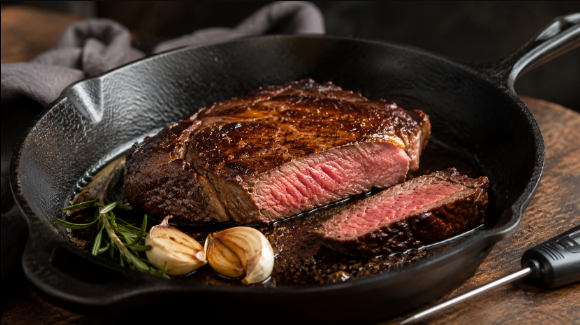
Petite Sirloin Steak is a lean, beefy cut that can deliver excellent flavor without the price of premium cuts such as ribeye or filet mignon. The challenge is that its lower fat content means it can become dry or chewy when overcooked. The best approach is to control the steak’s thickness, cooking temperature, and internal doneness instead of relying on cooking time alone.
For the most consistent results, use a hot pan or grill to build a browned crust, monitor the internal temperature with a meat thermometer, and let the steak rest before slicing. USDA guidance recommends that whole beef steaks reach at least 145°F (62.8°C) as measured with a food thermometer, followed by at least a three-minute rest.
What Is Petite Sirloin Steak?
Petite sirloin steak is a relatively lean steak from the sirloin area of the beef carcass. The exact terminology can vary between retailers and butchers, and petite sirloin is sometimes associated with cuts marketed as ball tip or sirloin tip.
Unlike highly marbled ribeye, petite sirloin generally has less internal fat. That gives it a pronounced beef flavor but also means there is less fat available to protect the meat from drying out during cooking.
This makes petite sirloin a good choice when you want:
- Strong beef flavor
- A leaner steak
- A more affordable option
- A steak suitable for grilling or pan-searing
- A versatile cut for marinades and sliced steak dishes
Is Petite Sirloin Steak Tender?
Petite sirloin can be tender when prepared correctly, but it is not usually as naturally tender as filet mignon or a well-marbled ribeye. Because it is relatively lean, overcooking is one of the easiest ways to make petite sirloin tough. A good thermometer is therefore more useful than trying to judge doneness by cooking time alone.The thickness of the steak also matters. A thicker piece gives you more time to develop a crust while bringing the center to the desired temperature.
Petite Sirloin Steak Taste Like
Petite sirloin has a distinctly beefy flavor with relatively little richness from intramuscular fat. This makes it a good match for simple seasoning as well as marinades, garlic butter, chimichurri, pepper sauces, and other bold flavors. If you enjoy the stronger flavor of leaner beef cuts, petite sirloin can be a very good value. If you prefer a buttery, rich steak with heavy marbling, ribeye will generally provide that experience more naturally.
The Best Way to Cook Petite Sirloin Steak
For most petite sirloin steaks, high-heat pan-searing or grilling works well.
The basic process is:
- Pat the steak dry.
- Season it well.
- Preheat the pan or grill.
- Sear the steak over high heat.
- Check the internal temperature.
- Remove it when it reaches your desired cooking stage.
- Rest the steak.
- Slice across the grain.
Cooking time should be treated as an estimate rather than a guarantee. Even steaks of the same advertised thickness can cook differently because of starting temperature, shape, surface temperature, and other variables. Recent professional cooking guidance also emphasizes using an instant-read thermometer rather than depending solely on timing or visual appearance.
Petite Sirloin Steak Ingredients
For a simple pan-seared version, you only need a few ingredients:
- 2 petite sirloin steaks
- 1–2 tablespoons neutral cooking oil
- Kosher salt
- Freshly ground black pepper
- 1 tablespoon butter
- 1–2 garlic cloves
- Fresh rosemary or thyme, optional
You can also use a steak marinade if your cut is particularly lean or you want additional flavor.
The important thing is not to hide the beef flavor under too many seasonings.
How to Prepare Petite Sirloin Steak
Before cooking, remove the steak from its packaging and pat the surface thoroughly dry with paper towels. A dry surface browns more effectively than a wet one.
Season both sides generously with salt and freshly ground black pepper. If you are using a marinade, remove excess liquid from the surface before placing the steak into a hot pan or onto the grill.
You don’t need to leave the steak sitting at room temperature for hours. Prepare your cooking equipment and focus on getting a good sear while monitoring the internal temperature.
How to Pan-Sear Petite Sirloin Steak
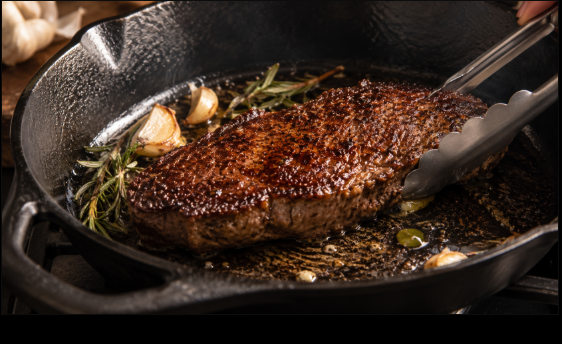
A heavy skillet, particularly cast iron, is an excellent choice for petite sirloin.
1. Preheat the skillet
Place the skillet over medium-high to high heat and allow it to become properly hot.
2. Add a small amount of oil
Use an oil suitable for high-heat cooking and add enough to lightly coat the cooking surface.
3. Place the steak in the pan
Lay the steak away from you to reduce splattering.
You should hear an immediate, strong sizzle.
4. Build the crust
Allow the first side to develop a deep brown crust before turning.
Avoid repeatedly moving the steak around the pan. Good contact with the hot surface helps develop better browning.
5. Turn the steak
Cook the second side and begin checking the internal temperature as the steak approaches your target.
6. Add butter and aromatics
During the final stage, you can add butter, garlic, and rosemary or thyme.
Tilt the pan slightly and spoon the foaming butter over the steak.
7. Check the center
Insert an instant-read thermometer into the thickest part of the steak. For a thinner steak, inserting the thermometer from the side can make it easier to reach the center accurately.
8. Rest before slicing
Transfer the steak to a plate or cutting board and allow it to rest.
Petite Sirloin Steak Temperature Guide
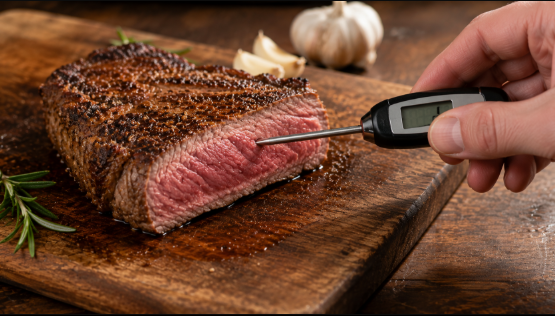
Temperature is more reliable than cooking time because steak thickness and cooking conditions vary.
| Doneness | Common Target Range |
|---|---|
| Rare | 120–125°F |
| Medium Rare | 130–135°F |
| Medium | 140–145°F |
| Medium Well | 150–155°F |
| Well Done | 160°F+ |
These are culinary doneness targets rather than a replacement for food-safety guidance. For food safety, the USDA recommends 145°F for whole beef steaks, followed by at least a 3-minute rest.
If you prefer a particular doneness below that temperature, understand that it does not meet the USDA’s stated minimum temperature recommendation.
Petite Sirloin Steak Cooking Time
There is no single cooking time that works for every petite sirloin steak.
Thickness is one of the most important variables.
As a general principle:
- Thin steaks cook quickly and can easily become overdone.
- 1-inch steaks are well suited to quick pan-searing or grilling.
- Thicker steaks provide more room to develop a crust before the center becomes overcooked.
- Very thick steaks may benefit from a gentler cooking stage followed by a final high-heat sear.
Use time as a starting point, then switch your attention to internal temperature.
This approach is also consistent with general sirloin cooking guidance, which notes that cooking times vary with steak thickness.
How to Grill Petite Sirloin Steak
Grilling is another excellent option for petite sirloin.
Start with a clean, well-preheated grill.
Pat the steak dry and season it shortly before cooking. Place it over the hotter part of the grill to develop the initial crust.
After browning the first side, turn the steak and continue cooking until it approaches your target internal temperature.
For thicker steaks, you can move them to a cooler area of the grill after the initial sear. This gives you greater control over the center without continuing to expose the outside to maximum heat.
Use a thermometer rather than relying only on grill marks.
How to Keep Petite Sirloin Steak Tender
Because petite sirloin is relatively lean, tenderness depends heavily on cooking technique.
Don’t overcook it
Long cooking can drive out moisture and produce a firmer texture.
Don’t rely only on time
A timer tells you how long the steak has been cooking. It doesn’t tell you its internal temperature.
Use the right heat
High heat helps create a flavorful crust before excessive moisture is lost from the surface.
Rest the steak
Resting gives the steak time to stabilize after cooking.
Slice correctly
Slicing against the grain shortens the muscle fibers you bite through, making each piece easier to chew.
Should You Marinate Petite Sirloin Steak?
A marinade can work particularly well with lean steak.
You can use ingredients such as:
- Olive oil
- Soy sauce
- Worcestershire sauce
- Garlic
- Black pepper
- Lemon or lime juice
- Fresh herbs
Acidic ingredients can add brightness and flavor, but don’t assume that leaving the steak in an acidic marinade indefinitely will make it dramatically more tender.
For petite sirloin, the biggest improvements usually come from proper cooking temperature and slicing, combined with a flavorful marinade when desired.
Best Seasonings for Petite Sirloin Steak
You don’t need an elaborate rub.
A simple combination of:
Salt + black pepper + garlic
can highlight the beef’s natural flavor.
For a stronger profile, try:
- Garlic and rosemary
- Smoked paprika and garlic
- Black pepper and onion powder
- Chili and cumin
- Montreal-style steak seasoning
- Chimichurri after cooking
For a lean cut like petite sirloin, sauces and finishing butter can also add richness without requiring the steak itself to contain a lot of marbling.
How Long Should Petite Sirloin Steak Rest?
Allow the steak to rest after cooking before slicing.
The exact resting period depends on the size and thickness of the steak. A modest steak may need only a few minutes, while a thicker cut can benefit from longer. Most importantly, don’t leave the steak cooking in the hot skillet while you wait for it to rest. Transfer it away from the cooking surface. USDA guidance specifically calls for at least three minutes of rest after a whole beef steak reaches the recommended 145°F minimum internal temperature.
How to Slice Petite Sirloin Steak
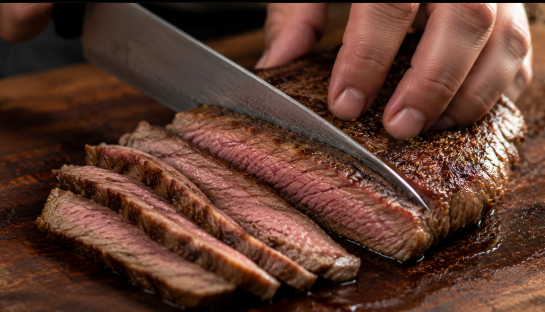
Slicing can make a noticeable difference with a lean steak. Look closely at the surface of the cooked meat and identify the direction in which the muscle fibers run. Then cut across the grain rather than parallel to it. Use a sharp knife and make relatively thin slices. This shortens the muscle fibers, making each bite easier to chew.
If you are serving petite sirloin in steak sandwiches, tacos, salads, or bowls, slicing across the grain becomes especially important.
Petite Sirloin vs Top Sirloin
Petite sirloin and top sirloin are related in that both are associated with the sirloin region, but they should not automatically be treated as identical cuts.
Names used for petite sirloin can vary by retailer and market, which is one reason it’s worth checking the package or asking your butcher exactly which muscle and cut designation you’re buying. Top sirloin is generally positioned as a larger, more established steak cut, while petite sirloin is often sold as a smaller, leaner and more economical option.
For cooking purposes, focus on the actual thickness and structure of the steak in front of you rather than assuming every sirloin steak will cook identically.
Petite Sirloin vs Ribeye
The biggest difference is fat.
Petite Sirloin
- Leaner
- Strong beef flavor
- Usually more affordable
- Less marbling
- Can dry out when overcooked
Ribeye
- More marbling
- Richer flavor
- More buttery texture
- Generally more forgiving during cooking
If your priority is rich, fatty flavor, ribeye is the obvious choice. If you want a leaner steak with a strong beef flavor at a lower price, petite sirloin is worth considering.
Common Petite Sirloin Steak Mistakes
Cooking by time alone
A recipe might say “cook for five minutes,” but your steak may be thicker or thinner than the steak used to develop that timing. Better approach: Use the time as a guide and verify the internal temperature.
Starting with a wet steak
Excess moisture can interfere with browning. Better approach: Pat the surface dry before seasoning and searing.
Using too much heat for too long
High heat is useful for searing, but keeping a lean steak over intense heat until it is far beyond your desired temperature can produce a dry result.
Cutting immediately
Slicing as soon as the steak leaves the pan makes it harder to control the final serving texture. Better approach: Let it rest.
Slicing with the grain
This can make a relatively lean steak seem tougher.
Better approach: Identify the grain and slice across it.
What to Serve With Petite Sirloin Steak
Petite sirloin works well with sides that complement its beefy flavor without overwhelming it.
Try:
- Roasted potatoes
- Garlic mashed potatoes
- Grilled vegetables
- Creamed spinach
- Green beans
- Roasted asparagus
- Corn on the cob
- Simple garden salad
- Chimichurri
- Garlic butter
For a lighter meal, thinly slice the steak and serve it over a salad with roasted vegetables.
Final Thoughts
Petite sirloin steak is a practical choice when you want a flavorful, lean steak without paying ribeye or filet mignon prices. Its lower fat content does require more attention during cooking, but that doesn’t mean it has to be tough or dry. The most reliable approach is simple: dry the steak, season it well, use high heat to create a crust, monitor the internal temperature, rest it after cooking, and slice against the grain.
Most importantly, don’t treat cooking time as an exact measurement. Steak thickness, starting temperature, cooking surface, and heat all influence the result. A thermometer gives you much better control than a timer alone.