
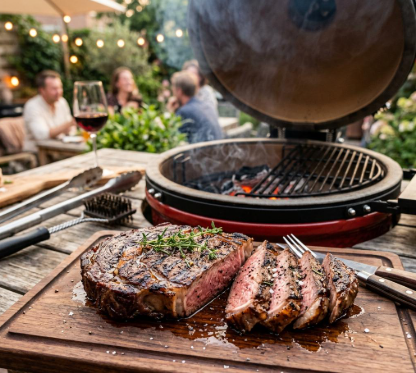
If you’ve ever stood in front of a hot grill wondering “How long should I grill this steak?”, you’re not alone. A difference of just 60–90 seconds per side can turn a juicy medium-rare ribeye into an overcooked, dry disappointment. The good news is that steak grill time is far less mysterious than it seems once you understand thickness, grill temperature, and internal doneness.
Why Steak Grill Time Matters More Than You Think
Steak is one of the few foods where timing directly controls texture. Chicken can tolerate a little extra cooking, but steak changes dramatically minute by minute. The proteins tighten, moisture escapes, and the fat either melts beautifully or turns greasy if the timing is off.
Think of steak like a camera exposure. Too little time and the center stays cool and underdeveloped; too much time and the image is blown out. The sweet spot is the moment when the exterior develops a deep brown crust while the center reaches your preferred temperature.
The Ideal Grill Temperature for Steak
Before we talk minutes, we need to talk heat. Most professional grillers aim for 450°F–550°F at the grate level. This range creates the Maillard reaction the chemical process responsible for the rich brown crust and steakhouse flavor.
| Grill Temp | Best Use |
|---|---|
| 350–400°F | Thinner steaks, gentle cooking |
| 400–450°F | General grilling |
| 450–550°F | Ideal for steak |
| 550°F+ | Quick searing only |
A common mistake is grilling steak at 350°F because it feels “safer.” The problem is that lower heat keeps the steak on the grill longer, which often dries out the interior before a proper crust forms. High heat gives you the best of both worlds: a flavorful exterior and a juicy center.
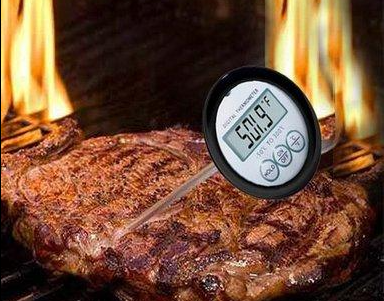
Steak Grill Time Chart by Doneness
For a 1-inch thick steak cooked over direct high heat (450°F–550°F), these are the most reliable 2026 grilling times.
| Doneness | Time Per Side | Target Temp |
|---|---|---|
| Rare | 2–3 min | 120–130°F |
| Medium-Rare | 3–4 min | 130–135°F |
| Medium | 4–5 min | 140–145°F |
| Medium-Well | 5–6 min | 145–155°F |
| Well-Done | 6–7 min | 160°F+ |
These times align closely with current steakhouse and grilling reference charts.
Rare (120–130°F)
Rare steak is cool to warm in the center with a bright red interior. It requires only 2–3 minutes per side on a very hot grill. Because the cooking window is so short, rare steaks are the easiest to overcook accidentally.
Medium-Rare (130–135°F)
This is the sweet spot for most steak lovers. Grill 3–4 minutes per side and remove the steak when it reaches 128–132°F, then let carryover cooking bring it to the final 130–135°F range.
Medium (140–145°F)
Medium steak has a warm pink center and slightly firmer texture. Expect 4–5 minutes per side for a 1-inch cut.
Medium-Well and Well-Done
These levels require 5–7 minutes per side and benefit from slightly lower heat after the initial sear to avoid burning the exterior.
How Thickness Changes Grill Time
Thickness is often more important than the cut itself.
½-Inch Steaks
Thin steaks cook incredibly fast—1½–2 minutes per side. They are best for sandwiches, tacos, or quick weeknight meals.
1-Inch Steaks
This is the standard steakhouse thickness and the easiest to cook evenly. Use the chart above as your baseline.
1½-Inch Steaks
Increase cooking time by about 1 minute per side. A medium-rare 1½-inch steak usually needs 4–5 minutes per side.
2-Inch Steaks
At this thickness, direct heat alone becomes risky. The outside can char before the center reaches medium-rare.
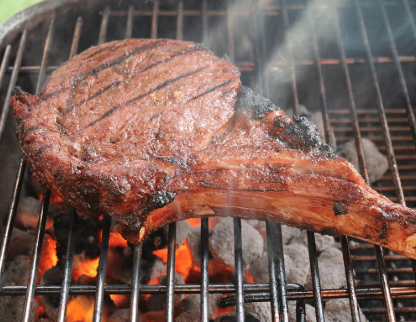
Best Grill Times by Steak Cut
Different cuts contain different amounts of fat, connective tissue, and bone, which affects how they respond to heat.
Ribeye Grill Time
Best doneness: Medium-rare 1-inch ribeye: 3–4 min per side 1½-inch ribeye: 4–5 min per side
Ribeye has abundant marbling, which acts like an internal basting system. The fat melts as it cooks, making this cut especially forgiving.
Filet Mignon Grill Time
Best doneness: Rare to medium-rare 1½-inch filet: 4–5 min per side plus 2–4 min indirect Filet is lean and tender, so overcooking is more noticeable. Many chefs finish it on indirect heat after a quick sear.
Sirloin Grill Time
Best doneness: Medium-rare to medium 1-inch sirloin: 4–5 min per side Sirloin is leaner than ribeye and benefits from a slightly shorter rest period to preserve juiciness.
The 3-3-3 Rule Explained
You’ve probably seen the 3-3-3 rule in BBQ forums and videos. Here’s what it actually means:
- 3 minutes on the first side over direct heat
- 3 minutes on the second side
- Flip again for 3 minutes
- Flip one final time for 3 minutes
Total cooking time: 12 minutes.
This method works best for 1½-inch steaks because the repeated flipping promotes more even cooking. Frequent flipping does not prevent a crust from forming; in fact, many modern grilling experts prefer it for thick cuts.
A useful analogy is rotating a marshmallow over a campfire. If you leave one side facing the flame too long, it burns before the inside warms through. Turning it periodically distributes heat more evenly. Steak behaves in a surprisingly similar way.
Reverse Sear: The Best Method for Thick Steaks
For 1½–2 inch steaks, reverse searing consistently produces the most steakhouse-like results.
Step 1: Set Up a Two-Zone Grill
Create:
- Indirect zone: 250–275°F
- Direct zone: 500°F+
Step 2: Cook Indirectly
Place the steak on the cooler side with the lid closed until it reaches 105–110°F internally.
Step 3: Sear
Move it to the hot side and sear 60–90 seconds per side.
Step 4: Rest
Remove the steak at 123–125°F for a final medium-rare temperature of 130–135°F after resting.
This method is especially effective for tomahawk, porterhouse, and thick ribeyes because it gives you edge-to-edge pink meat instead of a gray overcooked band around the outside.
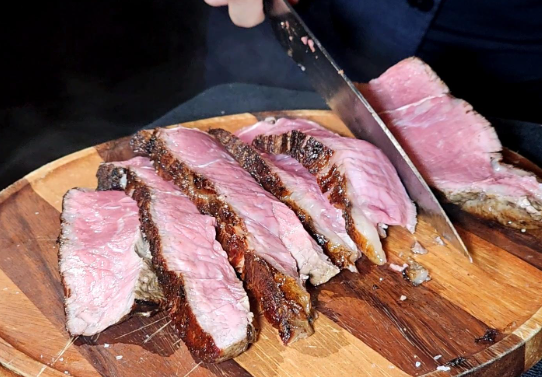
The 5-Minute Rest That Changes Everything
Many home cooks nail the grill time and then ruin the steak by slicing immediately. When steak comes off the grill, the juices are highly pressurized from the heat. Resting allows those juices to redistribute through the meat.
Resting Guidelines
| Steak Thickness | Rest Time |
|---|---|
| ½ inch | 3–4 min |
| 1 inch | 5 min |
| 1½ inch | 7–8 min |
| 2 inch | 8–10 min |
A 1-inch steak cooked to medium-rare should be removed from the grill around 128–130°F and allowed to rest for 5 minutes. During that time, the temperature typically rises 3–5°F.
Gas Grill vs Charcoal Grill Times
People often ask whether charcoal changes the timing. The answer is: slightly.
| Grill Type | Typical Difference |
|---|---|
| Gas | More consistent heat |
| Charcoal | Often 30–60 sec faster per side |
| Pellet | Excellent for reverse sear |
Charcoal can create hotter localized zones, so watch the steak closely during the sear phase.
Common Steak Grill Time Mistakes
Starting with a Cold Steak
Take the steak out of the refrigerator 20–30 minutes before grilling. A slightly tempered steak cooks more evenly.
Not Patting It Dry
Moisture is the enemy of browning. Use paper towels to dry the surface thoroughly.
Pressing the Steak
Pressing with a spatula squeezes out juices and does not make it cook faster.
Trusting Time More Than Temperature
A $15 instant-read thermometer is more valuable than any memorized grill chart.
Quick Reference: Most Popular Steak Grill Times
QUICK REFERENCE
Most Popular Steak Grill Times
450–550°F
1-inch ribeye (medium-rare)
3–4 min/side
1-inch sirloin (medium)
4–5 min/side
1½-inch filet mignon
4–5 min/side
2-inch tomahawk (reverse sear)
Indirect + 1–2 min sear
Rest after grilling
5–10 minutes
What Steak Chefs Actually Prioritize
Professional grill cooks rarely think in terms of “exactly 4 minutes.” They prioritize:
- Surface color (deep brown, not black)
- Internal temperature
- Fat rendering
- Steak thickness
- Carryover cooking
That’s why two steaks of the same weight can have different grill times if one is wider and thinner while the other is narrower and thicker.
Google’s E-E-A-T framework also favors content that demonstrates experience and practical understanding, not just copied charts. The difference between an average steak article and a truly useful one is the ability to help a reader adapt when the steak is thicker than expected, the grill is running hot, or the wind is affecting charcoal temperature. Google Search Central
Conclusion
The best steak grill time depends on three variables: thickness, grill temperature, and desired doneness. For the steak most people cook—a 1-inch ribeye or sirloin over a 450–550°F grill—the magic number is 3–4 minutes per side for medium-rare and 4–5 minutes per side for medium. Remove the steak a few degrees before your target temperature and let it rest for 5 minutes.Mastering the right steak grill time will help you cook restaurant-quality steaks every time.
FAQs
How long do I grill a 1-inch steak for medium-rare?
Grill it for 3–4 minutes per side over high heat (450–550°F) and remove it when the internal temperature reaches 128–132°F.
Should I grill steak at 400°F or 450°F?
450°F–550°F is generally better for steak because it creates a superior crust while keeping the center juicy.
What is the 3-3-3 rule for steak?
It means grilling a thick steak for 3 minutes per side, flipping multiple times, for a total of about 12 minutes.
How long should a 2-inch steak stay on the grill?
Use a reverse sear: cook indirectly at 250–275°F until 110°F internal, then sear 1–2 minutes per side over high heat.
Do I really need a meat thermometer?
Yes. Grill times vary with steak thickness, grill type, weather, and starting temperature. A thermometer is the most accurate way to achieve your preferred doneness.