
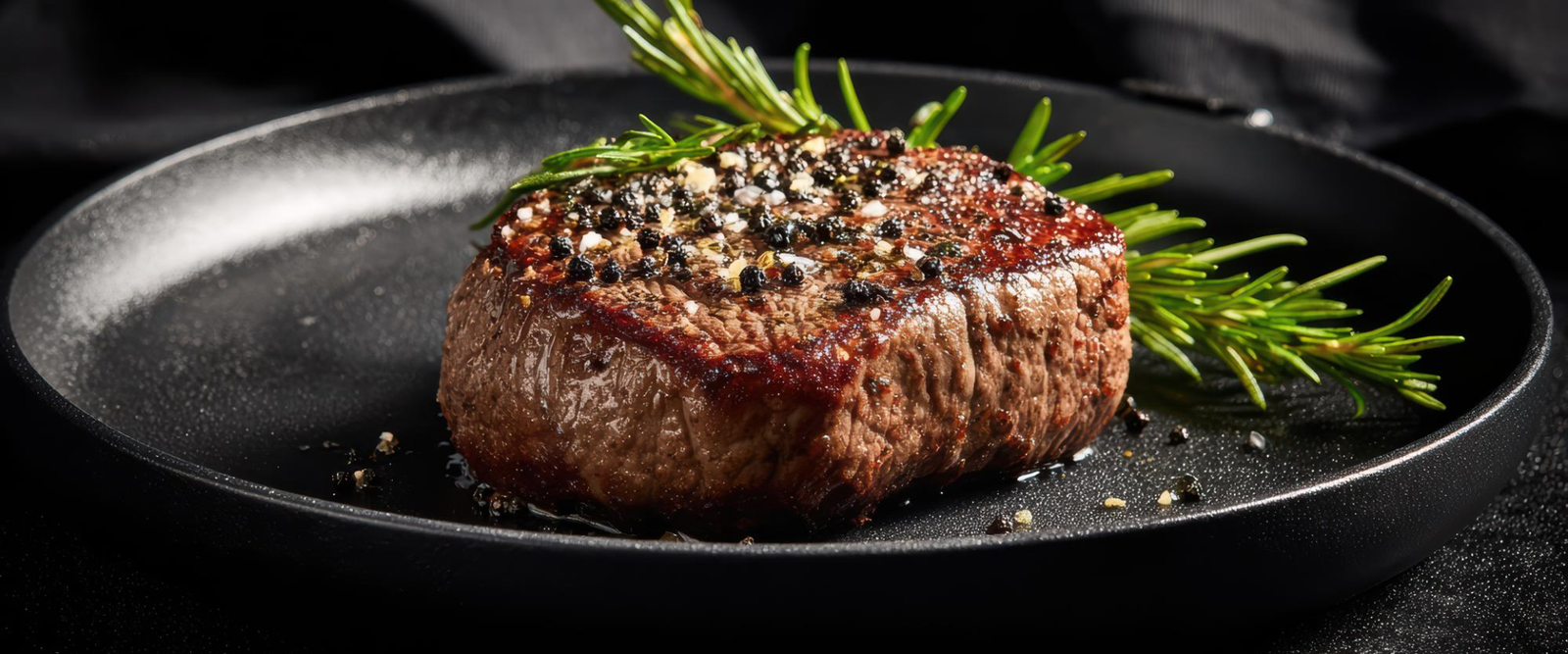
Search results for medium rare steak love throwing out “130–135°F” and stopping there. What most of them skip is the number that actually matters while you’re cooking: the pull temperature. A medium rare steak finishes at 130–135°F, but you take it off the heat at 125–128°F, because carryover cooking keeps raising the internal temperature for several minutes after the pan goes cold. Miss that detail and you’ll overshoot every time.
What Is a Medium Rare Steak?
A medium rare steak is a steak with a final internal temperature of 130–135°F (54–57°C) after resting. The center stays a warm red-pink, the fat has just started to render, and the texture is tender without any chew from undercooked connective tissue.
That final number is different from your pull temperature. Because the outside of the steak is hotter than the center while it cooks, heat keeps moving inward for several minutes after the steak leaves direct heat. Pull the steak at 125–128°F, rest it for 5–10 minutes tented loosely in foil, and it will land in the 130–135°F range on its own.
Why Medium Rare Became the Default Order
Medium rare isn’t a trend it’s the temperature range where a whole-muscle cut’s fat, moisture, and texture line up best. According to the USDA, the minimum recommended internal temperature for whole cuts of beef is 145°F, which technically sits in medium territory. That conservative number is built for general food safety, not flavor.
The reason chefs still recommend going below 145°F: bacteria on a whole-muscle steak live on the surface, not throughout the meat, and a hot sear handles that surface during cooking. That’s also why a common myth keeps circulating the red liquid in a medium rare steak is not blood. It’s myoglobin, a protein in muscle tissue that holds oxygen and turns red when exposed to air. Steak juice contains almost no actual blood, since most of it is removed during processing.
What Still Works in 2026 for Cooking Medium Rare
The 3-3-3 method. Sear one side for 3 minutes over direct high heat, flip and sear the other side for 3 minutes, then move to lower or indirect heat and finish 3 minutes per side. It’s a reliable framework for 1 to 1.5-inch steaks like ribeye, strip, or sirloin, but it’s a starting point not a replacement for checking temperature.
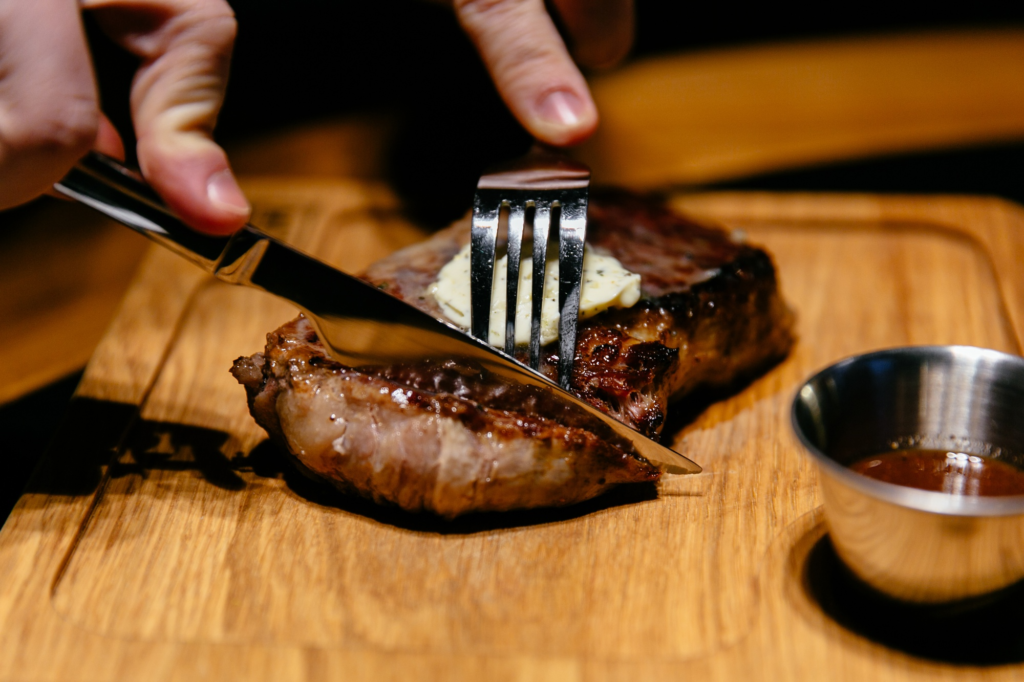
Butter basting in the last 1–2 minutes. Lower the heat slightly, add butter, a smashed garlic clove, and fresh thyme to the pan, then tilt the skillet and spoon the foaming butter over the steak repeatedly. This builds flavor on the crust without overcooking the center.
A digital instant-read thermometer over a timer. Cook time depends on thickness, pan heat, and starting temperature, all of which vary too much to trust a clock alone.
Resting the steak before cutting. Tent it loosely with foil for 5–10 minutes. This is where carryover cooking finishes and juices redistribute through the meat instead of pooling on the cutting board.
What No Longer Works Reliably
Pulling at 140°F “to be safe.” This is the single most common mistake people post about after a steak comes out tougher and grayer than expected. At 140°F before resting, carryover pushes the final temperature well into medium territory, past where most people consider medium rare.
Relying on touch alone with no backup. The touch test is a reasonable secondary check, but it’s inconsistent across cuts and cooking methods. Treat it as a sanity check, not your primary method.
Cooking straight from the fridge. A cold center cooks unevenly, often leaving you with a seared exterior and a colder-than-expected middle even at the right surface temperature.
Is Medium Rare Steak Safe to Eat?
The USDA’s official guidance sets 145°F as the minimum internal temperature for whole cuts of beef, with a 3-minute rest. That’s a conservative standard meant to cover the general population, including people with weaker immune systems.
For healthy adults eating a whole-muscle cut, a medium rare steak carries low risk because the surface where pathogens like . coli and Salmonella live reaches a safe temperature during the sear. The interior of an intact cut stays essentially sterile until it’s cut open, which is why steak doesn’t follow the same rule as ground beef. Ground beef must always reach 160°F, since grinding spreads any surface bacteria throughout the meat.
People who are pregnant, immunocompromised, very young, or elderly are generally advised to stick to the USDA’s 145°F recommendation rather than ordering medium rare.
Medium Rare vs Other Doneness Levels
| Doneness | Internal Temp (after rest) | Center Color | Texture |
|---|---|---|---|
| Rare | 120–125°F | Deep red, cool center | Very soft |
| Medium Rare | 130–135°F | Warm red-pink | Tender, slight resistance |
| Medium | 140–145°F | Pink with brown edges | Firmer, fat melts further |
| Medium Well | 150–155°F | Thin pink line | Firm, less juice |
| Well Done | 160°F+ | No pink | Firm throughout |
Some cooks now prefer medium over medium rare specifically because the higher temperature renders more fat, which can mean a less chewy bite on well-marbled cuts. It’s a legitimate preference, not a sign anyone is doing it wrong.
Should You Order or Cook Your Steak Medium Rare?
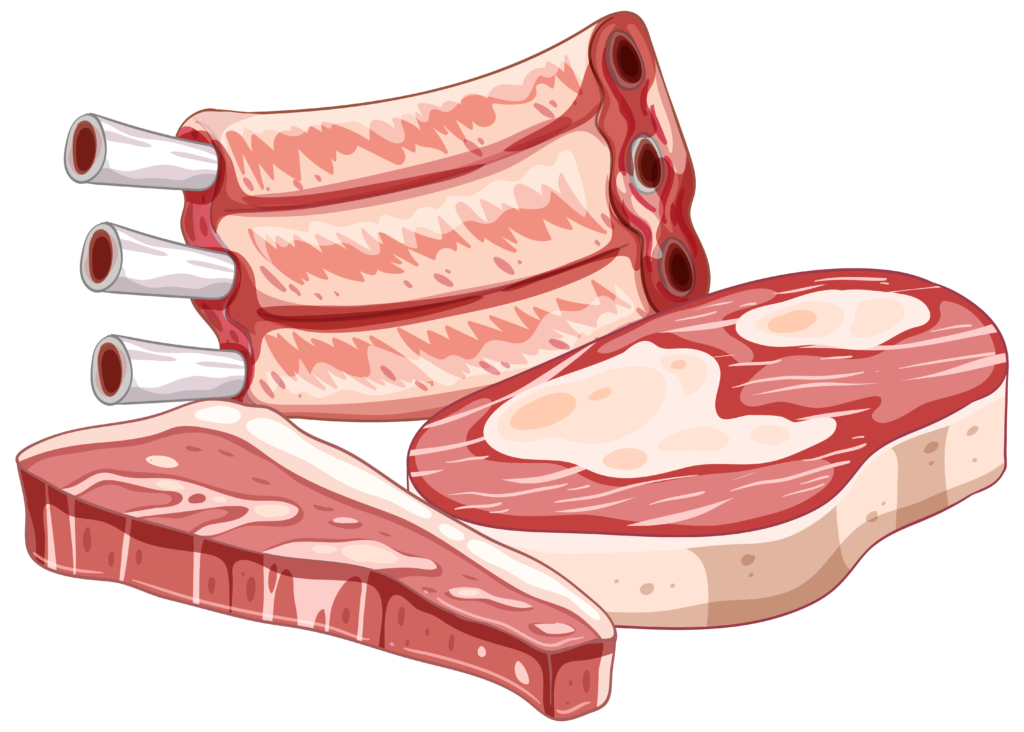
If you’re working with a well-marbled cut of ribeye, strip, sirloin, or filet and you’re not in a higher-risk health category, medium rare delivers the best balance of moisture and tenderness. The narrow gap between 125°F (pull) and 135°F (final) is also why it’s the doneness people most often miss without a thermometer.
If you want less pink, or you’re cooking for someone in a higher-risk group, medium (140–145°F) is the safer, USDA-aligned choice that still keeps reasonable juiciness, especially on fattier cuts.
FAQs
Is medium rare 135 or 145°F?
Medium-rare finishes at 130–135°F after resting. 145°F is the USDA’s minimum recommendation for whole cuts of beef, which falls in medium, not medium rare.
What is the 3-3-3 rule for steak?
It’s a timing method: sear one side 3 minutes over direct high heat, flip and sear the other side 3 minutes, then finish 3 minutes per side over lower or indirect heat. It works best for 1 to 1.5-inch steaks and should be confirmed with a thermometer.
How long do I cook a medium rare steak?
There’s no universal time it depends on thickness, cut, and heat source. A 1-inch ribeye on high heat typically takes 3–4 minutes per side for the sear, but always confirm with a thermometer rather than the clock.
Is the red liquid in medium rare steak blood?
No. It’s myoglobin, an oxygen-storing protein in muscle tissue. Most blood is removed from meat during processing, so what you’re seeing isn’t blood at all.
Why did my medium rare steak come out tough?
Tenderness at medium rare depends on the cut. Cuts with more connective tissue, like sirloin tips, stay chewy at 130–135°F because that tissue only breaks down above 160°F with extended cooking time. Choose naturally tender cuts like ribeye or tenderloin for medium rare.
What’s the best cut for medium rare?
Ribeye, New York strip, and filet mignon are the most forgiving, since their fat content and tenderness hold up well in the medium rare range.
Final Thoughts
The gap between a good medium rare steak and an overcooked one usually comes down to one missed detail: pulling at 125–128°F instead of waiting until the thermometer already reads 135°F. Combine a reliable method like the 3-3-3 rule with an actual thermometer, rest the steak properly, and a medium rare steak stops being a coin flip.
Also read