
Table of Contents
Roast Duck Recipe: Crisp Skin, Pink Breast, Every Time
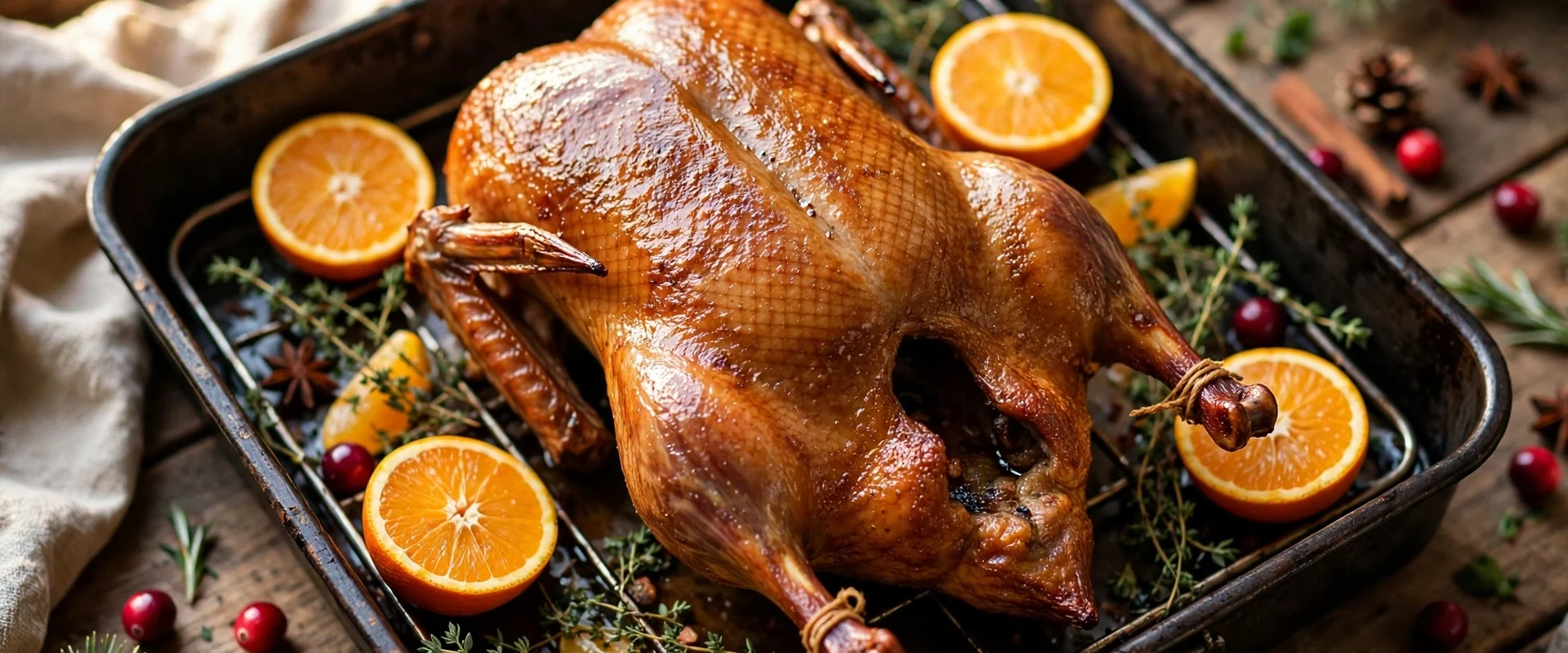
This roast duck recipe gives you a whole duck with shatteringly crisp skin and a breast that stays pink and juicy inside. I tested it three times in my own kitchen, and the method below is the one that worked every single time. You need a 2kg duck, a hot oven, patience with the fat, and a thermometer. That is the whole secret.
Key takeaways: Dry the skin overnight in the fridge for the crispiest result. Roast at 200°C (400°F) for the first 30 minutes, then drop to 180°C (350°F). Pull the duck when the breast reads 57°C (135°F) and rest it 15 minutes before carving. Save every drop of duck fat, because it makes the best roast potatoes you will ever eat.
Why This Roast Duck Recipe Works
Most roast duck recipes fail in one of two ways. The skin stays soft and flabby, or the breast overcooks into grey, dry meat while you wait for the legs to finish. This roast duck recipe fixes both problems by treating the breast and the legs differently in the same oven. The duck starts hot so the skin tightens and browns, then the temperature drops so the breast cooks gently while the legs catch up. A short rest at the end lets the juices settle and the skin stay crisp.
I cook duck the way I cook steak: with a thermometer, not a timer. Timers guess. A thermometer tells you the truth. Duck breast is a red meat, and it eats best when it is pink in the middle, just like a steak. The legs, meanwhile, need longer and hotter to turn tender. The two stage roast in this roast duck recipe handles that split without any extra equipment.
Ingredients for Roast Duck Recipe
- 1 whole duck, about 2kg (4.4lb), giblets removed
- 1 tablespoon fine sea salt
- 1 teaspoon black pepper, freshly ground
- 1 orange, halved
- 4 garlic cloves, lightly crushed
- 4 sprigs fresh thyme
- 1 tablespoon honey, for the glaze
- 1 tablespoon soy sauce, for the glaze
- 1 teaspoon five spice powder (optional, for a festive Chinese style roast duck recipe)
How to Roast a Duck: The Method I Tested
Step 1: Dry the skin the night before
Unwrap the duck the evening before you cook it. Pat it dry inside and out with kitchen paper, then set it on a rack over a tray, uncovered, in the fridge overnight. Cold, dry air is the best friend of crispy duck skin. If you skip this step, the skin steams instead of crisping, and no amount of oven heat fixes it later. This one step makes more difference than anything else in this roast duck recipe.
Step 2: Score and season
Take the duck out of the fridge an hour before cooking so it loses the chill. Use a sharp knife to score the skin over the breast in a crosshatch pattern, cutting through the fat but not into the meat. This lets the fat render out instead of trapping itself under the skin. Season generously all over with salt and pepper, and rub a little salt into the scored cuts. Stuff the cavity with the orange halves, garlic and thyme.
Step 3: Start hot, then drop the heat
Heat the oven to 200°C (400°F). Set the duck breast side up on a rack in a roasting tin. Roast for 30 minutes at 200°C so the skin tightens and starts to colour. Then turn the oven down to 180°C (350°F) and keep roasting for about 1 hour 15 minutes more. Baste once or twice with the fat in the tin, and drain the fat into a jar as it collects. Duck gives up a lot of fat, and you want it out of the tin, not pooling around the bird.
Step 4: Glaze in the last 15 minutes
Mix the honey and soy sauce with a pinch of five spice if you like it. Brush it over the breast and legs for the final 15 minutes of roasting. The glaze turns glossy and deep gold, but watch it closely, because honey burns fast at this heat. If it darkens too quickly, cover the breast loosely with foil and let the legs finish.
Step 5: Check the roast duck temperature, then rest
Roast duck temperature is the part you must get right. Push a thermometer into the thickest part of the breast, away from the bone. I pull my duck at 57°C (135°F) in the breast, because carryover heat takes it to about 60°C (140°F) while it rests, which is pink and juicy. The legs should read at least 74°C (165°F), and they will, because they sit lower and closer to the heat.
FoodSafety.gov lists 74°C (165°F) as the safe minimum internal temperature for duck, so if you prefer your breast fully cooked, take it to 74°C and accept a firmer result. Rest the duck on a board for 15 minutes before you carve. Do not tent it with foil, or the skin will soften.
How to Carve a Whole Roast Duck
Carving a duck is easier than carving a chicken because the shape is simpler. Start with the legs: cut through the skin where the leg meets the body, then pop the joint and slice the leg off in one piece. Cut each leg into thigh and drumstick. Then slice the breast off each side in one long piece, following the breastbone down. Slice the breast across the grain into thick pieces. A 2kg duck feeds four people comfortably, or two very hungry people with leftovers.
What to Serve With Roast Duck
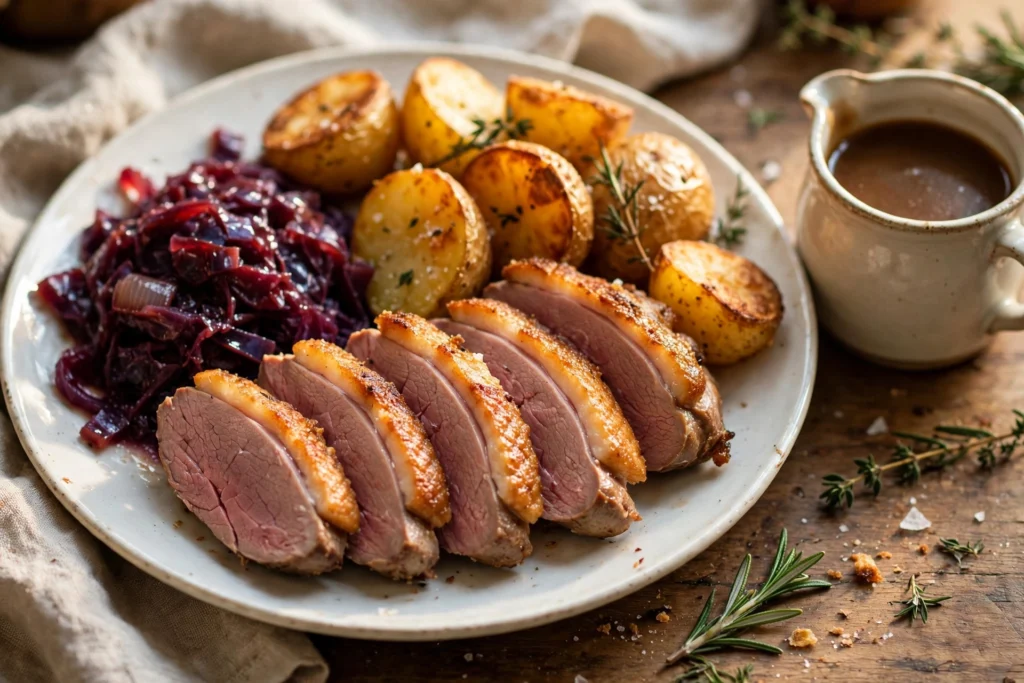
Roast duck loves rich, sharp sides. Duck fat roast potatoes are the obvious partner, and they belong on the same tray in spirit if not in fact, so roast them separately in the fat you saved. Red cabbage braised with apple and vinegar cuts through the richness, and so does a sharp orange salad. For a festive table, this roast duck recipe sits beautifully next to the Christmas cake at the end of the meal, and the whole spread reads as a proper celebration dinner.
If you want more ideas for the rest of the plate, my guide to good sides for steak covers potatoes, greens and sauces that work just as well next to duck. When it comes to temperature discipline, the same rules I use for steak apply here too, so my steak doneness guide is worth a read if you cook by feel instead of by thermometer. This roast duck recipe works with all of those sides, so this roast duck recipe is easy to serve for a crowd.
Common Roast Duck Mistakes
Skipping the overnight dry
Wet skin never crisps. Even two hours uncovered in the fridge helps if you forgot the night before, but overnight is best.
Cooking by time alone
Ducks vary in size and fat, so a timer is a guess. A £10 thermometer removes the guesswork and is the single best tool for this roast duck recipe.
Throwing away the fat
A 2kg duck renders roughly 300ml of fat. That fat is liquid gold. Roast potatoes in it, fry eggs in it, or spread it on toast with salt. Never pour it down the sink.
Carving too soon
Cut into a duck straight from the oven and the juices run out onto the board. Fifteen minutes of rest keeps them in the meat and keeps the skin crisp.
Roast Duck Recipe Card
Prep time: 20 minutes, plus overnight drying. Cook time: 1 hour 45 minutes. Rest time: 15 minutes. Serves: 4. Calories: about 620 per serving with skin.
- Dry the duck uncovered on a rack in the fridge overnight.
- Heat the oven to 200°C (400°F). Score the breast skin, season well, and stuff the cavity with orange, garlic and thyme.
- Roast breast side up for 30 minutes at 200°C, then drop to 180°C (350°F) for 1 hour 15 minutes, draining fat as it collects.
- Brush with the honey and soy glaze for the final 15 minutes.
- Check the roast duck temperature: pull at 57°C (135°F) in the breast for pink, or 74°C (165°F) for fully cooked. Rest 15 minutes, then carve and serve.
Storing Leftover Roast Duck
Strip leftover meat off the bone and keep it in the fridge for up to 3 days. Reheat it gently in a hot oven for 8 to 10 minutes so the skin crisps again; the microwave turns it rubbery. The carcass makes a superb stock, so simmer it with an onion, a carrot and a bay leaf for 2 hours and freeze it for soups and risottos. Leftover duck also makes a brilliant next day sandwich with hoisin sauce and spring onions, or a quick fried rice with the saved duck fat.
FAQ: Roast Duck Recipe
How long does it take to roast a duck?
A 2kg duck takes about 1 hour 45 minutes in total: 30 minutes at 200°C (400°F), then about 1 hour 15 minutes at 180°C (350°F). Add 15 minutes per extra 500g, and always check the roast duck temperature with a thermometer instead of trusting the clock.
What temperature should roast duck be cooked to?
Pull the duck when the breast reads 57°C (135°F) for a pink, juicy result, or 74°C (165°F) if you want it fully cooked through. The legs should reach at least 74°C (165°F) either way. Rest the duck 15 minutes before carving.
How do I get crispy duck skin?
Dry the skin uncovered in the fridge overnight, score the fat so it renders, start the roast hot at 200°C (400°F), and drain the fat from the tin as it collects. Never cover the duck with foil while it rests, or the steam softens the skin you worked for.
Can I roast a duck without a rack?
Yes. Set the duck on a bed of halved onions and carrots in the roasting tin, which lifts it out of its own fat and flavours the vegetables at the same time. A rack is better for air flow, but the vegetable bed works well.
Is roast duck hard to cook?
No, it is easier than a roast chicken in one way: duck is forgiving. The fat keeps the meat moist, and the two stage roast in this roast duck recipe handles the breast and legs in one pan. If you own a thermometer and you dry the skin overnight, you will get a great result on your first try.