
Table of Contents
To cook bavette steak well, sear it hard in a very hot pan for 2 to 3 minutes per side, rest it for 5 minutes, then slice it thinly against the grain. That short, hot cook keeps this lean, flavour packed cut juicy instead of tough. I tested this method three times in my own kitchen, and the version below gives you a deep brown crust and a pink, tender middle every time.
Key Takeaways
- When you learn how to cook bavette steak, remember it needs high heat and a short cook. Two to 3 minutes per side suits a steak about 2 cm thick.
- Pull bavette steak at 52C for medium rare, then rest it for 5 minutes before slicing.
- Always slice bavette steak thinly against the grain, or even a perfectly cooked steak will chew tough.
- Bavette steak is the same cut as flap meat, and it makes a superb steak for sandwiches, salads and steak frites.
- A simple salt, pepper and garlic butter finish beats a heavy marinade on this cut.
What Is Bavette Steak?
Anyone learning how to cook bavette steak should first understand the cut. Bavette steak comes from the lower belly of the animal, near the flank. Butchers in France and the UK sell it as bavette, while US butchers often call the same cut flap meat. It has long, loose fibres and a rich, beefy flavour that beats many pricier cuts.
How to Cook Bavette Steak: My Tested Method
Learning how to cook bavette steak starts before the pan gets hot. Take the steak out of the fridge 30 minutes before cooking so it loses its chill. Pat it very dry with kitchen paper. A wet surface steams instead of searing, and a poor sear is the main reason home cooked bavette disappoints. Season generously with flaky sea salt and cracked black pepper just before cooking, not hours ahead, so the salt does not draw out moisture.
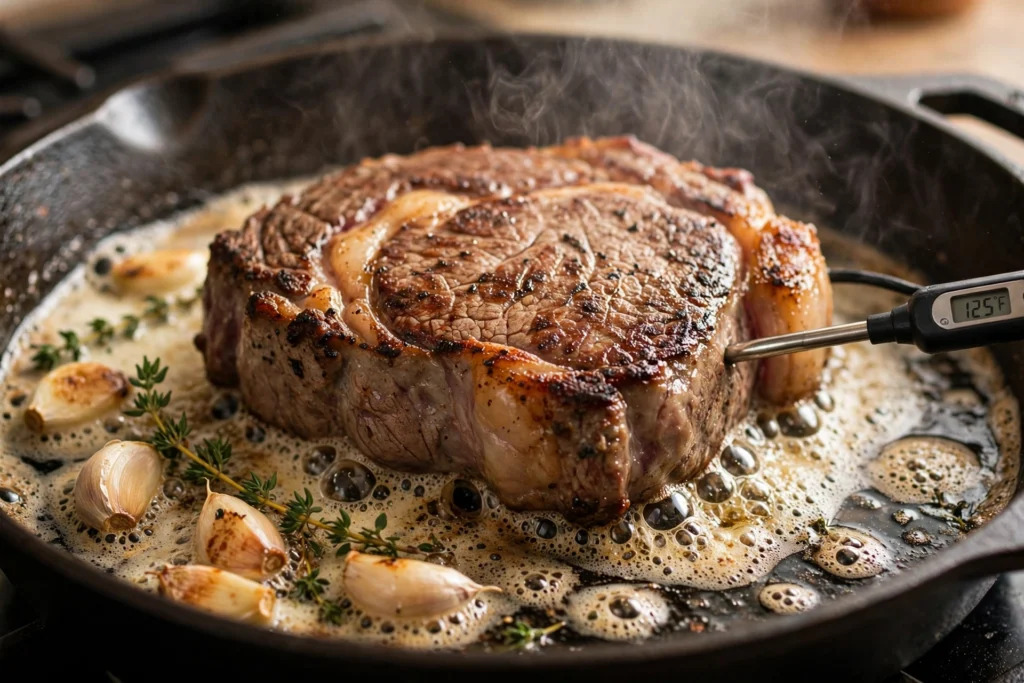
Heat a cast iron skillet or heavy frying pan over high heat until it just starts to smoke. Add a tablespoon of neutral oil with a high smoke point, such as sunflower oil. Lay the steak away from you so hot oil does not splash toward you. Cook for 2 to 3 minutes without moving it, then flip it once. Add a knob of butter, a crushed garlic clove and a sprig of thyme to the pan for the second side, and baste the steak with the foaming butter. Cook the second side for 2 to 3 minutes. Check the temperature with a probe thermometer in the thickest part.
Bavette Steak Cooking Time and Temperature
How to cook bavette steak to each doneness depends on thickness, but this table covers the usual supermarket cut.
- Rare: 2 minutes per side, pull at 49C
- Medium rare: 2 to 3 minutes per side, pull at 52C
- Medium: 3 to 4 minutes per side, pull at 57C
- Well done: not recommended for bavette, it turns leathery fast
I pull bavette steak 2 to 3 degrees below my target temperature because carryover cooking finishes the job during the rest. For food safety guidance on beef cooking temperatures, see the FoodSafety.gov safe minimum internal temperatures chart. Rest the steak on a warm plate, loosely tented with foil, for 5
minutes. Resting lets the juices settle back through the meat instead of running out onto the board when you slice.
How to Slice Bavette Steak Against the Grain
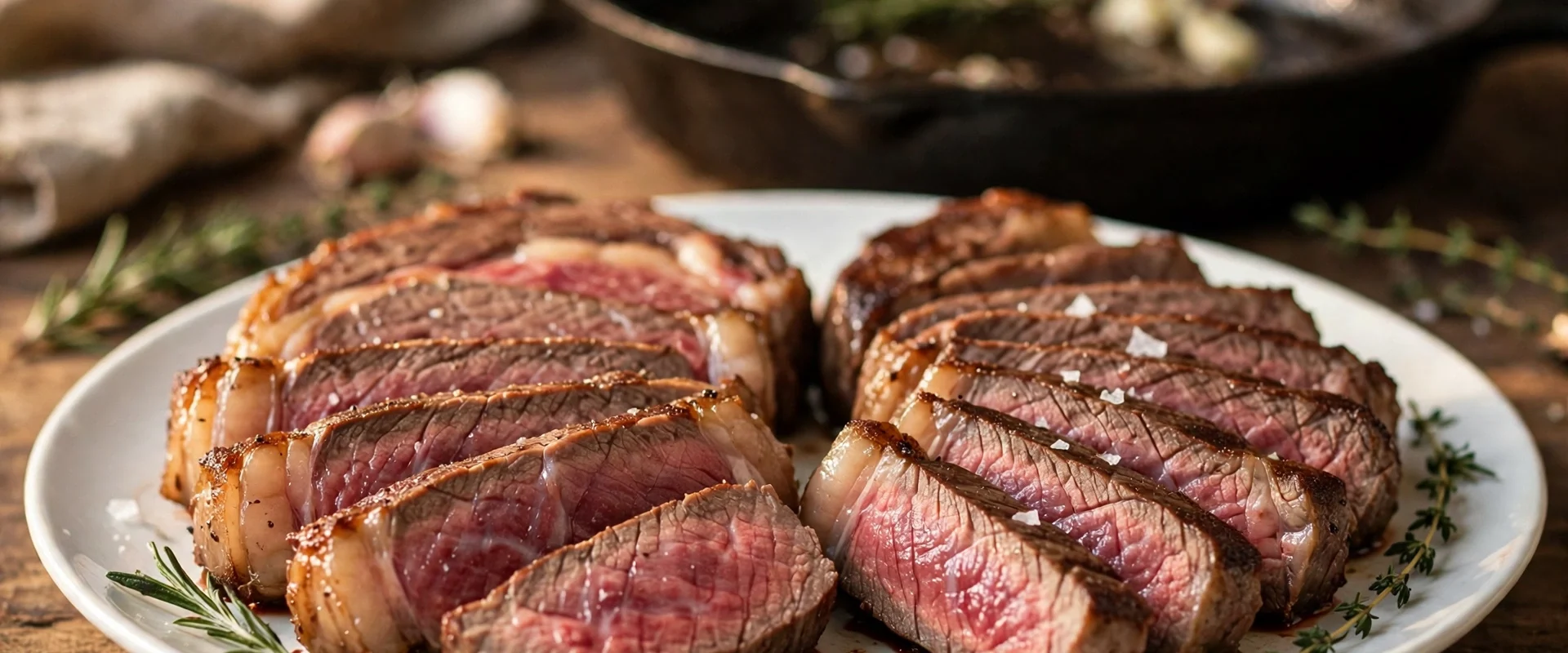
Slicing makes or breaks your result when you learn how to cook bavette steak. Look at the steak and find the long lines running through it. That is the grain. Cut across those lines, at a slight angle, in slices about 5 mm thick. Short fibres chew tender, while long fibres chew tough, even when the cook was perfect.
Bavette Steak Recipe Card
This bavette steak recipe shows how to cook bavette steak for a weeknight dinner. Serves: 2 people. Prep time: 35 minutes including bringing the steak to room temperature. Cook time: 5 to 6 minutes. Rest time: 5 minutes.
Ingredients
- 1 bavette steak, about 400 to 500 grams and 2 cm thick
- 1 tablespoon sunflower oil
- 1 teaspoon flaky sea salt
- 1 teaspoon cracked black pepper
- 25 grams butter
- 1 garlic clove, crushed
- 1 sprig of fresh thyme
Method
- Take the steak out of the fridge 30 minutes before cooking and pat it dry.
- Season both sides with salt and pepper just before cooking.
- Heat a cast iron skillet over high heat until it just smokes, then add the oil.
- Sear the steak for 2 to 3 minutes on the first side without moving it.
- Flip once, add butter, garlic and thyme, and baste for 2 to 3 minutes on the second side.
- Check the temperature and pull at 52C for medium rare.
- Rest for 5 minutes, then slice thinly against the grain and serve at once.
Bavette Steak vs Flank Steak
Shoppers learning how to cook bavette steak often confuse bavette steak vs flank steak because both cuts come from the belly area and both need slicing against the grain. Flank steak is leaner, flatter and slightly firmer, while bavette has more marbling and a looser texture that soaks up marinades faster. I cook both the same way, hot and fast with a rest, but I favour bavette for sandwiches and salads because its looser fibres stay tender when sliced thin. If your butcher has no bavette, flank steak makes the best substitute in this recipe. For a full map of how cuts compare, read our complete guide to steak cut types, and if you want another everyday UK cut cooked the same hot and fast way, try our guide to cooking rump steak.
What to Serve With Bavette Steak
Bavette steak pairs beautifully with bold, fresh flavours. I reach for peppercorn sauce for a classic plate, or serve sliced bavette over salad, in a crusty roll with caramelised onions, or with chips for steak frites. Our guide to good sides for steak lists 15 options that work with this cut.
Mistakes to Avoid When You Cook Bavette Steak
The most common mistake when you learn how to cook bavette steak is cooking it like a thick sirloin. A long, gentle cook dries it out. Give it fierce heat and a short time instead. The second mistake is skipping the rest, which costs you juices. The third mistake is slicing with the grain, which turns tender meat chewy. The fourth mistake is crowding the pan with two steaks at once, which drops the temperature and steams the meat. Cook one steak at a time if your pan is small. Finally, do not over season a good bavette. Salt, pepper, butter and garlic let the beef speak.
Can You Grill Bavette Steak?
Yes, bavette steak grills superbly, and grilling is another way to learn how to cook bavette steak outdoors. Heat the grill to its highest setting, oil the grates, and grill for 2 to 3 minutes per side with the lid open. Rest for 5 minutes and slice against the grain. For temperature detail by doneness, see our steak doneness guide.
Frequently Asked Questions
What temperature should bavette steak be cooked to?
Pull bavette steak at 52C for medium rare. That temperature is the sweet spot when you learn how to cook bavette steak. Rest it for 5 minutes and it will settle near 54C. Pull at 57C for medium, and avoid cooking past medium because the lean fibres dry out quickly.
Is bavette steak tough?
Bavette steak is only tough when you overcook it or slice it with the grain, so the method matters as much as the heat when you learn how to cook bavette steak. Cooked hot and fast, rested properly and sliced thinly against the grain, bavette eats tender and juicy. The grain direction matters more here than with most steaks.
Do I need to marinate bavette steak?
No, you do not need to marinate bavette steak, and a simple seasoning suits anyone learning how to cook bavette steak.
What is the best substitute for bavette steak?
Flank steak is the closest substitute, followed by skirt steak. Both need the same hot, fast cook and the same slicing against the grain. Ask your butcher for flap meat if the label says neither bavette nor flank, because that is often the same cut under a US name.
How long should bavette steak rest?
Rest bavette steak for 5 minutes before slicing, the final step in how to cook bavette steak well. That rest lets juices redistribute and lets carryover cooking finish the centre gently. Slice straight after the rest so the meat still serves hot.