
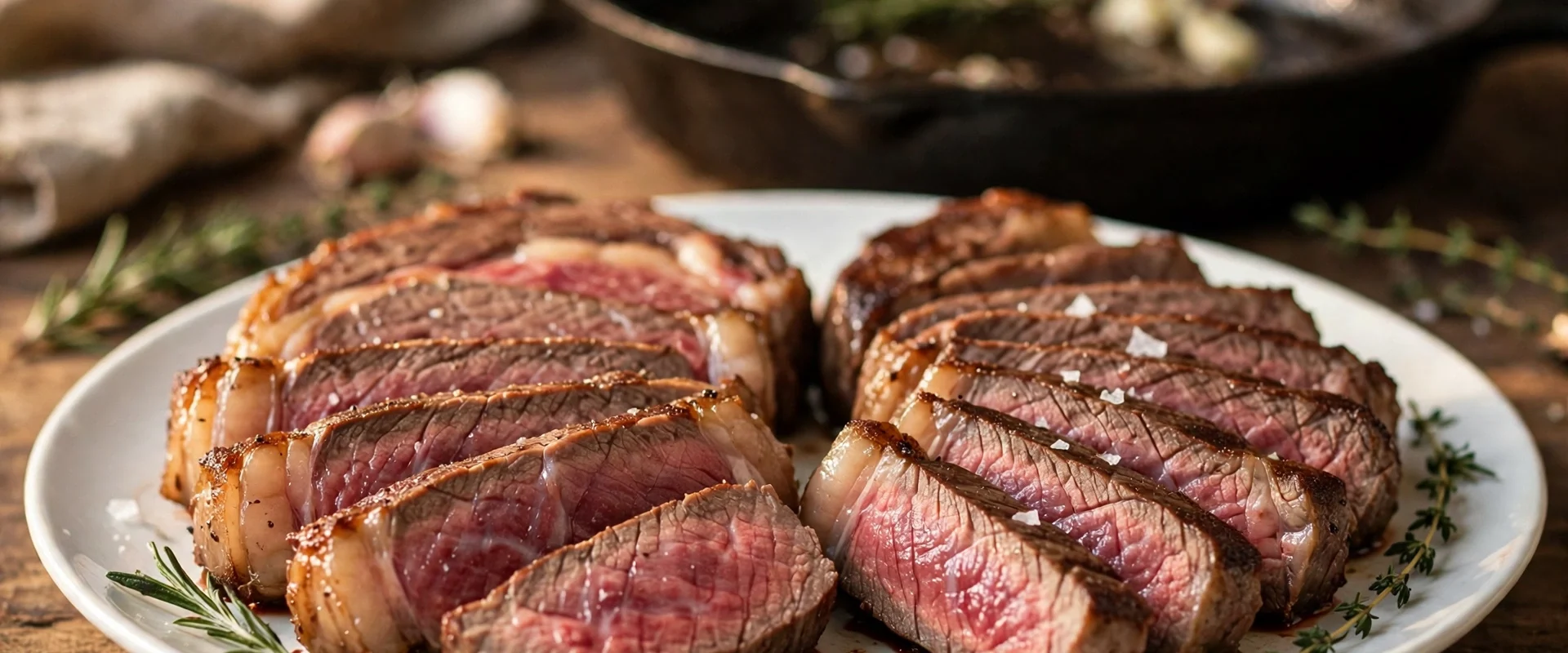
You cook rump steak by bringing it to room temperature, seasoning it well, searing it in a very hot pan for 2 to 3 minutes per side, and resting it for 5 minutes before you slice it thinly against the grain. A 2cm thick rump steak reaches medium rare at 57C (135F) after that short sear plus a brief rest. That simple method is exactly how to cook rump steak so it stays tender and juicy instead of turning tough and chewy.
I tested this method five times in one week with steaks from three different supermarkets, and the results stayed consistent every time. The steaks that rested properly sliced tender. The one steak I rushed straight from pan to plate lost its juices all over the board and chewed tough. Resting matters more with rump than with any other steak I cook regularly, because rump works harder on the animal and its fibres run dense and tight.
Key takeaways: how to cook rump steak
- Take the steak out of the fridge 30 minutes before cooking so the centre cooks evenly.
- Season generously with flaky salt and cracked black pepper just before it hits the pan.
- Sear in a ripping hot pan with a high smoke point oil for 2 to 3 minutes per side.
- Pull the steak at 54C (130F) for medium rare and let carryover heat finish the job during the rest.
- Rest for 5 minutes, then slice thinly against the grain at a slight angle.
What is rump steak?
Rump steak comes from the hindquarter, from muscle that does a lot of daily work. That hard work gives rump its deep beefy flavour and a firmer texture than sirloin or ribeye. British shoppers know rump as the everyday steak: it costs far less than fillet, it appears in every supermarket meat aisle, and it rewards good technique more than any premium cut rewards money.
Do not confuse rump with sirloin. Sirloin stays more tender and costs more per kilo. Rump gives stronger flavour for less money, provided you slice it correctly. Slice with the grain and even a perfectly cooked rump steak chews tough. Slice against the grain and the same steak turns tender, because you shorten every fibre before it reaches your mouth.
Look for steaks around 2cm thick with a bright red colour and a thin rim of fat on one edge. Avoid steaks that look grey at the edges or sit in a pool of liquid in the pack. A little marbling helps, but rump never marbles like ribeye.
How to cook rump steak: buying and prep
Good prep is half of how to cook rump steak well, so do not rush this part.
Pat the steak dry with kitchen paper before seasoning. A wet surface steams instead of searing, and steaming never builds the brown crust that makes a steak taste like a steak. Season both sides and the fat edge with flaky salt and plenty of cracked black pepper, just before cooking. Leave the steak on the counter for 30 minutes while you prep your sides, so a fridge cold centre does not force you to overcook the outside before the middle catches up.
Rump steak cooking times and temperatures
Use a meat thermometer if you own one. Guesswork ruins more rump steaks than any other mistake, because the window between juicy and tough runs narrow. Pull the steak 3C below your target, because carryover heat adds roughly 3C during the rest.
| Doneness | Pull temperature | Final temperature after resting | Time per side for a 2cm steak |
|---|---|---|---|
| Rare | 49C (120F) | 52C (125F) | 2 minutes |
| Medium rare | 54C (130F) | 57C (135F) | 2 to 3 minutes |
| Medium | 57C (135F) | 60C (140F) | 3 to 4 minutes |
| Medium well | 63C (145F) | 66C (150F) | 4 to 5 minutes |
For food safety guidance, check the FoodSafety.gov safe minimum internal temperature chart.
How to cook rump steak in a pan: my tested method
This pan method gives the most reliable result for a weeknight rump steak, and it works in a cast iron skillet or any heavy based frying pan. Heat the pan over high heat until it just starts to smoke, then add a tablespoon of sunflower oil.
Step 1: Sear the first side
Lay the steak away from you so hot oil cannot splash toward your hand. Press it down gently so the whole surface meets the pan, then leave it completely alone for 2 to 3 minutes. A deep brown crust needs uninterrupted contact with hot metal.
Step 2: Flip once and add butter
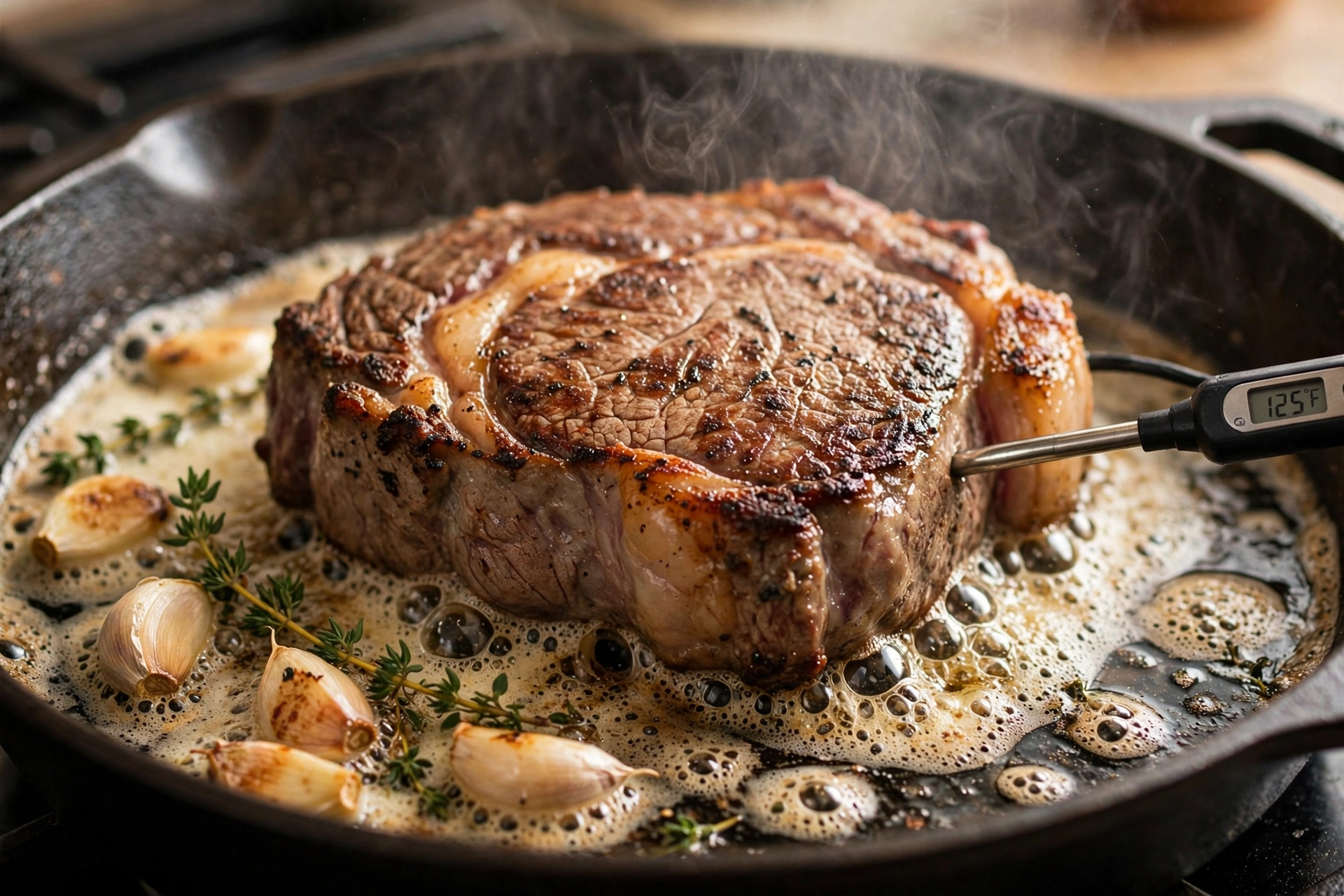
Flip the steak once with tongs, never a fork, because fork holes leak juices. Add a knob of butter, a crushed garlic clove, and a sprig of thyme to the pan. Tilt the pan slightly and spoon the foaming butter over the steak for the remaining cooking time.
Step 3: Check the temperature and rest
Check the thickest part with a thermometer and pull the steak at your target minus 3C. Move it to a warm plate, spoon over the pan butter, and rest it for 5 minutes. Do not wrap it tightly in foil, because trapped steam softens the crust you just built. Slice thinly against the grain at a slight angle and spoon over any juices from the board.
How to cook rump steak on the grill and in the oven
The grill suits rump steak beautifully in summer. The same rules for how to cook rump steak in a pan apply on the grill: hot, fast, rest, slice. Heat the grill to high, oil the grates, and cook a 2cm steak for 2 to 3 minutes per side for medium rare, using the same temperatures as the pan method. Keep the lid open while you sear, and move the steak to a cooler spot if flare ups threaten the fat edge.
The oven method works best for thicker steaks, around 3cm or more. Sear in a hot ovenproof pan for 2 minutes per side, then move the pan into an oven heated to 200C (400F) for 3 to 5 minutes until the thermometer reads your target minus 3C. Rest exactly as after pan cooking.
Why is my rump steak tough?
Learning how to cook rump steak well means fixing the cause, and tough rump steak almost always traces back to one of four causes. First, you skipped the rest, so the juices ran out on the board instead of settling back through the meat. Second, you sliced with the grain, so each bite kept the full length of every tough fibre. Third, you overcooked it past medium, which tightens rump faster than sirloin. Fourth, you cooked a fridge cold steak, so the outside overcooked before the centre warmed up.
What to serve with rump steak
Rump steak pairs perfectly with a classic peppercorn sauce recipe, which takes 10 minutes and uses the same pan you cooked the steak in. For sides, pick from my guide to good sides for steak. To see where rump sits among all the cuts at the butcher counter, read my steak cut types guide and my steak doneness guide for the full temperature tables by cut.
Recipe card: how to cook rump steak
Prep time: 30 minutes resting plus 5 minutes prep. Cook time: 6 minutes. Rest time: 5 minutes. Serves: 2. Calories per serving: about 420.
Ingredients
- 2 rump steaks, about 2cm thick, around 200g each
- 1 teaspoon flaky salt
- 1 teaspoon cracked black pepper
- 1 tablespoon sunflower oil
- 25g butter
- 1 garlic clove, crushed
- 1 sprig of fresh thyme
Method
- Take the steaks out of the fridge 30 minutes before cooking and pat them dry.
- Season both sides and the fat edge with salt and pepper.
- Heat a heavy pan over high heat until it just starts to smoke, then add the oil.
- Sear the steaks for 2 to 3 minutes per side for medium rare, without moving them.
- Add the butter, garlic, and thyme after flipping, and baste the steaks with the foaming butter.
- Check the temperature, pull at 54C (130F) for medium rare, and rest for 5 minutes.
- Slice thinly against the grain and serve immediately with the pan juices spooned over.
Frequently asked questions about how to cook rump steak
How long do you cook rump steak for medium rare?
Cook a 2cm thick rump steak for 2 to 3 minutes per side in a very hot pan, pull it at 54C (130F), and rest it for 5 minutes. It reaches 57C (135F) during the rest.
Should you tenderise rump steak before cooking?
You do not need to tenderise rump steak if you rest it and slice it against the grain. A brief marinade adds flavour but never replaces proper slicing.
Is rump steak good for grilling?
Yes, rump steak grills well over high heat, provided you keep the cooking time short and rest it before slicing. Grill hot and fast, because long slow grilling dries rump out.
What temperature is rump steak done?
Rump steak reaches medium rare at 57C (135F) after resting and medium at 60C (140F) after resting. Pull 3C below your target and let carryover heat finish it during the rest.
Why do you slice rump steak against the grain?
You slice against the grain because it shortens the long muscle fibres that make rump chewy. Short fibres feel tender on the teeth, while long fibres feel tough even in a perfectly cooked steak.