
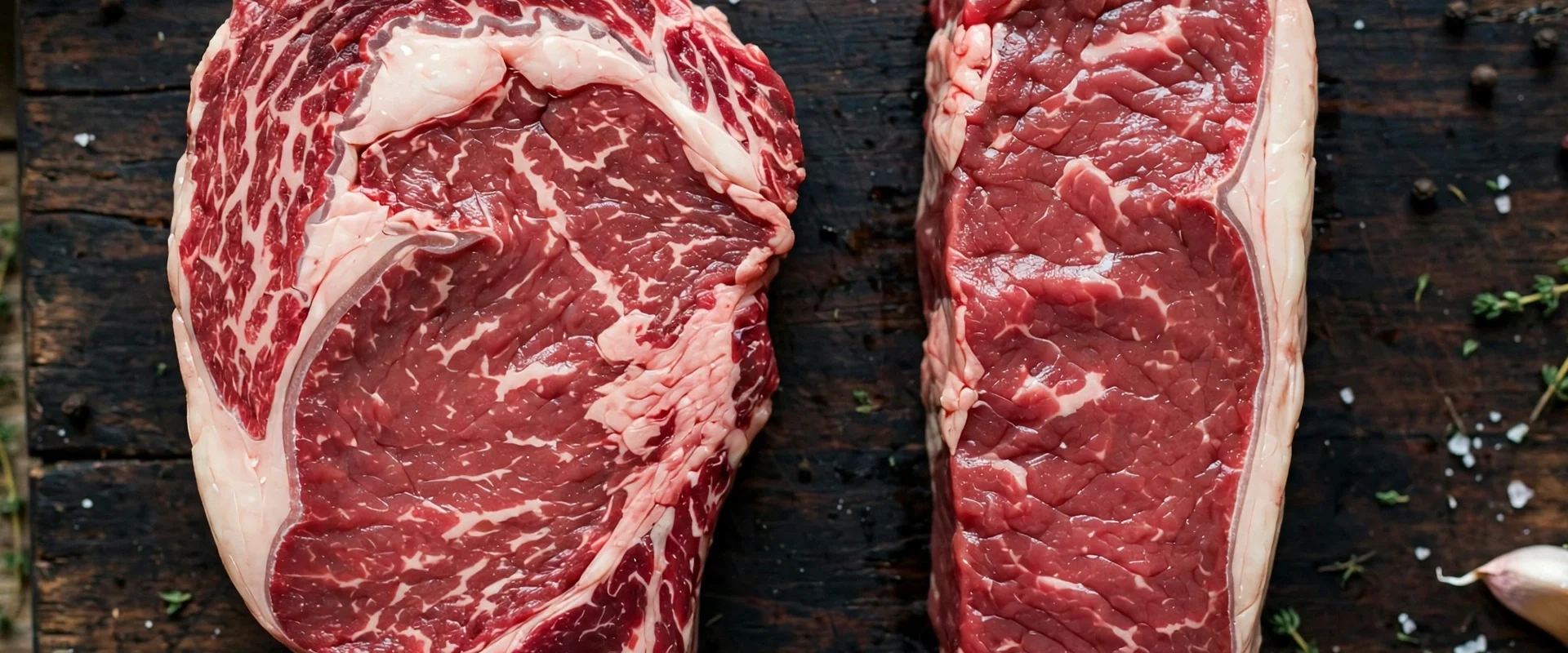
Ribeye steak vs New York strip is the most common steak debate at the butcher counter, and I have cooked both cuts dozens of times. The short answer to the ribeye steak vs New York strip question: ribeye wins on flavor and juiciness because of its heavy marbling, while New York strip wins on a firmer beefy chew and cleaner slices. I bought both cuts from the same butcher last weekend, cooked them side by side with the same method, and tasted the difference myself. Here is everything I found.
Key Takeaways
- Ribeye comes from the rib section, carries the most marbling, and delivers the richest, juiciest flavor. Best for flavor first buyers.
- New York strip comes from the short loin, has a tighter grain and less fat, and gives a firmer, beefier chew. Best for leaner texture lovers.
- Ribeye usually costs more per pound at most butchers because demand for its marbling is higher.
- Both cuts cook best with high heat and a medium rare finish around 130 to 135°F. Pull them a few degrees early and rest 5 to 10 minutes, the same rule I follow in every ribeye steak vs New York strip cook.
Ribeye Steak vs New York Strip: Quick Comparison
| Feature | Ribeye | New York Strip |
|---|---|---|
| Comes from | Rib primal (ribs 6 to 12) | Short loin |
| Marbling | Heavy, rich fat throughout | Moderate, mostly along one edge |
| Flavor | Buttery, rich, beefy | Beefy, clean, mineral |
| Texture | Tender, softer bite | Firm, satisfying chew |
| Fat cap | Yes, thick and flavorful | Yes, along one edge |
| Typical price | Higher | Lower to mid |
| Best thickness | 1.5 to 2 inches | 1 to 1.5 inches |
What Makes a Ribeye Different
The ribeye comes from the rib primal, the same section that gives us prime rib. This muscle does very little work, so it stays tender, and it carries generous intramuscular fat, the white marbling you see webbed through the red meat. That fat is the whole story of ribeye steak vs New York strip flavor debates, and it is the main reason I rank ribeye first whenever someone asks which cut tastes better. When the fat renders in the pan, it bastes the meat from the inside and creates that buttery, rich taste people pay extra for.
In my test I bought a 1.75 inch bone in ribeye and a 1.25 inch boneless New York strip from the same counter. The ribeye had visibly more marbling before cooking even started, and that difference showed up in every single bite. If you want maximum flavor and do not mind extra fat, ribeye is your cut.
When ribeye is the better pick
- You want the juiciest, most flavorful steak on the plate.
- You are reverse searing a thick steak and want fat to render slowly.
- You are feeding people who judge a steak on richness, not leanness.
What Makes a New York Strip Different
The New York strip comes from the short loin, just behind the ribs. It is the same muscle that makes up one side of a porterhouse. The grain runs tighter here and the fat sits mostly along one edge instead of running through the meat. That structure gives the strip its signature firm, beefy chew.
In my side by side cook, the strip sliced cleaner than the ribeye. Each slice held its shape on the board, which made it the easier cut to serve for a group. The flavor was beefy and direct rather than buttery. If you prefer a steak with real chew and less fat, the strip settles the ribeye steak vs New York strip question in your favor, and you will also save money.
When New York strip is the better pick
- You want a firmer texture and a cleaner, beefier flavor.
- You prefer less fat on the plate.
- You want excellent steak for less money per pound.
My Ribeye Steak vs New York Strip Side by Side Test
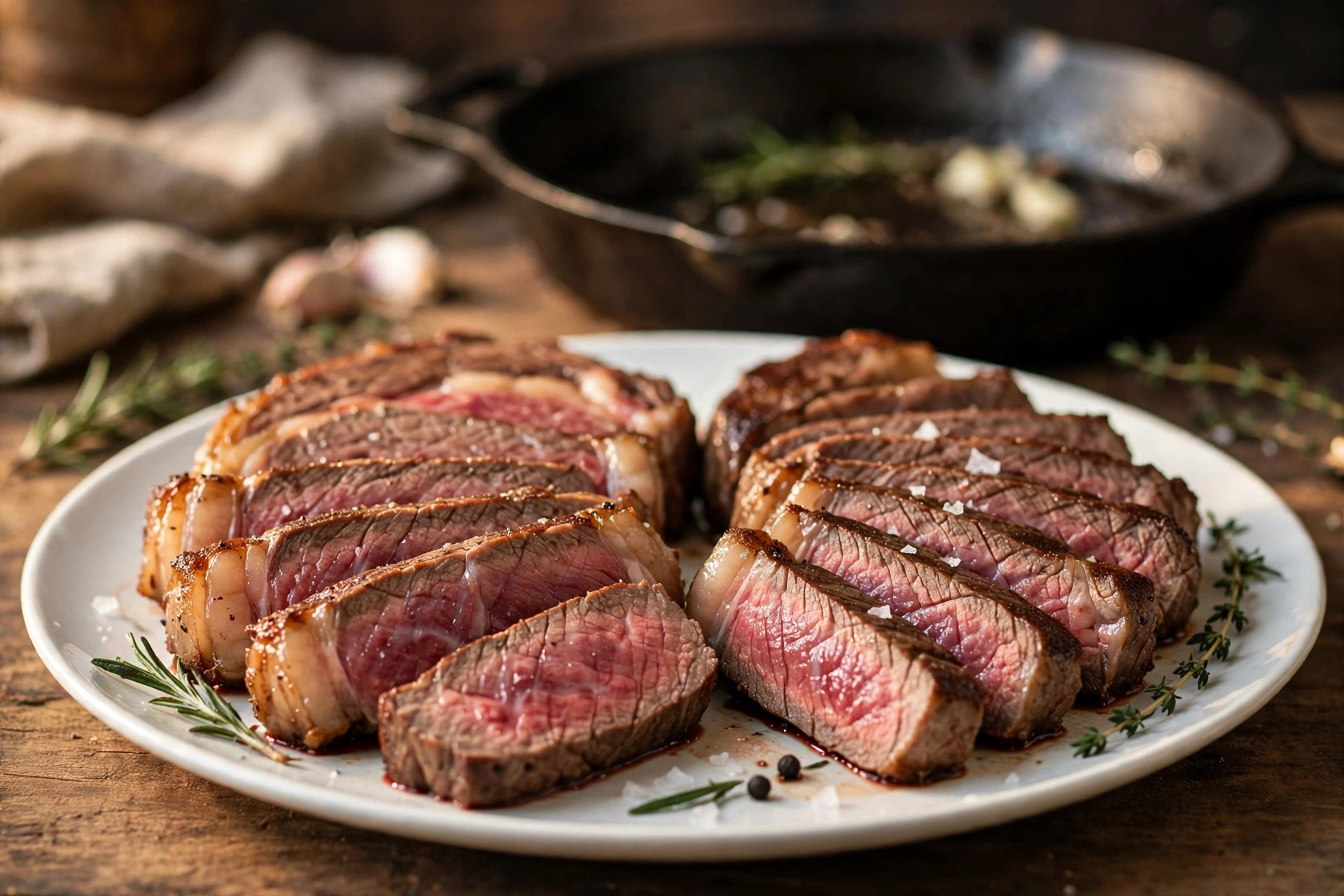
I tested ribeye steak vs New York strip the only fair way: same day, same butcher, same method. I salted both 45 minutes ahead, seared them in the same cast iron skillet over high heat for 3 minutes per side, then finished in a 400°F oven until the centers read 130°F. Both rested 8 minutes.
The ribeye won on juiciness by a clear margin. Juice pooled on the cutting board when I sliced it, and the fat cap had crisped into the best bite on the plate. The strip won on beefiness. It had a more direct, meaty flavor and a satisfying chew that the ribeye lacked. My honest verdict from this test: ribeye for flavor, strip for texture. Neither is objectively better. They are different steaks for different moods.
Ribeye Steak vs New York Strip Price Comparison
At most US butchers and grocery stores, ribeye costs more per pound than New York strip. In my city last weekend the boneless ribeye ran about 30 percent higher than the strip. The reason is simple demand: marbling drives price, and ribeye has the most marbling of any mainstream cut.
Bone in ribeyes cost less per pound than boneless ribeyes at many counters, and a bone in cut also protects the meat during cooking. If the ribeye price stings, a thick bone in ribeye can close the gap with strip pricing while still giving you ribeye flavor.
How to Cook Ribeye Steak vs New York Strip for the Best Results
Both cuts cook best with high dry heat and a medium rare finish. The details differ slightly.
Ribeye cooking tips
- Go thick, 1.5 to 2 inches, so the fat has time to render without overcooking the center.
- Reverse sear thick ribeyes: low oven at 250°F to 120°F internal, then a hard sear.
- Render the fat cap first by standing the steak on its edge for a minute before laying it flat.
- Pull at 125 to 130°F and rest 10 minutes. The carryover heat finishes the job.
New York strip cooking tips
- 1 to 1.5 inches is the sweet spot. Thinner strips cook through before the crust develops.
- A screaming hot cast iron skillet or grill gives the best crust on a strip.
- Sear 3 to 4 minutes per side, then check with a thermometer. Do not guess.
- Pull at 130°F for medium rare and rest 5 to 8 minutes.
For full doneness guidance, see my guide to pulling a medium rare steak at the right temperature. Safe cooking matters too: the FoodSafety.gov safe minimum internal temperature chart lists 145°F with a 3 minute rest as the safe minimum for whole beef cuts.
Ribeye Steak vs New York Strip: Which One Should You Buy?
Here is my decision rule after years of running ribeye steak vs New York strip taste tests. Buy the ribeye when flavor is the priority and you want the richest steak experience possible. Buy the New York strip when you want a firmer chew, less fat, cleaner slices, or a better price. If you are cooking for a crowd with mixed tastes, buy both and let the plate settle the debate. That is exactly what I do now.
Want step by step methods for each cut? Read my guide to cooking ribeye steak perfectly every time and my easy New York strip steak recipe for beginners.
FAQs
Is ribeye or New York strip more tender?
Ribeye is more tender. Its heavy marbling and the lazy rib muscle it comes from give it a softer bite than the firmer short loin muscle of the strip.
Which is better, ribeye or New York strip?
Neither cut wins the ribeye steak vs New York strip debate outright. Ribeye is better for rich flavor and juiciness. New York strip is better for a firm beefy chew, cleaner slices, and lower price. Pick based on what you value most.
Why is ribeye more expensive than New York strip?
Demand. Ribeye carries the most marbling of any common cut, and shoppers pay a premium for that marbling. Strip has less intramuscular fat, so it prices lower at most counters.
Can you cook ribeye and New York strip the same way?
Yes. Both take high heat searing and finish best at medium rare around 130 to 135°F. The ribeye benefits from a thicker cut and extra time rendering its fat cap, while the strip does best at 1 to 1.5 inches.
Which steak is better for grilling?
Both grill well, but the strip has a slight edge on the grill because its firmer structure and edge fat cap handle direct flame cleanly. Ribeye drips more fat, which can cause flare ups, so keep a cool zone ready.